 Photo Courtesy: Representative Image
"Critics argue that the KZC’s apology was designed specifically to shield SoO militants from accountability. The conspicuous absence of any named militant factions, village chiefs, or arrested suspects reveals that the apology threatens no one. In this context, the council's silence functions as a strategic deflection mechanism to divert guilt away from the armed groups."
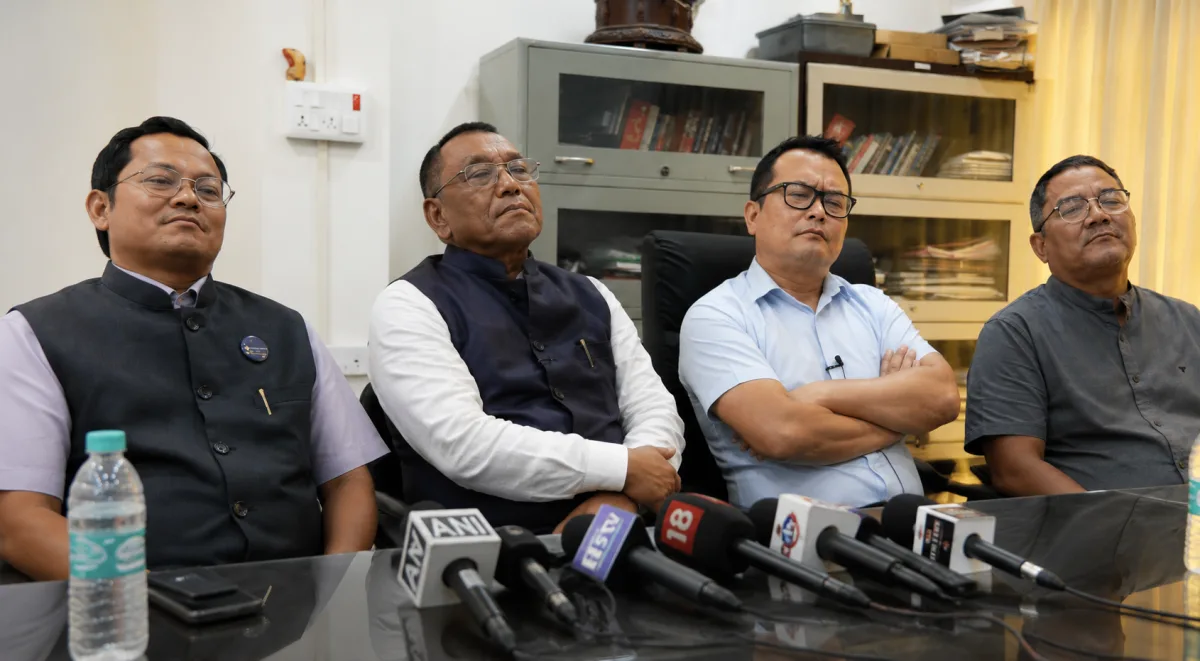
On June 25, 2026, the Kuki-Zo Council (KZC) formed on October 11, 2024, as a branch under Kuki Inpi Manipur issued a press release regarding the killings of six Naga civilians whose bodies were recovered on June 10–11 in Kangpokpi district. The statement, delivered by Council Chairman Henlianthang Thanglet, termed the incident a "grave mistake" driven by emotion. What followed, however, has drawn sharp criticism from multiple observers for what they describe as deflection, omission, and the use of contested terminology.
The Factual Framework
The following timeline is established through official and media records:
On May 13, 2026, six Naga civilians were abducted from Leilon Vaiphei village. On May 15, security forces brokered a mutual hostage exchange that secured the release of 14 individuals from both communities. On June 9, the United Naga Council (UNC) released its remaining 14 Kuki captives as a gesture of de-escalation. The Kuki armed factions did not reciprocate. The bodies of the six Naga hostages described by the UNC as highly mutilated and dismembered were discovered between June 10–11 near a Kuki-Zo village in Kangpokpi district.
Manipur Deputy Chief Minister Losii Dikho told ANI on June 15 that cadres of the Kuki National Front (KNF-P) carried out the abduction and execution. Dikho further alleged that villagers handed the victims to armed men, with involvement of women's groups and village chairmen. The state government has referred the case to the National Investigation Agency (NIA), and the NIA investigation is currently underway.
The KNF-P is a recognised signatory to the Suspension of Operations (SoO) ceasefire agreement that governs 25 Kuki and Zomi militant groups.
The Apology and Its Critics
Chairman Thanglet's statement traced the escalation to the killing of three Thadou pastors on May 13 an incident that triggered the sequence of events leading to the hostage crisis. KZC Spokesperson Ginza Vualzong raised grievances regarding what the council characterised as "biased or selective security operations" by state and central forces, and demanded firm action against militant groups on all sides, including the NSCN-IM and the Zeliangrong United Front.
Critics have challenged these framings on factual grounds. They note that security operations in Kangpokpi during mid-June followed the recovery of the victims' bodies and the failure of the Kuki side to reciprocate the June 9 hostage release suggesting the operations constituted a proportional emergency response rather than selective targeting. The Hindu has reported that security forces do not select operational zones arbitrarily but follow the trail of crime.
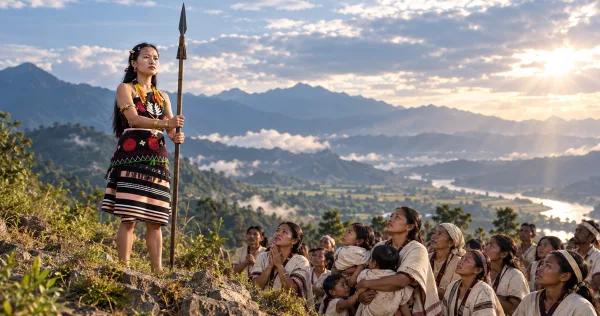
The most contentious aspect of the KZC statement, however, concerns terminology. Thanglet referred to the deceased including pastors Kenpibou Chawang and Manu Thiumai not by their specific tribal identities or as Nagas, but as "Kacha Nagas." Naga organisations have long rejected this term as pejorative. The word derives from the Angami Naga terms Keva or Ketsa, meaning "forested" or "wild country", a geographical descriptor that British administrators anglicised into an ethnic label. For families who spent 27 days searching for their loved ones, the term has been described as a final indignity.
Questions of Complicity and Silence
Multiple sources have reported that Kuki Inpi Manipur, the Kuki-Zo Council, and militant leadership were aware that Naga hostages were being held in their areas. Critics have posed a question that remains unanswered: if the leadership genuinely condemned the hostage-taking, did they possess the capacity through intelligence, local authority, or influence to intervene? The absence of such intervention until the hostages were found dead, these critics argue, points to either implicit complicity or a deliberate choice to look the other way.
Notably, the KZC apology named no militant group, no village chief, no arrested suspect. Naga People's Front President Awangbow Newmai has separately accused Kuki civil society organisations of attempting to conceal the crime and has implicated the KNF-P and Leilon Vaiphei villagers.
The Political Dimension
The case has acquired significant political weight. The United Naga Council has demanded abrogation of the SoO pact, designation of the KNF-P as a terrorist organisation, and the removal of Deputy Chief Minister Nemcha Kipgen wife of KNF-P President Semtinthang Thangboi Kipgen. The UNC has stated that her continuation in office amounts to a willful compromise of internal security.
The Editorial Position
The Kuki-Zo Council's apology contains a fundamental asymmetry: it asks for forgiveness while withholding the specifics that would make forgiveness meaningful. A call for balanced condemnation of all militant groups cannot substitute for naming the specific group that a sitting minister has publicly accused of mass murder particularly when that group operates under a ceasefire agreement with the Indian state.
If a Suspension of Operations signatory can stand accused of executing six civilians and face no public censure from its own community leadership, the framework risks becoming a shelter for impunity. The KZC's defence that emotions ran high, that all sides bear blame, that the community should not be branded as wicked contains elements of reasonableness. But proportion is not the same as impunity, and an apology that names no perpetrators threatens no one.
The NIA investigation is underway. The courts will determine culpability. Until then, the blood of six Naga pastors and farmers demands what any democratic society owes its victims: names, arrests, and prosecutions. Nothing less will do.
The views expressed are those of the NEWire.in editorial board. For corrections or clarifications, contact editor@newire.in

Comments