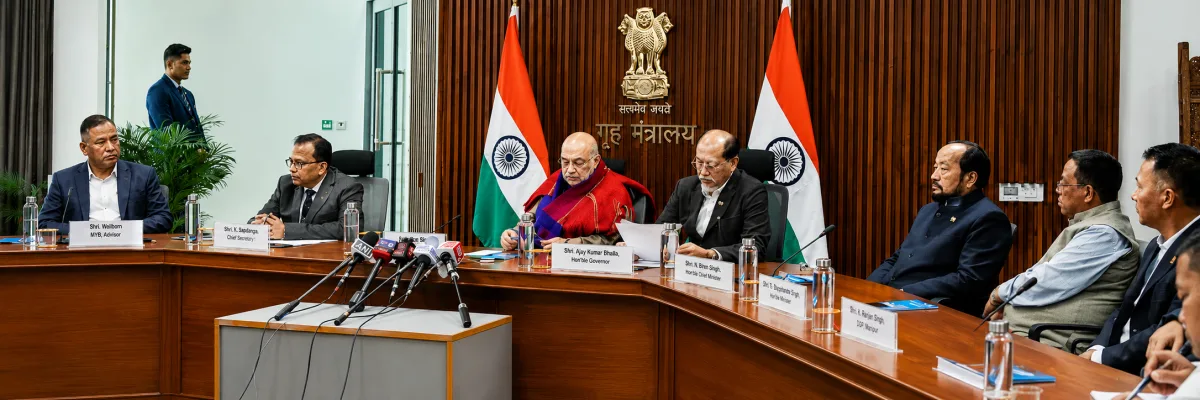
On February 5, 2026, the Government of India, the Government of Nagaland, and the Eastern Nagaland People's Organisation signed a Memorandum of Agreement to establish the Frontier Nagaland Territory Authority. The agreement promised a 62-member council with legislative, executive, and financial powers over 46 subjects, a Rs 5,000 crore development package over ten years, and a mini-secretariat headed by an officer of Principal Secretary rank. Five months later, the enabling legislation remains deferred, the Eastern Nagaland People's Organisation has threatened renewed agitation, and the constitutional foundation of the agreement itself is in question.
According to the Nagaland Advocate General's opinion, recorded by the state Cabinet on February 26, 2026, the state legislature does not possess the constitutional competence to delegate its legislative powers to another body. The opinion states that the state government cannot transfer its legislative authority to the Frontier Nagaland Territory Authority through state legislation. This is not a technical objection. It is a structural constitutional barrier that strikes at the heart of what the MoA promised.
The MoA, according to the Press Information Bureau release of February 5, 2026, and a leaked outline accessed by the Morung Express, explicitly commits legislative powers to the Frontier Nagaland Territory Authority. The council is to comprise 40 elected members, with one-third reserved for women, two members nominated by the Governor, and the 20 MLAs from eastern districts as ex-officio non-voting members. The territory is to receive Rs 2,500 crore from the Ministry of Development of North Eastern Region, Rs 2,500 crore from central line ministries, 100 per cent central funding for centrally sponsored schemes in the territory for the first decade, and a one-time grant of Rs 75 crore for administrative headquarters. The Chief Executive Member is to hold cabinet minister rank. All of this rests on a legislative foundation that the state's own law officer has declared constitutionally unviable.
This is a credibility trap. The Government of India signed an agreement promising powers it had not confirmed were legally deliverable. The Government of Nagaland signed an agreement its own Advocate General would later declare beyond the state's legislative competence. The Eastern Nagaland People's Organisation, which accepted the Frontier Nagaland Territory Authority framework after rejecting every economic package offered since 2010, now faces the prospect that the political autonomy it negotiated may not be constitutionally achievable through the mechanism chosen. All three parties are bound to a document whose central commitment may require a constitutional amendment or Union legislation under Articles 3 and 4 of the Constitution, neither of which was prepared before the signing.
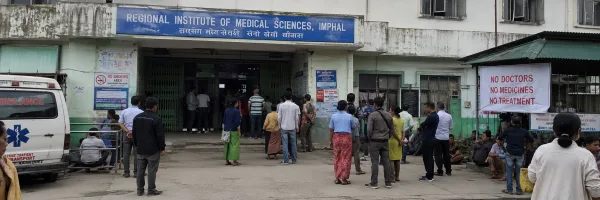
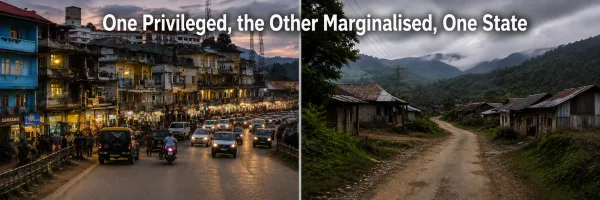
The grievance that produced this agreement is documented and severe. Eastern Nagaland, comprising the districts of Tuensang, Mon, Kiphire, Longleng, Noklak, and Shamator, has a documented history of administrative neglect stretching back to the colonial era. The region was an un-administered frontier until 1948, was governed through the Governor after statehood in 1963, and has consistently lagged in infrastructure, healthcare, education, and connectivity. According to the Eastern Nagaland People's Organisation, per capita income in the eastern districts is approximately Rs 5,000 against a state average of Rs 16,000, though independent official verification of these figures remains unavailable. The organisation's capacity for democratic mobilisation was demonstrated in the 2024 Lok Sabha elections, when a boycott enforced across 20 assembly segments resulted in zero votes being cast, affecting approximately four lakh registered voters according to Election Commission data reported by the Times of India and the Indian Express.
The state government's position is constitutionally cautious but politically consequential. The Cabinet has repeatedly stated that Article 371A of the Constitution, which protects Naga customary law and land ownership and requires a resolution of the Nagaland Legislative Assembly before any Parliamentary Act can apply to the state, is sacred and sacrosanct. In August 2025, the Cabinet rejected any new constitutional provision such as Article 371K, which would have placed the Frontier Nagaland Territory Authority outside Article 371A's framework, viewing it as an unacceptable bifurcation of the state's constitutional protections. The state introduced the Frontier Nagaland Territory Authority Bill on March 26, 2026, but deferred it within twenty-four hours on March 27, 2026, at the request of the Centre, the Eastern Nagaland People's Organisation, and the Eastern Nagaland Legislators' Union. A special assembly session was announced on July 6, 2026, but had not been convened as of July 14, 2026.
The constitutional architecture is genuinely complex. Nagaland is not covered under the Sixth Schedule of the Constitution, which provides for Autonomous District Councils in Assam, Meghalaya, Tripura, and Mizoram. The Frontier Nagaland Territory Authority cannot be modelled on existing autonomous councils. No judicial precedent exists in India for a state legislature delegating its legislative powers to a sub-state territorial authority. Under established administrative law principle, the non-delegation doctrine holds that legislatures cannot transfer their essential legislative functions to executive or subordinate bodies. If the state legislature is indeed incompetent to delegate these powers, then the MoA's central commitment requires either a constitutional amendment under Article 368 or Union legislation under Articles 3 and 4, neither of which the Centre has proposed or even indicated a timeline for.
This is not merely a political delay. It is a systemic governance failure in which political agreement preceded legal feasibility assessment. The Ministry of Home Affairs, which has engaged the Eastern Nagaland People's Organisation since 2010 and has seen every previous offer rejected, signed the MoA without confirming that the promised legislative powers could be delivered through the mechanism it chose. The state government, which had rejected Article 371K and knew its own constitutional architecture, signed the agreement before obtaining the Advocate General's opinion. The result is a document that all three parties treat as binding but whose central provision may require a constitutional amendment that no institution has yet prepared.
The Ministry of Home Affairs must obtain and publish the Solicitor General's opinion urgently. If the opinion confirms that state legislation is constitutionally incompetent to delegate legislative powers, the Centre must propose a constitutional amendment or Union legislation under Articles 3 and 4 within a defined timeline. The full text of the MoA, which has not been officially published and is known only through a leaked outline in the Morung Express, must be released to the public to enable informed constitutional debate.
The Government of Nagaland must convene the announced special assembly session without further delay. It must publish the Advocate General's full opinion. It must engage western Naga stakeholders transparently to address legitimate concerns about the fragmentation of Naga unity under Article 371A. If the Constitution permits the Frontier Nagaland Territory Authority through state legislation, the Assembly should legislate. If it does not, the state should demand constitutional amendment from the Centre rather than use the legal objection as a pretext for indefinite delay.
The Nagaland Legislative Assembly must pass enabling legislation if the Solicitor General confirms constitutional competence. If not, it should pass a resolution demanding constitutional amendment and establish standing committee oversight of any development package to prevent the bureaucratic delays that the Eastern Nagaland People's Organisation has long alleged.
The Eastern Nagaland People's Organisation must maintain democratic pressure while respecting constitutional process. It should clarify publicly whether it will accept an authority with executive and financial powers only if legislative powers require constitutional amendment. The organisation's capacity for electoral mobilisation is proven, but constitutional legitimacy requires that political pressure work within, not against, the rule of law. With its Central Executive Committee scheduled to meet on August 6, 2026, the organisation faces a critical choice between escalation and engagement.
The media must report the constitutional dimension with the same rigour as the political drama. The full MoA, the Advocate General opinion, and the Solicitor General opinion must be demanded and published. The Rs 5,000 crore commitment, now escalated to a demand for Rs 10,000 crore, requires independent tracking to ensure it does not become another unfulfilled promise in a sixteen-year record of rejected packages.
The Frontier Nagaland Territory Authority impasse is a warning. Constitutional governance cannot function through executive agreements that bypass legal architecture. Political promises that outpace constitutional feasibility create credibility traps that damage all parties and the citizens they serve. The Eastern Nagaland People's Organisation has a legitimate, documented grievance that deserves constitutional resolution. But resolution requires that legal feasibility precede political commitment, not the other way around. The institutions that signed the MoA on February 5, 2026, must now repair the constitutional foundation they failed to confirm before making their promises.



Comments