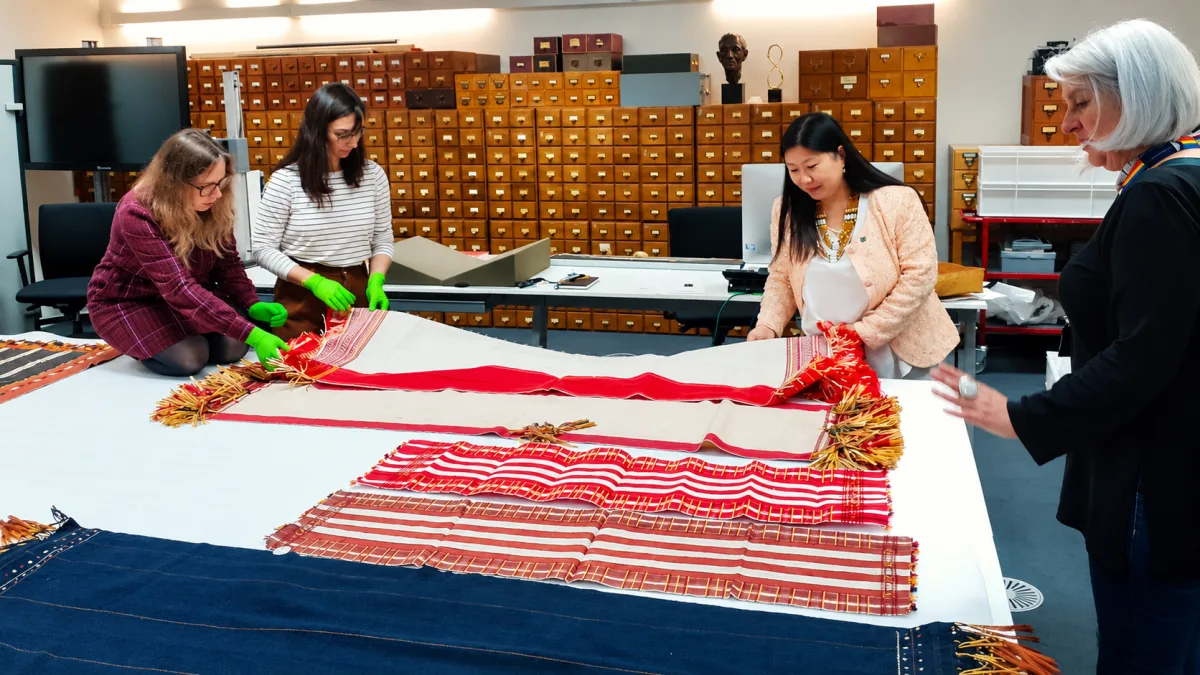
Som Kamei examines Rani Gaidinliu’s collection at Oxford’s Pitt Rivers Museum, exploring its historical significance, Zeliangrong heritage, material culture, collective memory and museum-community relationships.
I have been told by a very good friend of mine who recently visited the Pitt Rivers Museum in Oxford that one was immediately struck by the density of objects, each carrying fragments of histories, cultures, and memories. And for every object on display, there are many more that remain in museum storage. And even though it has never been exhibited publicly, the Rani Gaidinliu collection stands out among them, not only for its historical significance but also for the way it embodies the collective memory of the Zeliangrong community. For me, reflecting on this collection is not just about the objects themselves, but about the layered meanings they carry and the responsibilities museums hold in shaping narratives of identity and heritage.
Rani Gaidinliu: A Living Memory
Rani Gaidinliu, often recognised and remembered as a freedom fighter and spiritual leader, occupies a unique place in the history of the North East. Her resistance against colonial rule and her advocacy for the cultural and spiritual revival of the Zeliangrong people made her more than a political figure, she became a symbol of resilience. The collection at Pitt Rivers, consisting of shawls, undeciphered scripts in notebooks, and other personal artifacts, is not merely a set of objects; it is a repository of lived experiences and cultural continuity. Indeed, many of her personal associates, close followers, and former soldiers in her guerilla army are still living today. They have played an important role in keeping alive the memory of Rani Gaidinliu and her life’s work. The sharing of the digitised Gaidinliu Collection with the community was an opportunity for these memories to be brought to life and shared with the community, especially the younger generations.
Role of Museums
Museums like Pitt Rivers play a dual role. On one hand, they preserve fragile histories, ensuring that objects survive the passage of time. On the other, they inevitably shape how those histories are told and remembered. For instance, It was surprising to learn that, even today, most of the information about the artefacts in the Gaidinliu Collection comes from the notes made by the colonial officers who captured her. They tend to represent Gaidinliu, her activities, and her followers in a somewhat negative light, and through the textual descriptions, this perspective shapes how the history of Gaidinliu is told to museum visitors. There is a need to revisit the language through which the artefacts in the collection become meaningful to viewers. For that to happen, we need to illuminate for the viewer the multilayered nature of Gaidinliu’s activities, her life and story must be retold from the Zeliangrong Naga perspective. Museums must also recognise that they have a responsibility to preserve these collections, but also to give voice to what they mean for the community. For the Zeliangrong community, the presence of Rani Gaidinliu’s collection in Oxford is both a source of pride and a reminder of displacement. The objects are safeguarded, yet they are far from the land and people whose stories they embody.
This distance raises questions about ownership, representation, and the ethics of care. One must consider what it means to care for the collection. Is it sufficient to protect it from physical damage, or do museums also need to care for the cultural well-being of the object and its relationships with the community?
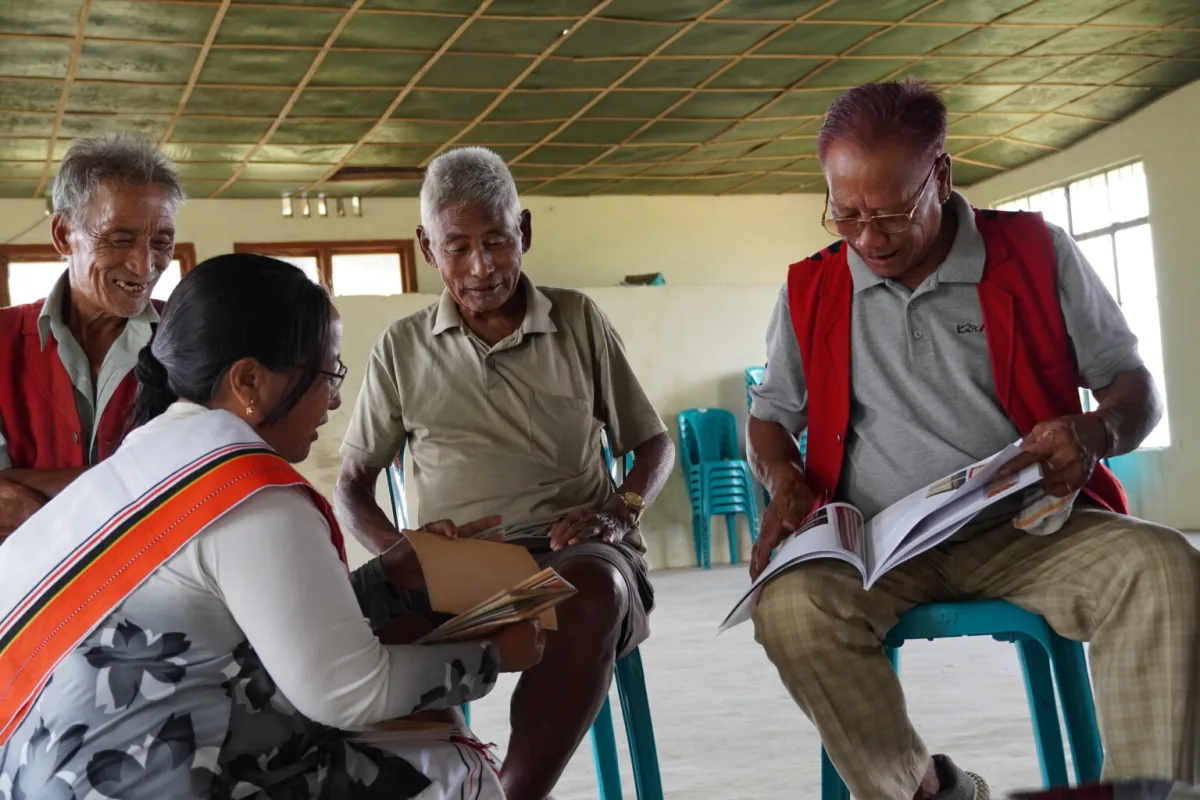
Research consultant Tasile Zeliang shows the collection to community elders in Tening village, Nagaland
Collective Memories and Community
The Zeliangrong community’s collective memory is deeply tied to Rani Gaidinliu’s legacy. Her shawls, for instance, are not just textiles; they are woven with meanings of identity, resistance, and belonging. The undeciphered scripts she left behind are tantalizing fragments of thought, unfinished, yet powerful in their mystery. For the community, these objects are touchstones of memory, connecting generations to a shared past. Yet when housed in a museum thousands of miles away, they risk becoming detached from the living practices and oral traditions that give them meaning. The undeciphered scripts, for example, are more than archival curiosities; they are invitations to engage with the intellectual and spiritual world of Rani Gaidinliu.
The care of such collections is not only about conservation but also about contextualization. Preserving shawls in controlled environments ensures their physical survival, but what about the intangible heritage they represent? One might even say that their historicity lies not only in their age but in their potential to spark dialogue, research, and renewed cultural pride. I was very happy to learn that one of the important forms of community engagement undertaken as part of the DiMuse project was the collaboration with community weavers to produce replicas of the original handlooms in the Gaidinliu Collection. These efforts showcased the work of community weavers and reactivated traditional weaving knowledge about rare designs and techniques. More such efforts ought to be undertaken, as they help in revitalising intangible cultural heritage of the community. The research-oriented objectives of museum projects provide a conducive space for close study and discussion.
Revitalising such traditional cultural practices is an important way in which museums can move beyond being custodians of objects to becoming facilitators of memory. This means collaborating with communities, allowing them to interpret and narrate their own histories. Without this, collections risk being frozen in time, beautiful but silent.
Another aspect of this is the scope for the pedagogical uses of the digitised Gaidinliu Collection. The digital copies shared with the community are being used to tell audiences about Zeliangrong culture and Rani Gaidinliu’s life in an engaging manner. The digital space offers a lot of scope to use new technologies to create visualisations, narratives, and online communities through which people can share and learn.
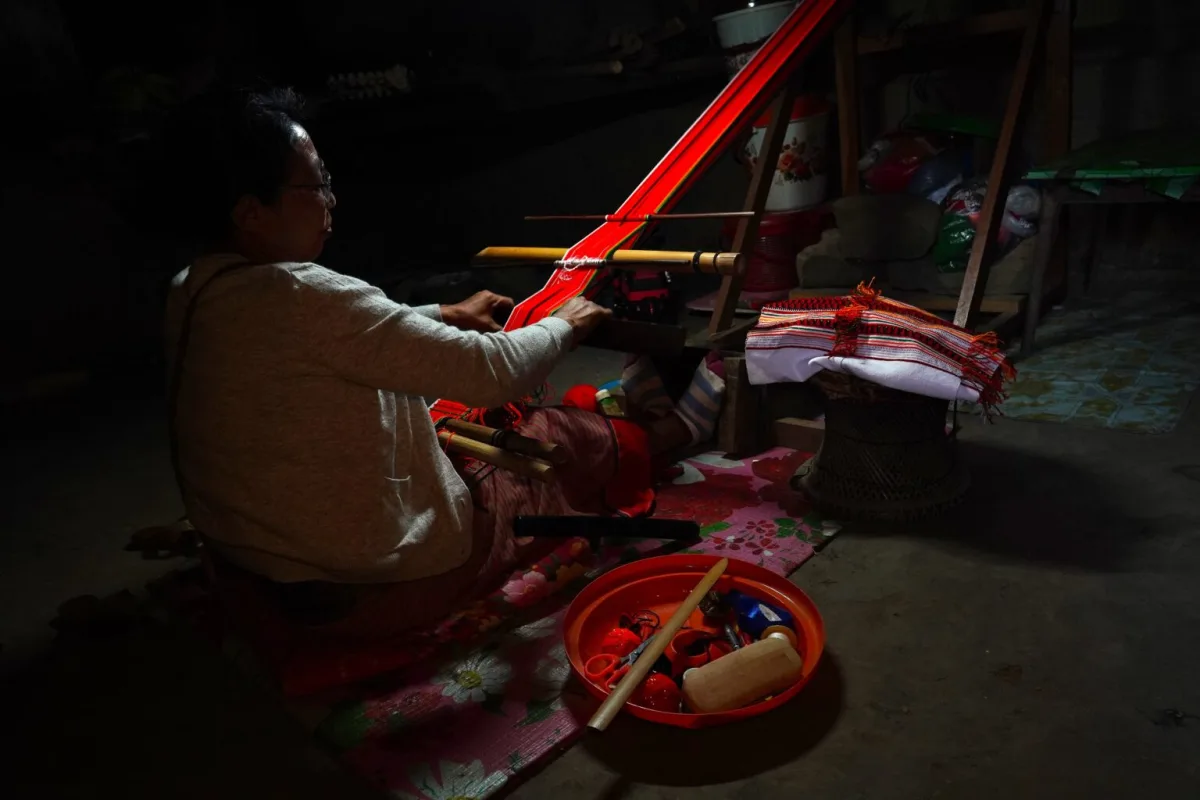
Rongmei weaver PG Abilu works on a replica of a garment from the Gaidinliu Collection
My personal reflections
My friend and renowned academic, Arkotong Longkumer was kind enough to send me the digital copies of the Rani Gaidinliu collection from PRM. When I received it finally, even though it was just a replicas I felt a tension between admiration and longing. Admiration for the meticulous care with which the museum preserves these artifacts, and longing for them to be closer to the people whose stories they embody. The shawls seemed to whisper of journeys, rituals, and resistance. The undeciphered scripts felt like unfinished conversations, waiting for the community to reclaim and interpret them. The collection is not just about the past, it is about the continuity of memory, the resilience of identity, and the responsibility of institutions to honour living cultures.
The Rani Gaidinliu collection at Pitt Rivers Museum is more than a set of historical objects, it is a mirror of collective memory, a reminder of resilience, and a challenge to rethink the role of museums. For the Zeliangrong community, these artifacts are not relics but living symbols. As museums continue to grapple with questions of representation and care, the collection calls for a more inclusive approach, one that bridges the gap between preservation and participation, between Oxford and the hills of the North East. Are there ways to bring museum collections closer to communities? How can communities and museums work together to enrich what we know about artefacts? The use of digital technologies may help to bridge this gap in some sense, but one must remember that ultimately it is a matter of living, evolving relationships and not just technology.
The shawls, the undeciphered scripts, and the entire collection remind us that memory is not static. It is woven, spoken, and lived. And museums, if they are to truly honour heritage, must ensure that these memories remain alive, not only within their walls but within the communities to whom they belong. Even as endeavours such as the digitisation and return of museum artefacts can help to further the task of bridging the distance between museums and communities, much more remains to be done. Most importantly, there is a need to think about museum-community engagement in a long-term perspective. How can we establish strong relationships built on trust, collaboration, and a recognition of mutual interests but also difference? In this sense, I see the DiMuse project as a first step in this direction. And I am hopeful that the relationships built over the course of this project will develop into an enduring relationship that reconnects the Zeliangrong Naga people with their cultural heritage and memory.
Republishing Note: This Reflections: The Gaidinliu Collection at the Pitt Rivers Museum by Som Kamei, IPoS, author and historian, is republished by NEWire.in with due permission. The article was originally published by Gaurav Rajkhowa in blogs.ed.ac.uk


Comments