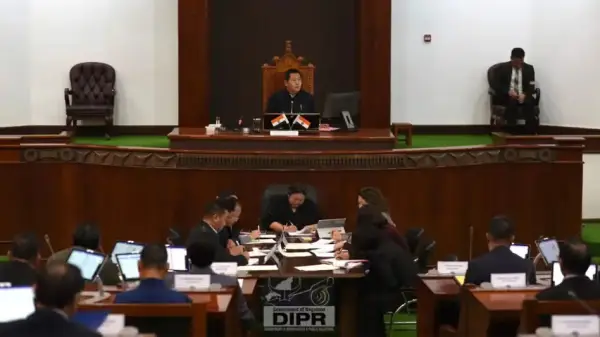
Kohima: The 9th session of the 14th Nagaland Legislative Assembly wrapped up a busy day of legislation in Kohima on September 3. Lawmakers passed a slate of government bills while introducing a new framework for the state cooperative sector.
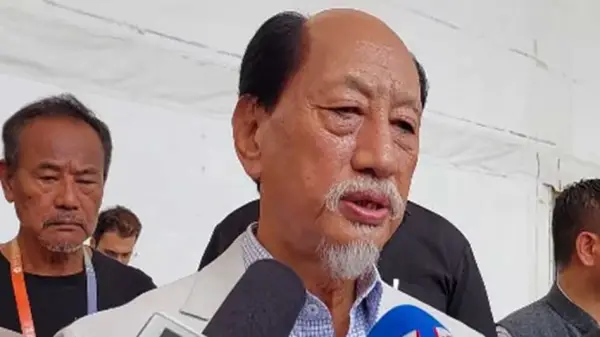
Chief Minister Dr. Neiphiu Rio successfully pushed the Nagaland Right to Public Services Bill 2026 through the House. This law mandates time-bound delivery of public services. It includes safeguards to ensure fairness, specifically offering residents an opportunity to be heard before the state imposes penalties. The legislature also passed the Nagaland Town and Country Planning (Sixth Amendment) Bill 2026. This move grants the state government authority to set rules and maintain existing zoning regulations until new master plans are finalized.
Health and Family Welfare Minister P. Paiwang Konyak secured the passage of the Nagaland Paramedical Council (Repeal) Bill 2026. This act dissolves the state’s 2014 regulatory body to align with the national framework. Konyak stated, "Whereas, to ensure uniformity in professional standards, avoid dual regulatory functions and integrate the allied and healthcare workforce of Nagaland under a national framework which will enable recognition of the courses offered by the State institutions at national level and thereby access to employment across the country, it has become necessary to repeal the Nagaland Paramedical Council Act, 2014 and to adopt the National Commission for Allied and Healthcare Professions Act 2021."
The House also passed the 11th and 12th amendments to the Nagaland Goods and Services Tax Act. Meanwhile, Minister of Public Health Engineering and Cooperation Jacob Zhimomi tabled the Nagaland Cooperative Policy 2026. Designed to remain in effect until 2046, the policy seeks to turn cooperatives into a central pillar of the state economy. It promotes growth in agriculture, bamboo, textiles, and tourism while protecting tribal identity and customary laws under Article 371 (A).
In other proceedings, Minister for Power and Parliamentary Affairs KG Kenye presented the sixth edition of the Rules of Procedure and Conduct of Business in the NLA. Additionally, Chairperson Kuzholuzo Nienu submitted two reports from the Committee on Estimates covering the Horticulture and Rural Development departments.
Updated at 4th September 2026 at 1:49am
In a major shift, the House unanimously passed the Frontier Nagaland Territorial Authority (FNTA) Bill 2026. The legislation creates a self-governing body for Tuensang, Mon, Longleng, Kiphire, Noklak, and Shamator districts. Chief Minister Rio confirmed the state requested the central government raise the proposed economic package from Rs 5,000 crore to Rs 10,000 crore to fund infrastructure and regional development. The bill saw a minor amendment to its preamble before clearing the floor.
Separately, the Nagaland Bar Association (NBA) escalated its standoff with the state’s legal leadership. The group reiterated its boycott of Advocate General KN Balgopal, citing a derogatory remark he allegedly made before the Supreme Court on September 1, claiming the state only offers government or underground jobs. The NBA demanded the Chief Minister terminate Balgopal's contract by September 13.
Meanwhile, the Nagaland Health Protection Society reported that 12 hospitals, including 10 government-run facilities, face investigation for irregularities under the Ayushman Bharat and Chief Minister Health Insurance schemes. Officials have yet to name the hospitals or detail the specific policy breaches under review.
Updated at 4th September 2026 at 5:46am
Deputy Chief Minister Y Patton moved the FNTA Bill for passage after adding a technical amendment to the preamble. The change removes specific phrasing regarding the authority's autonomy to ensure it aligns with the act's broader legal provisions. Chief Minister Rio confirmed the state will fund the authority based on population and size, while the Centre will provide special development grants to address the region's infrastructure deficit. The FNTA will maintain its own planning and finance setup to direct development projects at the grassroots level.
Separately, the Naga Students' Federation (NSF) escalated its "singing revolution" protest against the state's enforcement of the national song Vande Mataram in official functions. The student body ordered its affiliated units and educational institutions to bar government officials, including the Governor, from any events where the song is played. NSF president Mteisuding stated the group rejects the mandate because the lyrics conflict with Naga religious beliefs.
Minister KG Kenye urged the federation to stand down, noting that a legislative committee has withheld its final report on the issue. The government is stalling the report to see how the national Prevention of Insults to National Honour (Amendment) Act, 2026, impacts local authority. Advisor Achumbemo Kikon confirmed the government is weighing these national legal shifts against the specific protections granted under Article 371 (A). While the NSF suspended its demonstration after receiving a formal letter from the government, the federation warned it will intensify its agitation if the Assembly fails to pass a resolution opposing the mandate.
Updated at 4th September 2026 at 9:48am
NHPS chief executive officer Thavaseelan K confirmed the count of flagged hospitals, noting the split involves 10 government facilities and two private ones. The society stopped short of naming the hospitals or detailing specific policy breaches, but signaled that administrative actions are currently underway to address the findings.
Updated at 5th September 2026 at 5:46am
The FNTA framework sets up a 62-member regional council with authority over 46 executive subjects. The bill includes a provision for a 10-year review of the arrangement to gauge progress. The legislation also grants the authority power over officer transfers and postings, a change incorporated following consultations with the Union Ministry of Home Affairs.
Chief Minister Rio clarified the FNTA is not a separate state but a decentralised governance model meant to speed up development in the six eastern districts. Legislators noted the authority will serve as a gateway for Act East trade initiatives and help regional infrastructure catch up to the rest of the state. The assembly session concluded sine die after lawmakers processed six bills and one resolution over the two-day meeting.
State BJP president Benjamin Yepthomi lauded the move as a historic shift, stating: "The new chapter brings responsibility to embrace change and collectively strive for progress and a brighter future."
Updated at 5th September 2026 at 1:48pm
Lawmakers closed the session by unanimously passing a resolution urging the Centre to scrap the Protected Area Permit (PAP) regime. The House argued the permits choke off tourism, investment, and cross-border trade. Deputy Chief Minister Yanthungo Patton led the push, while Tourism Minister Temjen Imna Along insisted Nagaland's current stability makes the 2024 permit reimposition unnecessary. Rio proposed replacing the red tape with digital monitoring to keep tabs on foreign visitors without scaring off investors.
New details on the FNTA bill reveal the 62-member authority will feature 40 directly elected representatives, with one-third of those seats locked for women. The Governor gets two nominations, while 20 Eastern Naga MLAs will hold ex-officio status without a vote. Records show the bill originally hit the floor on March 26 but faced months of stall tactics over legal hurdles before finally clearing for the Ministry of Home Affairs.
Updated at 5th September 2026 at 9:49pm
The FNTA passage follows a February 5, 2026, Memorandum of Agreement between the state, the Centre, and the Eastern Nagaland Peoples' Organisation. The deal hit a wall after the signing, but intelligence director Mahesh Dixit and MHA advisor Ajit Lal stepped in to break the stalemate. Rajya Sabha MP S Phangnon Konyak and Lok Sabha member S Supongmeren Jamir also pushed the bill across the finish line. The Eastern Nagaland Legislators' Union and eight tribal Hohos provided the final political cover needed to get the draft through the assembly.
Lawmakers also tackled the Protected Area Permit regime, voting to demand its total removal. Industries advisor Hekani Jakhalu warned that the permit system scares off investors and costs Nagaland's youth jobs. The assembly session also touched on pension disputes, the volatile Assam-Nagaland border, and the looming Foreign Contribution Regulation Amendment Bill, 2026.

Comments