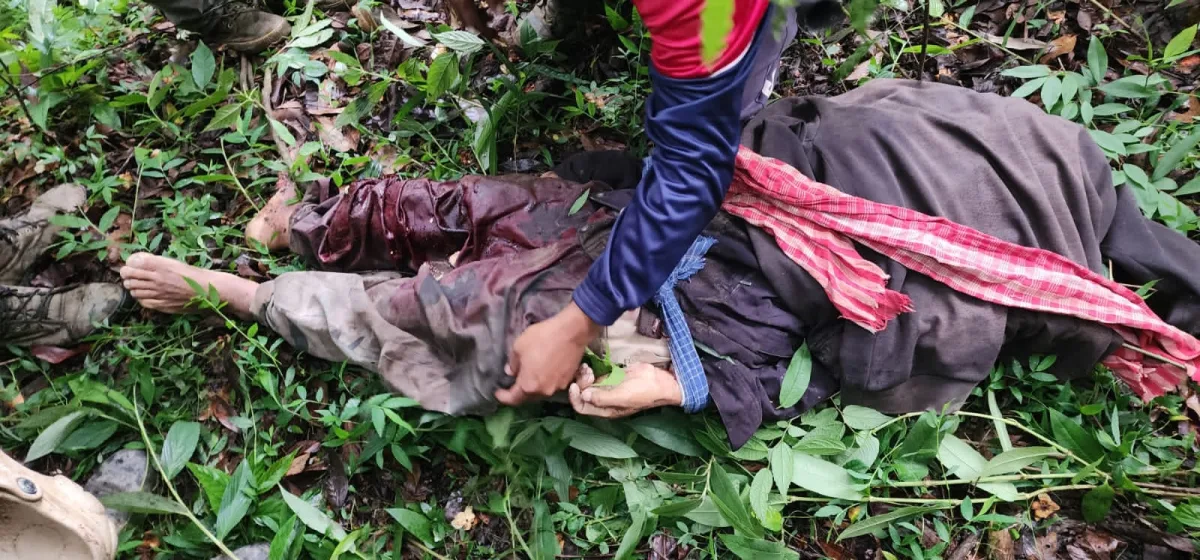
Imphal: Early on the morning of June 8, 2026, Chunjanglung Panmei stepped out into the quiet of Pongringlong village. He didn't know it would be his last morning. By afternoon, the Working Committee of the Joint Tribes Council, Manipur representing the Zeme, Liangmai, Rongmei, and Inpui communities wasn't just mourning. They were naming names. And one of those names, they say, belongs to the very forces paid to protect him.
The council's press release, issued the same day, pulls no punches. It calls the killing a brutal murder carried out by the Kuki militant group KNF (P), operating under the cover of the Suspension of Operations (SoO) agreement. But here's where the story takes a darker turn. The JTC doesn't stop at blaming the militants. It alleges that Indian Security Forces actively assisted the ambush firing indiscriminately, subjecting villagers to extreme fear, and turning their weapons against the people they swore to guard. "This is not neutrality," the statement reads. "This is complicity in murder."
That's a devastating charge. And it's not coming from a fringe group. The JTC speaks for four Naga tribes with deep ancestral roots in the region.
The council paints a grim picture of the KNF (P). They aren't freedom fighters, the JTC insists. They're narco-terrorists sheltering under a peace agreement while cultivating poppy plantations, wielding sophisticated weapons, and targeting unarmed civilians. The SoO agreement, meant to bring stability, has instead, according to this account, provided cover for violence.
But the council's fury is equally directed at what they call "the pattern of silence." This isn't the first attack, they note. Several assaults since May 13, 2026, have gone unpunished. "How many more must fall before the government acts?" the statement asks. It's a question heavy with frustration, and it hangs in the air unanswered.
The demands are clear and uncompromising. The JTC wants immediate arrest and prosecution of all Kuki elements involved. They want every SoO camp removed from Naga ancestral lands. They want a public apology and compensation for Panmei's family. And critically, they want an independent inquiry into the security forces' role in what they term an assassination.
The image that accompanies their statement is stark. A man lies motionless in the grass, his clothes stained, a red-and-white scarf tangled around him. Someone's hand reaches toward him too late. The photograph doesn't tell the whole story, but it screams that a life ended violently in a village that should have been safe.
The council closes with a warning wrapped in dignity. "The Naga people have shown maximum restraint and patience, but restraint is not weakness. And patience is not forgiveness." They name the culprits. They condemn them. And they promise not to rest until justice is served.
In a state where ethnic tensions have long frayed the fabric of coexistence, this killing and these accusations threaten to tear it further. The JTC has thrown down a gauntlet not just to militant groups, but to the government and the security apparatus itself. The question now is whether anyone in power will pick it up.



Comments