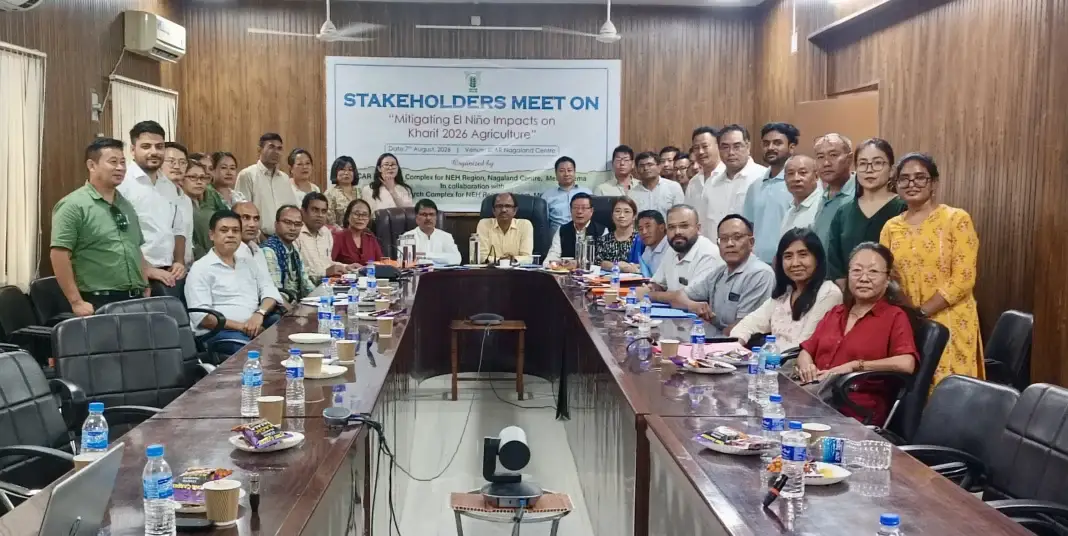
 Photo Courtesy: nagalandpost
Kohima: Agricultural scientists and state officials gathered at the ICAR Research Complex in Medziphema on August 7. They met to build a science-led strategy against El Nino threats for the 2026 Kharif season. Dr. Chubasenla Aochen opened the event. Dr. Kadirvel Govindasamy told the crowd that the group must prioritize institutional readiness to shield local farmers from volatile weather.
Dr. Girish Patil led technical sessions on climate stress. Experts warned that rainfall deficits and temperature shifts now threaten regional crop yields. Dr. V.K. Verma pushed for better water management and sturdy horticultural varieties. Meanwhile, Dr. Krishnappa Rangappa presented specific contingency plans for hill ecosystems. Dr. Harendra Verma introduced seven new high-yielding, climate-resilient rice varieties during his talk on resource management.
State officers from agriculture, horticulture, and fisheries departments joined the conversation. They tackled logistical hurdles and how to get resilient seeds into the hands of farmers. Khonthungo Lotha, Joint Secretary for the Government of Nagaland, lauded the collaboration between research staff and state workers. He stated, "seamless communication between research bodies and field departments" is the only way to deploy these mitigation strategies effectively.
The event included representatives from SAS Nagaland University, Krishi Vigyan Kendras, and various technical specialists. The team aims to protect tribal farming ecosystems and livestock from pending climate damage.





Comments