Kohima: Dimapur officials and students gathered at Immanuel College on October 1 to mark National Voluntary Blood Donation Day. The event, themed One Drop of Humanity. Give Blood. Save Lives, sought to boost local donation rates. It drew support from the Blood Centre at District Hospital Dimapur, the Voluntary Blood Donors Association of Nagaland, and the Nagaland State Blood Transfusion Council.
Deputy Commissioner Dr. Tinojongshi Chang served as the guest of honor. He reminded the crowd that blood is a vital resource that cannot be manufactured in a lab. He pushed students to act as ambassadors for the cause. He said, "every unit of blood donated voluntarily has the potential to help others in need at the right time and is an expression of humanity, compassion and social responsibility."
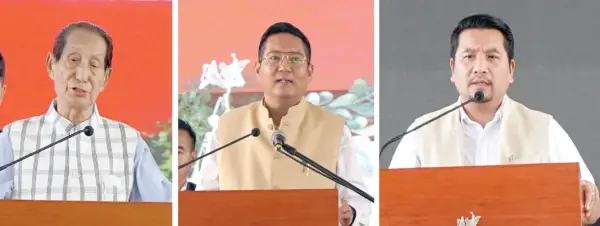
The DC wants a society where no one waits for blood. He argued that college programs teach students to be responsible citizens. Expert speakers rounded out the event. Temsuyanger Aier of the Chief Medical Officer’s office covered HIV and AIDS. Dr. Rongsenmar LKR spoke on donation safety, while VBDAN President Burakum Ao laid out the group’s core goals.
A blood drive followed the speeches. Exactly 27 donors stepped up to give blood. Dr. Temsutola chaired the day, and Inaholi T Aye led the opening prayer. Principal Dr. Th Sharachandra Singh welcomed the guests, while Chumchamo Ngullie performed and Red Ribbon Club Convener Ngipsho M Konyak delivered the final thanks.
Updated at 2nd October 2026 at 1:49pm
Temsuyanger Aier of the DISHA office provided a sobering look at the local HIV situation. He cited global 95-95-95 targets, noting that Dimapur has reached 94 percent in status awareness, 78 percent in treatment coverage, and over 95 percent in viral suppression. While HIV was first identified globally in 1981, Nagaland reported its first cases in 1994 among injecting drug users. Aier identified unprotected sex as the source of 86 percent of HIV transmission in the state, which currently holds the country's second-highest prevalence rate.
Dr. Rongsenmar LKR clarified the technical side of the drive, noting that if just one percent of the eligible population donated, local shortages would vanish. He specified that healthy individuals between 18 and 65 years old qualify, with men eligible to give four times annually and women three times. One unit of blood can save up to four lives. Among the 27 volunteers who rolled up their sleeves, records confirm at least one donor possessed O Negative blood.


Comments