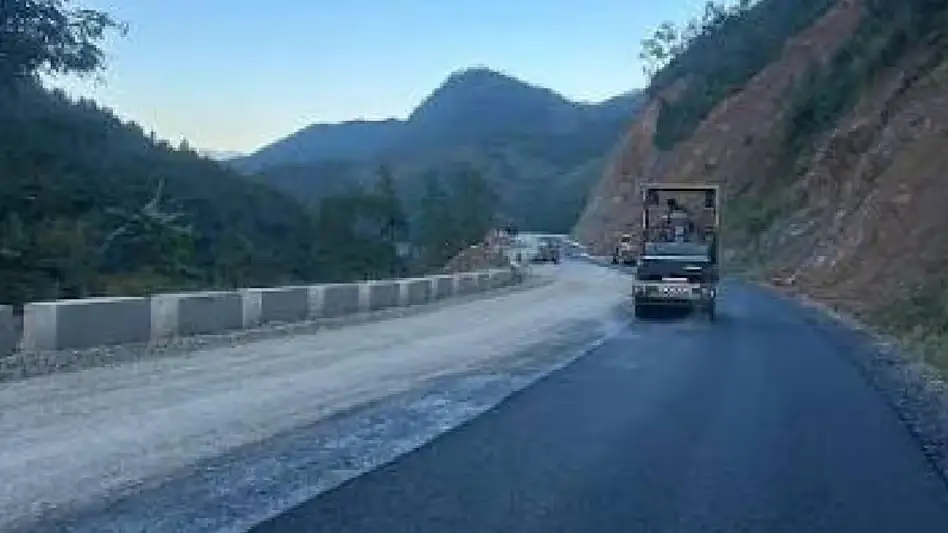
 Photo Courtesy: India Today Group
Kohima: The Union government gave Nagaland the green light to acquire land for the widening of National Highway 202 using the Nagaland Land (Requisition and Acquisition) Act of 1965. Deputy Chief Minister T R Zeliang confirmed the decision Wednesday following a meeting with senior officials from the Union Ministry of Road Transport and Highways in New Delhi.
This move resolves a standoff regarding which law governs land acquisition in the state. Officials debated between the central National Highways Act of 1956 and the state’s 1965 legislation. Nagaland officials insisted on their own law, citing Article 371(A) which protects Naga customary law and land ownership. The state government had expressed clear reservations about using the central act.
The ministry also agreed to accept the existing Detailed Project Report for NH 202. Zeliang noted the ministry will allow the state to fix technical gaps rather than hiring new consultants. "The decision will also avoid the appointment of a new DPR consultant, which could have necessitated fresh surveys and delayed the project by several months," Zeliang said.
This highway work targets Tuensang, Shamator, and Kiphire districts. These areas suffer from poor road conditions. The ministry also reviewed upgrade proposals for NH 329A, NH 702A, and the Foothill Road during the same meeting.
Updated at 23rd August 2026 at 1:48am
Zeliang met with key Ministry figures, including the Secretary, Director General, and Additional Director General, on August 19 to break the deadlock. The state government views this clearance as an interim reprieve rather than a permanent policy shift regarding the application of the 1956 Act.
Zeliang urged the Ministry to fast-track remaining technical fixes so the project can head to the Union Cabinet for final sanction. He also clarified that current road work in the affected districts is only stopgap maintenance, noting that these quick fixes fail to provide the long-term, sustainable infrastructure required for the region.
Updated at 23rd August 2026 at 9:47am
Zeliang sat down with the Ministry Secretary, the Director General, and the Additional Director General on August 19 to break the deadlock. The state government views this clearance as an interim reprieve rather than a permanent policy shift regarding the application of the 1956 Act.
Zeliang pushed the Ministry to fast-track the remaining technical fixes so the project can head to the Union Cabinet for final sanction. He also clarified that current road work in the affected districts is only stopgap maintenance, noting that these quick fixes fail to provide the long-term, sustainable infrastructure required for the region.


Comments