 Photo Courtesy: India Today Group
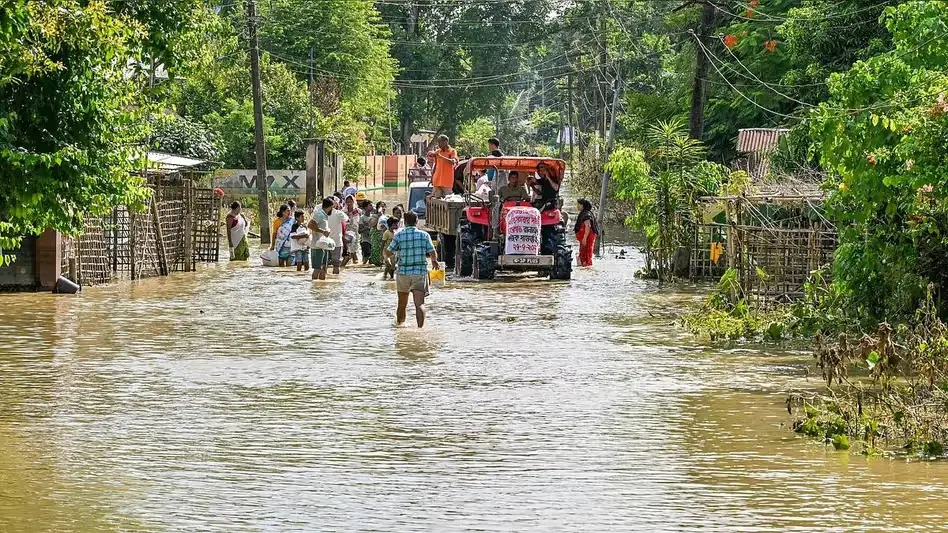
Guwahati: Assam’s flood crisis has left 99 people dead. The latest figures from the Disaster Reporting and Information Management System show 1,47,376 people remain affected across 12 districts as of August 8. The disaster has hit 460 villages across 30 revenue circles. Golaghat remains the hardest-hit area with 61,735 residents impacted, followed by Sivasagar at 43,492 and Jorhat at 24,283.
Relief operations are ongoing. Authorities now operate 94 relief camps and distribution centres, housing 8,568 displaced individuals. Sivasagar holds the highest concentration of camp residents at 4,862. Rescue teams, including the SDRF, DDRF, and Fire and Emergency Services, have evacuated 135 people by boat and five by helicopter. Officials report 10,599.89 hectares of submerged cropland, along with damage to 324 houses and various roads and embankments.
River levels remain a persistent threat. The Central Water Commission reports the Dhansiri at Golaghat and Numaligarh, and the Kushiyara at Sribhumi, are still flowing above danger levels. Experts argue the state must shift toward long-term structural solutions. Regarding the controversy over infrastructure, proponents of dam projects emphasize their potential for moderation. The Thatte-Reddy Committee noted: "Agitating against a dam while demanding flood control is self-defeating, since there can be no flood control without a dam."
This year’s disaster stemmed from extreme rainfall between July 18 and 20. Heavy downpours in Nagaland and upper Assam caused rivers to surge, with some areas receiving 436 percent more rain than normal. Officials are currently investigating whether landslide debris or mining waste created temporary dams that burst, intensifying the flash floods. With existing embankments dating back decades, experts are calling for a modernized, technology-driven strategy to mitigate the annual toll on human life and the economy.






Comments