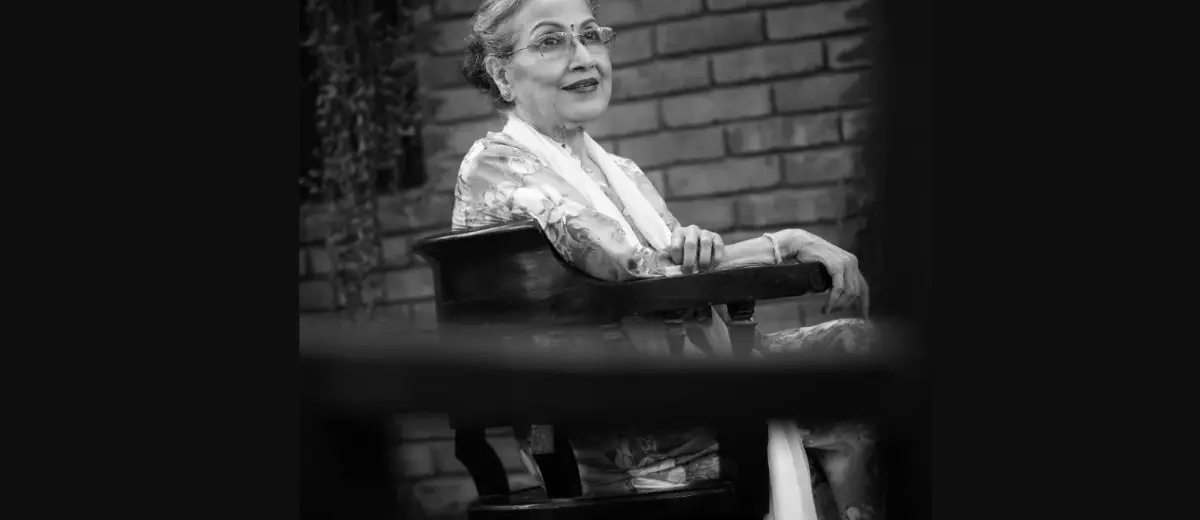
 Photo Courtesy: nenow
Guwahati: Bidya Rao defined an era of regional cinema. She mastered both Assamese and Bengali film, spanning a career that lasted nearly four decades. Her journey began early. At just six years old, she debuted in Dr. Bhupen Hazarika’s 1961 film Shakuntala. She was a natural.
Born in Dibrugarh to a Marathi father and Assamese mother, Rao relocated to Kolkata at age five. Her family’s proximity to Hazarika, who frequented their home for traditional Assamese food, paved her path to the screen. By 14, she landed the lead in Hazarika’s 1966 film Lotighoti. It won the President’s Silver Medal for Best Feature Film in Assamese. Her professional reputation skyrocketed.
Rao appeared in over 20 Bengali films, including Paari, Dolgobinder Karcha, and Tin Adhyay. She worked alongside legends like Uttam Kumar and Soumitra Chatterjee. Despite these successes, the people of Assam held her closest. She transitioned to adult roles in the late 1960s, starring in 1968’s Sangram and 1970’s Mukuta, the first Assamese film to run for 100 days. She married businessman M.P.N. Nair on a sudden impulse. Her career flourished after the wedding. In 1971, her performance in Aranya established her as a premier leading lady. The song Xile Xile Theka Khale from that film remains a classic.
She kept working throughout the 1980s. Her credits include the blockbusters Ajali Nabou and Mon Mandir. She worked under directors like Deb Kumar Bose and Siva Prasad Thakur. Reflecting on her time in the industry, she once noted, "Without her husband, she might not have achieved such great success in the film industry." Her husband’s connections even brought Bollywood directors like B.R. Chopra to their home, though he ultimately blocked her from pursuing Hindi cinema.
The couple settled permanently in Assam in 1980. They moved into a home in Guwahati’s Rehabari locality in 1988, but tragedy struck quickly. Nair died just twelve days later. Left to raise her son alone, Rao eventually returned to the screen. She reunited with director Bhabendra Nath Saikia for the 1991 film Sarothi. She remains a fixture in the history of Assamese arts.





Comments