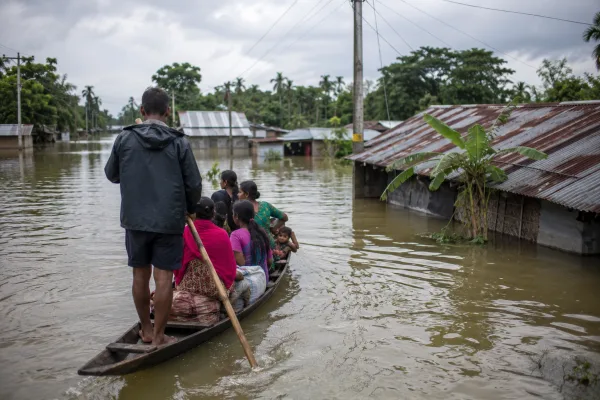
 Photo Courtesy: Representative Image
A 2015 study of migrant students in Shillong recorded the experience of a twenty-year-old from Mokokchung sitting in a private hostel in her second year of a bachelor's degree. She found her college through Facebook and WhatsApp messages from friends who came before her. Her parents had never visited Shillong. She paid less than she would in Delhi, and she did not know if she would return home after graduation. She was one of hundreds of students from Nagaland and Manipur who had made the same quiet calculation. The question was not whether she should be there. The question was why she felt she must be.
The usual answer that students leave because teachers at home are unqualified does not survive contact with the evidence. Both Manipur University and Nagaland University employ faculty of recognised competence. The 2015 study of 556 migrant students in Shillong, still the most comprehensive available though it predates the current crisis, found that barely seven per cent cited poor educational facilities as their primary reason, and teacher quality was not a significant independent variable. Students do not leave teachers. They leave systems that have failed to create the minimum conditions for learning. The exodus from Manipur and Nagaland is not a verdict on individual competence. It is a judgment on institutional challenge.
Consider what the evidence actually shows. Kohima College, a government institution in the Nagaland capital, reported in its 2024–25 Quality Enhancement Report that it faces "a serious shortage of infrastructural facilities" for its 1,900 students. Classrooms, computer laboratories, library rooms, an auditorium, and even toilets are inadequate. Students struggle with transportation because the college lacks buses and taxi fares are prohibitive. In Manipur, a 2018 study documented the "mushroom growth of private colleges" opening subjects without adequate infrastructure, while public funds were diverted to swimming pools and indoor stadiums instead of classrooms. The University Grants Commission, the study noted, sanctions "fewer amounts for the purchase of books and equipments." A qualified teacher cannot compensate for a laboratory without reagents, a library without books, or a classroom built for forty that holds eighty.
The paradox deepens when one examines the institutions themselves. Nagaland University secured NAAC B+ accreditation in 2024 after a twelve-year gap, a recovery that took too long and produced a CGPA of 2.52 that leaves substantial room for improvement. Thirty-four of the state's sixty-nine colleges remain non-accredited. These are documented administrative failures, not mere procedural delays. Manipur University has struggled with administrative paralysis, and the 2018 strike that suspended academic activity for fifty days was a precursor to the far greater disruption that followed. Historical records from 2018 document protesters burning tyres and blocking roads at Kongpal, Wangkhei, and Thoubal Bazaar; over ten students and two security personnel were injured. Individual faculty members at both universities have attempted to maintain academic continuity through online instruction, despite internet shutdowns and connectivity gaps that make even this modest effort heroic. The teachers are trying. The system is not.
For Manipur, the equation changed catastrophically after May 2023. The ethnic violence that displaced over 60,000 people did not merely disrupt education; it dismantled it. Universities and colleges were shut for more than two months. Twenty-three higher education institutions were converted into relief shelters. At least nine colleges and schools in the hill districts were burnt or looted. A 2024 study found that 57.7 per cent of Manipuri students now outside the state cite "frequent violence and blockades" as their primary reason for leaving. The Government of Manipur told Parliament in August 2024 that only five students had dropped out of schools, a claim that ground reports render implausible, given the documented 15,000 to 20,000 students directly affected and more than 60,000 people displaced. The gap between official claim and documented reality is itself a measure of institutional failure.
Ground reports from tribal hills of Manipur describe the specific reality behind the abstraction of "23 institutions converted to relief shelters." Incidence of Government schools built for 600 students each now admit 2,000, running double shifts. Community schools operate with volunteer teachers paid five or six thousand rupees a month. Children speak of AK-47s and being chased by mobs. Some help their families sell bamboo shoots instead of attending class. This is what happens when law and order collapses: education does not merely pause. It evaporates.
The damage extends even to institutions that should be insulated. Faculty at NIT Manipur report that recruiters who once flew to Imphal now refuse to come; as the institution's placement coordinator told The Hindu in December 2024, media images of the violence "seemed to have affected their psychology." Expected placements for 2024 were 100 students from 50 companies. The actual figure was 70 students from 40 companies, all recruited online. SS Career Counselling, a Manipur-based guidance organisation, reports a 90 per cent decline in its student-guiding activities since the violence began. When a state becomes synonymous with instability, even its best students pay the price.
Nagaland's story is different but no less instructive. Relative peace has not prevented an exodus driven by chronic underinvestment. The 2015 study found that 46.2 per cent of migrant students in Shillong learned of the city from friends, and 24.1 per cent from relatives. This is chain migration, not flight from violence. What Shillong offers is not national career primacy, North Eastern Hill University has dropped in the National Institutional Ranking Framework to the 151–200 band, but relative stability, geographic proximity, and lower cost than mainland cities. For 57.4 per cent of these migrants, it is a stepping stone to Delhi or Bangalore. Only 6.8 per cent intend to return home. Shillong is the least bad option within reach.
This exodus raises constitutional questions. Article 21 protects the right to life with dignity, a provision that the Supreme Court has interpreted to encompass the right to education. The Editorial Board considers that this principle extends to the minimum conditions necessary for higher education to function. Article 46 charges the state with promoting the educational interests of Scheduled Tribes, who constitute majorities in both states. Article 38 mandates equitable development. The freedom to migrate under Article 19 is not in dispute. What is in dispute is whether students are compelled to exercise that freedom because the state is not able to provide viable alternatives.
This is not a call for undifferentiated condemnation. Nagaland University's recovery of NAAC accreditation after twelve years represents documented institutional effort. Faculty at Manipur University who continued teaching through mobile data during internet shutdowns demonstrated a resilience that their administration did not deserve. Community volunteer teachers in Tribal Hills Districts kept classrooms operating in relief camps under deplorable conditions. These are acts of human and institutional courage, but they are patches on a collapsing roof, not a repair of the structure.
The Government of Manipur must recognise law and order as an explicit prerequisite for educational continuity. The documented conversion of multiple campuses into relief shelters and the destruction of the academic calendar for two months constitute an institutional emergency. The Government of Nagaland must address the infrastructure deficits documented in Kohima College's own official report through direct capital investment in classrooms, laboratories, libraries, and transportation. It should require all private colleges to meet NAAC accreditation standards within a defined timeframe or face affiliation review. Nagaland University must publicly account for its twelve-year accreditation gap and publish a concrete plan to improve its CGPA 2.52 rating to at least A grade within five years.
The University Grants Commission must link central funding for institutions in Manipur and Nagaland to measurable infrastructure outcomes, not merely enrollment numbers. It should conduct an independent audit of per-student expenditure across the three states to determine whether funding parity exists. The Government of India must commission a comprehensive study on inter-state student migration in the Northeast to replace the stale 2015 data, and it must treat internet connectivity in conflict zones as essential educational infrastructure, not a discretionary service subject to blanket shutdowns.
The student from Mokokchung who found her college on Facebook, the child in the relief camp, and the engineering undergraduate at NIT Manipur share one truth: they did not fail their institutions. Their institutions failed them, and that failure will continue to fill Shillong's hostels until it is finally named and repaired.
— The Editorial Team, NEWire.in
The editorial acknowledges documentary limitations. The most recent publicly available systematic survey of migrant student motivations dates to 2015. No subsequent peer-reviewed or government-commissioned migration study has been located. Similarly, comparable student satisfaction data across Manipur, Nagaland, and Meghalaya institutions is not publicly available. These gaps constrain the certainty with which current migration drivers can be characterised.


Comments