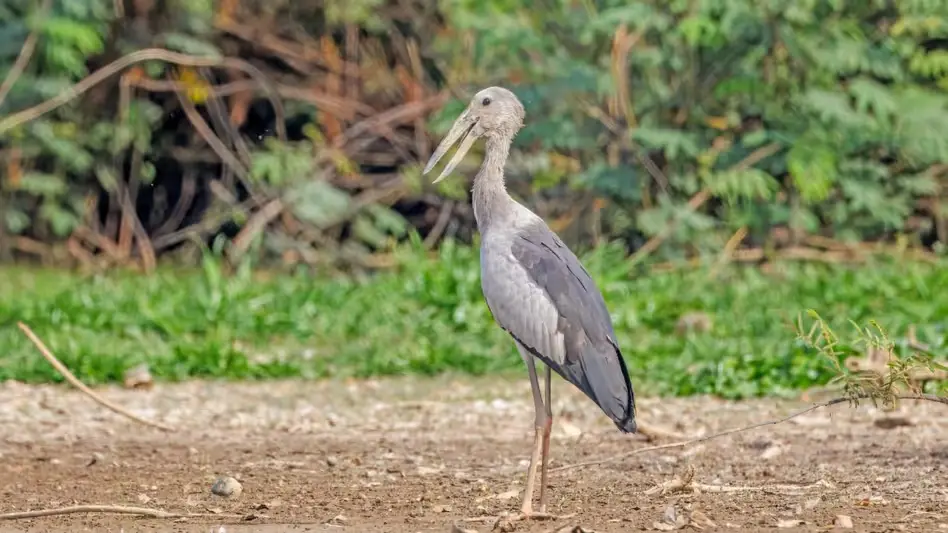
 Photo Courtesy: India Today Group
Guwahati: A breeding colony of roughly 100 Asian Openbills appeared in Sumoni Bandarkhati village, located within the Kakopathar Range of the Doomdooma Forest Division in Assam. The birds chose a single tree for their nests. Wildlife conservationist Devajit Moran identified the site, triggering calls for immediate protection. The village sits 45 km from Doomdooma and 69 km from Tinsukia.
Asian Openbills are storks known for the gap between their mandibles. They hunt snails in nearby wetlands. While currently labeled Least Concern, these birds face threats from habitat loss and human interference. They receive protection under Schedule II of the 1972 Wild Life Protection Act.
Moran wants to minimize human noise around the site. He insists on community engagement to safeguard the animals. "The first step should be to protect the tree where the birds are nesting. People living around the site need to know why the birds have gathered here and why they should not be disturbed. Awareness at the village level can make a major difference," Moran said.
Student groups have joined the push, educating locals on the legal status of the colony. The plan includes planting native Simalu trees to provide future nesting spots. Moran emphasizes that simple tree protection is not enough. The birds need the surrounding wetlands to survive long-term. He hopes this local effort grows into a larger regional drive to save habitats. The project relies on cooperation between the Forest Department and residents.
Updated at 8th September 2026 at 6:00pm
The legal protection for these birds falls under the 1972 Wild Life Protection Act as amended in 2022. Moran explicitly warned villagers against harming or consuming the storks to ensure compliance with these updated regulations.
Separately, the threat to wildlife in the Tinsukia district extends beyond nesting sites. Conservationists flagged danger from exposed power lines after a rare slow loris suffered a leg injury in the nearby Auguri Mamorni village. Authorities are now under pressure to replace open wires with insulated cables to prevent further electrocutions in areas where forest habitats bleed into human settlements.
Sumoni Bandarkhati sits 569 km away from Dispur.
Updated at 9th September 2026 at 1:49am
Tension in the Tinsukia district peaked Monday after a 39-year-old man, Umakanta Moran, was killed in a wild elephant attack near the Sidha Pul-Lakhipathar link road. Angry residents blocked National Highway-315 with the victim's body to force government action, demanding better lighting, cleared vegetation, and electric fencing to secure local routes against roaming herds. The All Moran Students Union is spearheading the protest, pushing for a 20 lakh rupee compensation package and government employment for the victim's widow.
The tragedy follows the recent injury of a rare slow loris in Auguri Mamorni village, where the animal was shocked by an exposed wire. Conservationists are now demanding that the government and electricity department work together to swap dangerous open lines for insulated cabling in forested zones. The Digboi Forest Division is investigating the elephant attack, but locals insist that reactive measures are no longer enough to manage the rising frequency of lethal human-wildlife encounters.






Comments