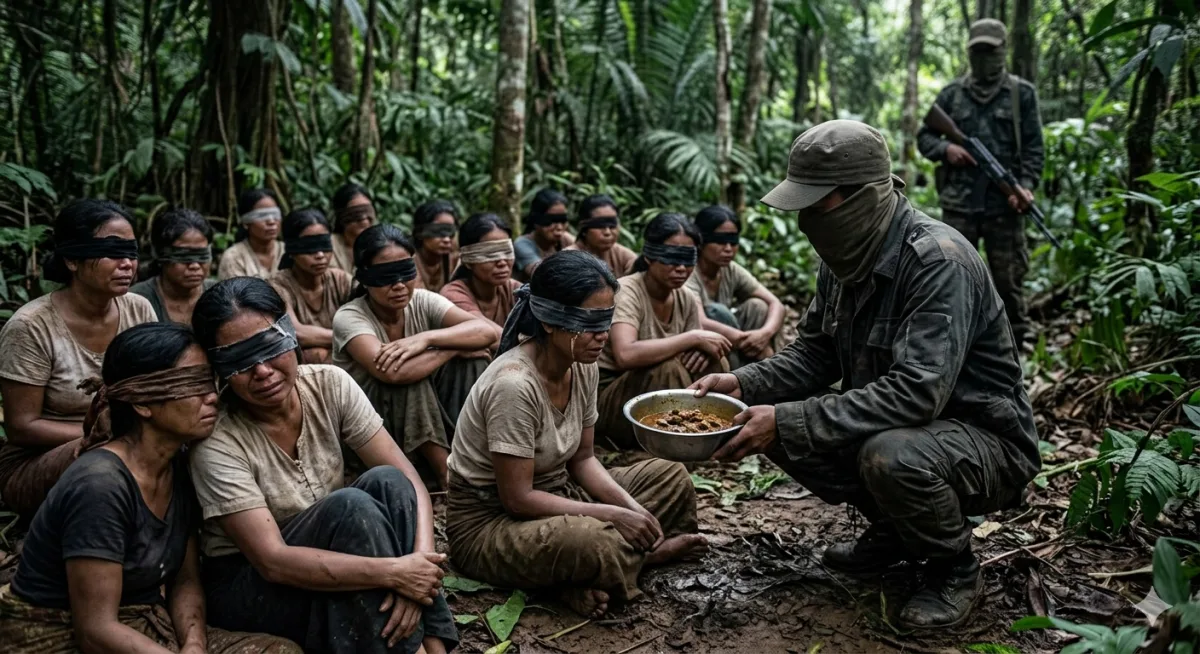
 Photo Courtesy: Representative Image
Imphal: The Naga women who made it out alive are talking. And what they are saying will turn your stomach.
Out of 18 people snatched off the road on May 13 near Leilon Vaiphei Kuki Village, the Naga women were kept apart from the men. They were blindfolded even during meals, so they never saw what was on their plate. Then one day, the captors (Kuki Militants, allegedly) served meat curry. The women ate it. Something felt wrong immediately.
"It had no smell. No taste we could place," one survivor recounted in a voice message that has since circulated among families and community leaders. "We know every meat in these forests. We know deer, we know wild boar, we know every bird. This was none of them."
That doubt that gnawing, unshakeable suspicion has now exploded into a full-blown horror that families of the dead are demanding answers for.
While the women and a child were eventually released, and 14 others exchanged in Kangpokpi on May 15, six Naga men vanished into the hills. For nearly a month, their families held onto hope. Prayer vigils were held. The Baptist world community pleaded. The United Naga Council negotiated. The Manipur government promised combing operations.
On June 10, that hope was crushed.
An alleged 450-strong search team Manipur Police, CRPF, Assam Rifles, sniffer dogs, forensic experts found what was left of them. The remains were so badly mutilated, sources said, they were barely recognizable. Manipur Police confirmed on X that the deceased were believed to be the six hostages taken on May 13: Pastor Kenpibou, Pastor Rev. Dr. Manu Thiumai, Deacon Phenrongwi Thiumai, Dilip Thiumai, Kaliwangbou Abonmai, and Ch. Phenrilung.
Witnesses alleged the men were tortured before being dismembered. The All Manipur Christian Organization, in a blistering statement, condemned the "barbaric and inhuman atrocity" and the "torture, mutilation, and dismemberment" of the victims, two of whom were pastors and one a deacon.
Now, the families are asking the question that haunts every mother, every wife, every sister who listened to that voice message:
Naga villagers, particularly those raised in the hills, do not second-guess meat. Generation after generation, they have hunted, trapped, and cooked every creature the forest offers. They know the gaminess of wild boar, the stringiness of jungle fowl, the particular oiliness of deer. When they say "this was foreign," they mean it in the most literal, bone-deep sense.
The terrifying suspicions of the survivors are amplified by the grim reality found at the Jawaharlal Nehru Institute of Medical Sciences (JNIMS) mortuary in Imphal.
Following alleged intense search operations, security forces recovered the remains of the six missing Naga men, including respected local pastors. The condition of the bodies left the entire community in absolute shock.
- Konsakhul Village Chairman D. Adam Liangmai, tasked with the grim duty of identifying the victims, could barely contain his horror when speaking to reporters.
- Unimaginable Torture: The victims were identified not by their faces, but solely by the clothes they wore.
- Extreme Dismemberment: The bodies bore unmistakable signs of severe, systematic mutilation, having been cut into pieces while some were reportedly still alive.
- The Chairman's Despair: Visibly shaken, Chairman Liangmai remarked, "We do not even cut meat in such a savage manner. Are the murderers of these hostages cannibals?"
If the women were fed meat that was "unknown," and the men were butchered with such savagery, the dots are connecting in ways that have left the community reeling.
The May 13 abduction, 18 people stopped at a village gate, separated by gender, held for weeks fits a pattern of communal hostage-taking that has turned roads into death traps and neighbors into suspects.
The United Naga Council has demanded that the government enforce Suspension of Operations ground rules, rationalize militant camps, and track down the perpetrators. The All Manipur Christian Organization wants an "immediate, transparent, and exhaustive investigation" by the Centre and the state. The Liangmai Baptist Churches Association has called for swift justice and protection of vulnerable communities.
But for the families of Konsakhul, justice is a distant word. What they want first is the truth, however ugly. What meat was that? Where did it come from? And why were they blindfolded so they could not see?
The women did not have to speak. They could have stayed silent, traumatized, grateful to be alive. But they chose to record what they remembered. That choice, to trust their own senses, to name their doubt, has now become the most damning piece of testimony in a case already overflowing with horror.
"We were blindfolded when they fed us," the voice says. "We never saw the food. But we tasted it. And we knew this was not from the forest."
In a conflict where evidence is often buried with the victims, that memory is all the prosecution may ever have. And for six families in Konsakhul, it is all the closure they may ever get.
The six victims: Pastor Kenpibou, Pastor Rev. Dr. Manu Thiumai, Deacon Phenrongwi Thiumai, Dilip Thiumai, Kaliwangbou Abonmai, and Ch. Phenrilung. They left a reception ceremony on May 13, 2026, at 10:30 a.m. They never made it home.
This is a developing story by NEWire


Comments