 Photo Courtesy: India Today Group
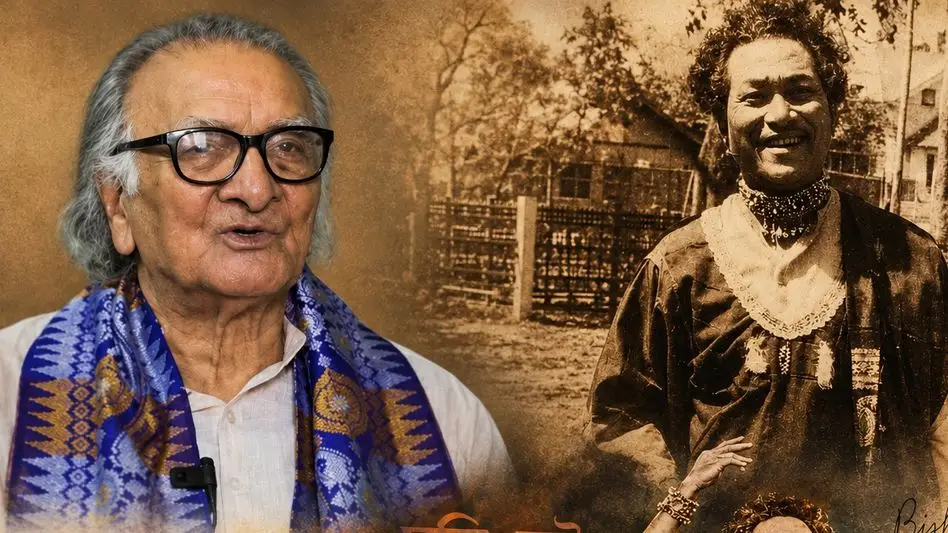
Guwahati: In late 1940, a young Jatin Goswami sought out Bishnu Prasad Rabha, hoping to learn from the man already celebrated as a titan of Assamese culture. The first encounter set the tone for a lifelong mentorship. Upon performing a traditional Sutradhari dance, Goswami received no immediate praise. Instead, Rabha critiqued his hand movements and introduced the complex concepts of Abartan and Bibartan. "That was the beginning," Goswami recalled.
Goswami remains one of Assam's most respected dance exponents, yet he maintains the deep reverence of a student when discussing his mentor. He describes Rabha not only as an artistic master but as a relentless scholar whose knowledge spanned philosophy, politics, and history. "I have never met another person with such enormous knowledge," Goswami said. "Whatever subject you discussed with him, he seemed to know it in depth."
Beyond his intellectual pursuits, Rabha led a life defined by artistic integrity and, at times, severe hardship. Goswami keeps letters from his mentor that detail the financial struggles Rabha endured, even as he dedicated his existence to social and cultural advancement. The loss of a significant manuscript on the Natyashastra remains a heavy point of regret for Goswami, who views it as the loss of unparalleled scholarship.
Rabha's choreography seamlessly blended classical techniques with folk traditions, often infusing his work with messages of social awakening and liberation. This was evident in celebrated productions like Mukti Deu, which Goswami performed and later taught extensively. While Goswami regrets that he never completed his training in Rabha's famed Shiva Nritya, he continues to share the lessons and philosophy passed down by his teacher. For Goswami, the letters and memories preserved over eight decades serve as a testament to a man whose creative vision and social ideals left an indelible mark on Assam.


Comments