 Photo Courtesy: nagalandpost
Kohima: Nagaland is pushing workers into the private sector. It is not going smoothly. Private employees with monthly salaries of Rs 25,000 or more face frequent loan rejections. They submit salary slips, bank statements, and employment certificates. Banks turn them away anyway.
Bankers blame the risk profile of these borrowers. They scrutinize staff turnover, payroll systems, and the financial stability of the companies. A firm lacking EPF coverage is often flagged as poorly formalized. Many private employers also refuse to act as guarantors for their staff. Bankers fear loan recovery issues. One official noted, "Bankers describe this as risk assessment rather than preferential treatment."
Government employees receive easier access. Their service conditions appear more predictable to lenders. Loan approvals are often centralized, forcing local branches to send applications to regional offices outside the state. Applicants struggle to get clear explanations for why their requests are denied.
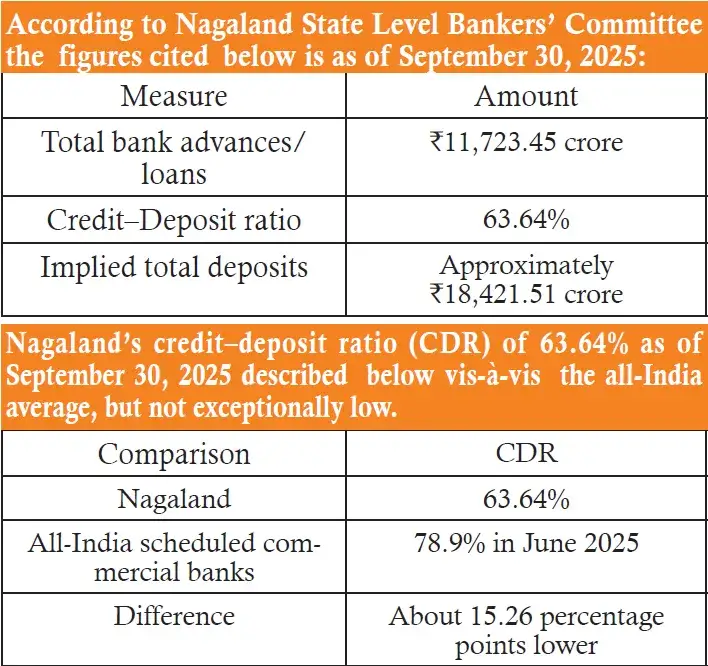
The State Level Bankers Committee report from September 2025 highlights high non-performing asset ratios in government schemes. Specifically, PMEGP sits at 25.70 percent, NULM at 16.48 percent, MUDRA at 10.04 percent, and SUI at 6.63 percent. Despite these recovery worries, total bank advances in Nagaland reached Rs 11,723.45 crore by September 30, 2025. MSME sector lending grew 13.47 percent year-on-year to hit Rs 1,672.49 crore.
The Nagaland Skill and Entrepreneurship Development Mission aims to grow fields like IT, healthcare, and hospitality. By March 9, 2026, 48,655 enterprises registered on the Udyam portal. The Chief Minister Micro Finance Initiative also added 777 units. If the state wants to move beyond government jobs, it needs a fairer banking system. Private workers need credit for emergencies, homes, and small business ventures. Without transparent, risk-based lending, the shift to a private economy remains stalled.






Comments