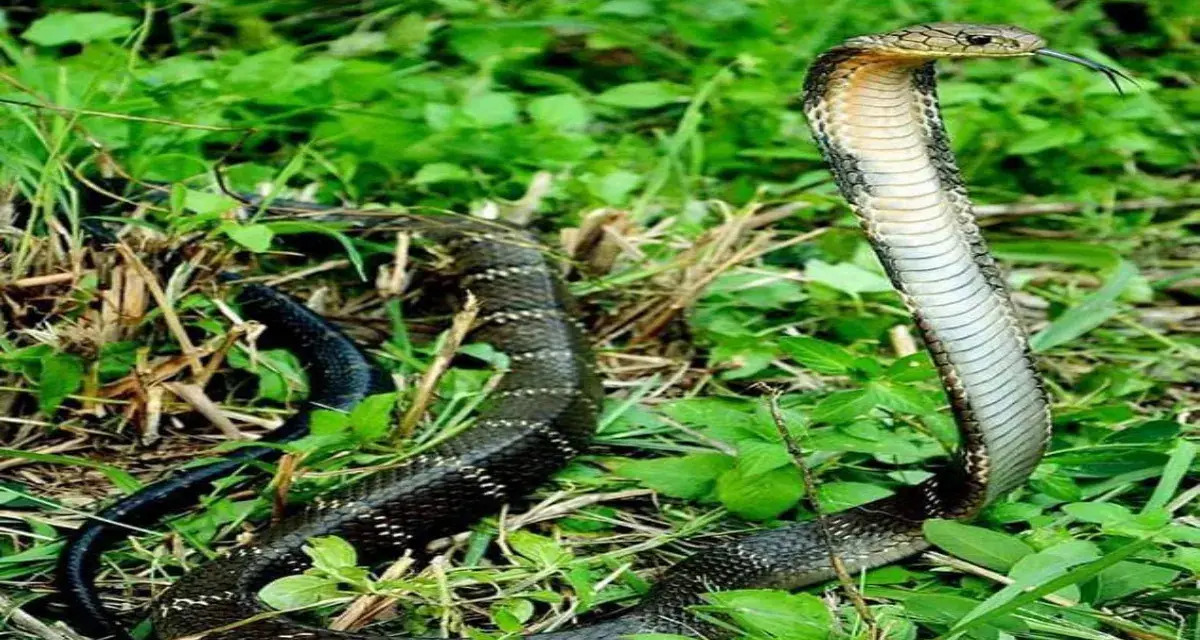
 Photo Courtesy: nenow
Aizawl: Researchers at Mizoram University identified the specific lineage of the state's king cobra population. Led by Prof. Hmar Tlawmte Lalremsanga, the team published their findings in Proceedings of the Zoological Society. They examined 27 adult snakes, including 15 males and 12 females. These specimens came from surveys conducted between 2007 and 2023.
The study used both morphological measurements and mitochondrial DNA analysis. Markers like 16S rRNA, cox1, and cytb confirmed the snakes belong to the Indo-Chinese lineage, Ophiophagus hannah. This settles the population's systematic placement. Scientists now recognize four distinct lineages instead of one single species.
Males and females showed measurable physical differences. Females possessed higher ventral scale counts, while males recorded higher values for subcaudal scales and tail length. Males also had larger head measurements. Researchers suggest these head variations might link to sexual selection or male rivalry. One author stated, "The researchers suggest that the differences in head size and shape merit further investigation, including whether they may be associated with sex-specific sexual selection and male-male rivalry."
The team documented 236 to 261 ventral scales for males and 240 to 258 for females. Male tail lengths hit 300 to 630 mm, while females measured 308 to 430 mm. Two high measurements came from rescued snakes that could not be re-examined. Experts believe these figures might stem from habitat adaptation or thermal conditions.
King cobras face constant threats. They are listed as a Schedule 1 animal in India and carry an IUCN vulnerable status. People often kill them on sight. Habitat destruction and the loss of nesting sites continue to plague the Northern King Cobra population. The authors insist that authorities must create conservation strategies tailored to these specific evolutionary lineages.






Comments