 Photo Courtesy: nenow
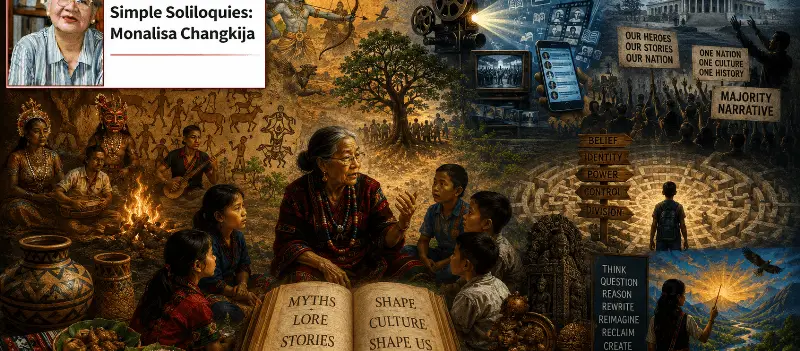
Kohima: Myths and stories define human society. They act as an operating system for the mind, justifying everything from property rights to social roles. Author Devdutt Pattanaik argues that these cultural fantasies are essential, stating, "Culture is based on tools and tales. Engineers create tools. Poets create tales. Tales justify human action—even genocide."
Political actors frequently manipulate these narratives to serve their own agendas. By enforcing majoritarian ideologies through media, education, and public policy, power brokers dictate what society values and remembers. This top-down control limits critical thinking and forces individuals to inhabit someone else's history.
The recent decision by the Nagaland BJP to celebrate the birth anniversary of Dr. Shyama Prasad Mukherjee illustrates this trend. Mukherjee held no connection to Naga culture, politics, or local history. Critics fear this marks the start of a broader push to normalize alien ideologies. Such actions effectively colonize the mind, gradually erasing indigenous traditions and local heritage.
Resistance requires more than just awareness. It demands a commitment to research and the courage to assert one's own history against the weight of imposed myths. If Nagas fail to reclaim their own narrative, their distinct identity risks total erasure. The future depends on whether people choose to blindly follow these imported stories or actively rewrite their own.


Comments