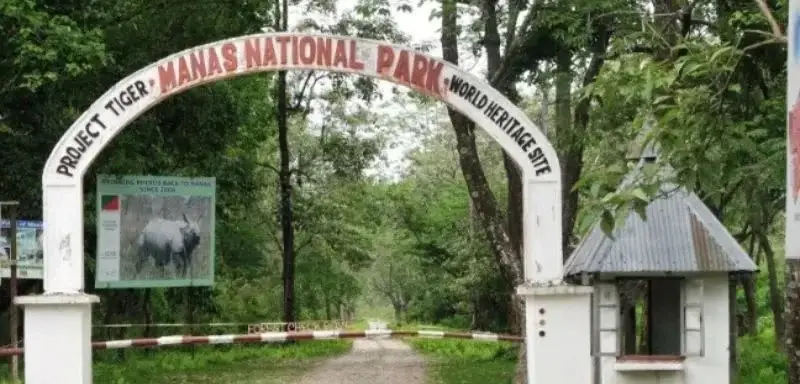
 Photo Courtesy: nenow
Guwahati: Manas Tiger Reserve is shrinking. Data from the Bodoland Territorial Council shows grassland coverage plummeted from 53.61% in 1990 to 30.24% in 2019. That is a massive 43% loss for the UNESCO World Heritage Site.
Invasive plant species are choking the park. Fourteen different types of weeds, including Lantana camara and Mikania micrantha, have taken root. These plants turn open plains into dense, unusable woodlands. Forest officials say this shift hurts rare wildlife like the pygmy hog, hispid hare, and the greater one-horned rhinoceros.
The trouble started years ago. Civil unrest between 1988 and 2004 stopped all habitat management. Heavy poaching nearly wiped out the park's rhino population during those years, removing key grazers that once kept the brush in check. A BTC Forest Department official noted, "The woody invasive species have accelerated the succession of grasslands into woodlands."
Woodland cover jumped from 40% to 60% in less than thirty years. This growth starves out herbivores, which in turn leaves big cats like tigers and leopards with fewer prey. On top of these ecological issues, illegal human encroachment remains a constant threat. Roughly 3,709 hectares of core forest land have been lost to settlers since the 1980s.





Comments