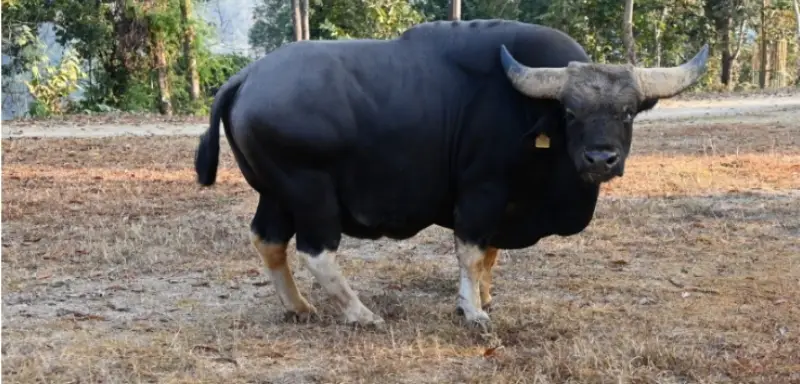
 Photo Courtesy: nenow
Itanagar: A new genomic study of the Arunachali mithun signals a worrying trend for the species. While India hosts nearly 384,000 of these semi-free-ranging bovines, researchers identified a long-term decline in the effective breeding population. The state of Arunachal Pradesh holds roughly 70 percent of the national total.
Scientists from the ICAR-National Research Centre on Mithun analyzed the whole-genome sequences of 11 animals. They identified a distinct population spanning the Siang, East Siang, Lower Siang, Upper Siang, Lepa Rada, and Shi Yomi districts. Now labeled the Siangmi, this group represents an estimated 20,000 individuals and potentially the world's oldest mithun breed.
Harshit Kumar, a scientist at NRC-Mithun, warned that traditional husbandry practices threaten long-term viability. The absence of pedigree records combined with the repeated use of a few bulls promotes inbreeding. “Genetic diversity forms the foundation of a population’s long-term survival,” Kumar said. The study estimates the current effective breeding population at only 160 individuals.
Girish Patil S, director of NRC-Mithun, leads the project to characterize these populations. Registration is vital. Without official breed status, farmers cannot access specific government programs like the National Livestock Mission. The Jomlo Mongku Mithun Farmers’ Federation has already begun ear-tagging and vaccinating over 16,000 Siangmi animals to document the herd.
The research team proposes three fixes for future management. They suggest implementing individual identification, utilizing genomic tools for parentage verification, and keeping systematic performance records. These steps aim to improve productivity while curbing the loss of genetic diversity. With formal recognition pending, breeders hope a Geographical Indication tag will eventually protect the Siangmi from crossbreeding and cement its status as a core cultural asset.
Updated at 16th August 2026 at 1:48pm
The decline in mithun ownership is hitting farmers hard beyond just their wallets. For many in the community, owning fewer animals marks a sharp loss of status and inherited prestige. Owners who once maintained large herds now report holding just a handful of animals, a trend that carries a heavy sense of shame for those who see the bovine as a primary measure of their family's standing.
Genetic analysis shows the Siangmi population holds unique physical traits, specifically a convex forehead and shorter, smoother horns. Scientists noted that while the population remains genetically well-connected, they found evidence that closely related animals frequently appear within the same village herds. Experts warn that unless farmers account for this relatedness during breeding, they risk triggering inbreeding that the current, mostly historical, genetic bottlenecks have yet to fully lock in.
Project leaders confirmed that the team generated 30 gigabases of DNA sequence per animal from blood samples taken across five villages. This effort identified nearly five million high-quality single nucleotide polymorphisms, providing a clearer look at the species' baseline than ever before. While the government rolls out a massive 7,834 crore rupee infrastructure investment program for 2026-29, local leaders are pinning their hopes on formal breed recognition to finally unlock specific support from central schemes like the Rashtriya Gokul Mission.







Comments