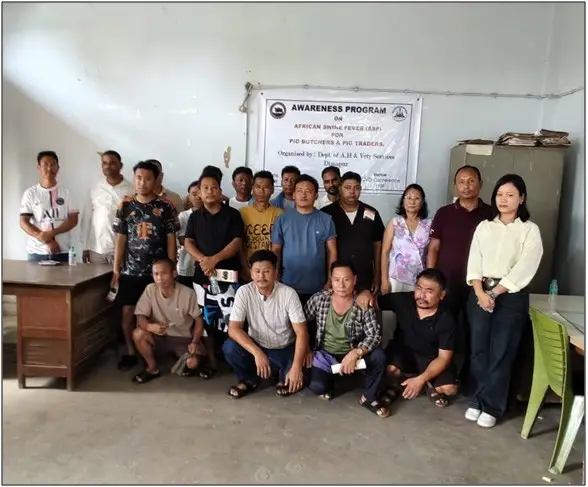
 Photo Courtesy: morungexpress
Kohima: The Department of Animal Husbandry and Veterinary Services recently gathered pig traders and butchers in Dimapur to address the threat of African Swine Fever. Held at the Chief Veterinary Officer's Conference Hall on June 4, the session focused on vital biosecurity practices needed to protect the regional pig farming industry from the highly contagious virus.
District Livestock Development Officer Dr. Vikshe Sumi clarified that while the disease has a mortality rate near 100 percent for pigs, it poses no health risk to humans. He warned that the virus spreads rapidly through contaminated materials, vehicles, and direct contact with infected animals. Dr. Sumi stated, "Sumi said the virus spreads through infected pigs, contaminated pork products, equipment, vehicles and clothing."
To mitigate these risks, officials advised traders to source livestock only from certified ASF-free farms and to avoid swill feeding, which involves using kitchen waste as pig feed. Butchers were also instructed to maintain high standards of cleanliness in slaughterhouses and meat shops. If pigs show signs of distress, such as high fever or unusual behavior, owners are required to report the cases to the nearest veterinary center immediately.
Veterinary Assistant Surgeon Dr. Akumna Tzudir provided training on proper meat hygiene, stressing the importance of fly-free stalls and personal safety protocols for handlers. With Nagaland importing nearly half of its pigs from states like Punjab, Haryana, and Karnataka, officials reiterated that all incoming stock must undergo rigorous testing and possess valid health certificates before crossing interstate borders. Surveillance teams remain active at entry points to ensure these protocols are followed to prevent further outbreaks.


Comments