 Photo Courtesy: India Today Group
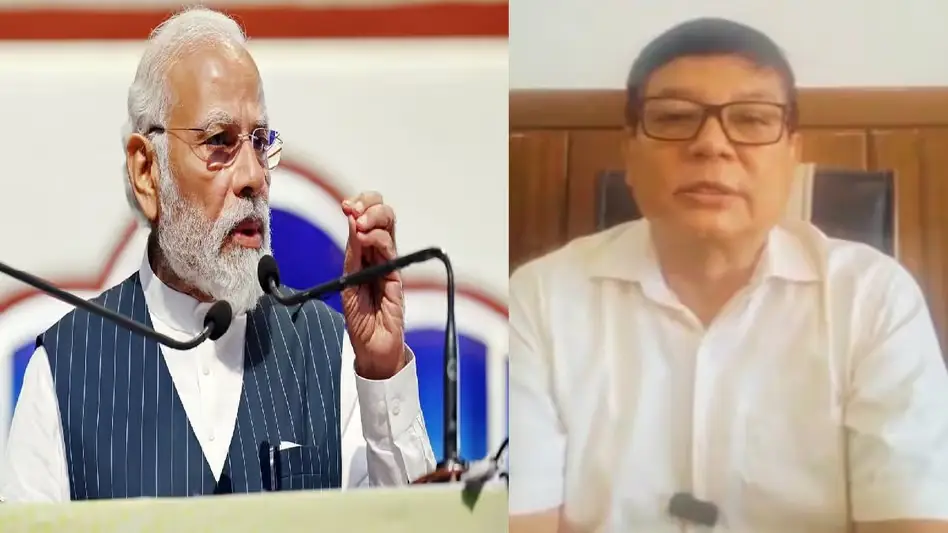
Guwahati: Senior Congress leader Debabrata Saikia is questioning the Narendra Modi government after the Prime Minister hit a 25-year milestone in office. Modi began his run as Gujarat chief minister in October 2001 and became India's longest-serving elected prime minister in June 2026. Saikia says this legacy deserves deep scrutiny.
He challenged the administration's impact on democratic institutions, civil rights, and the economy. Saikia criticized the fast-tracking of major legislation without debate, specifically pointing to the 2020 farm laws later repealed in 2021. He also scrutinized the 2019 abrogation of Article 370 in Jammu and Kashmir. The veteran politician expressed alarm over the use of harsh laws against activists, journalists, and critics. He also raised the Pegasus controversy.
Economic management remains a primary target. Saikia highlighted rising retail inflation, which hit 4.82 per cent in August 2026 with food inflation at 5.95 per cent. He questioned the impact of demonetization and criticized new merchant charges on UPI transactions over ₹2,000. He also slammed the concentration of assets among large corporate groups. "25 years in power means a time of accountability for 25 years," Saikia said.
Saikia raised concerns about the autonomy of the Enforcement Directorate, the Central Bureau of Investigation, and the Income Tax Department. He argued these agencies disproportionately target the opposition. He also addressed ethnic violence in Manipur, demanding better protection for citizens and the restoration of community trust.
In Assam, Saikia pointed to the pending National Register of Citizens, noting that 19,06,657 people were excluded when the list was published on August 31, 2019. He demanded a special rehabilitation package for families hit by the severe July 2026 floods. He also pressed for Scheduled Tribe status for the Moran, Matak, Chutia, Tai-Ahom, Koch-Rajbongshi, and Tea Tribes.
The Congress leader called for audits of public infrastructure and transparency in political funding. He invoked Atal Bihari Vajpayee’s 2002 thoughts on Rajdharma to criticize religious polarization. Finally, he slammed the Prime Minister for avoiding open press conferences. He believes these issues define the true cost of two and a half decades of leadership.




Comments