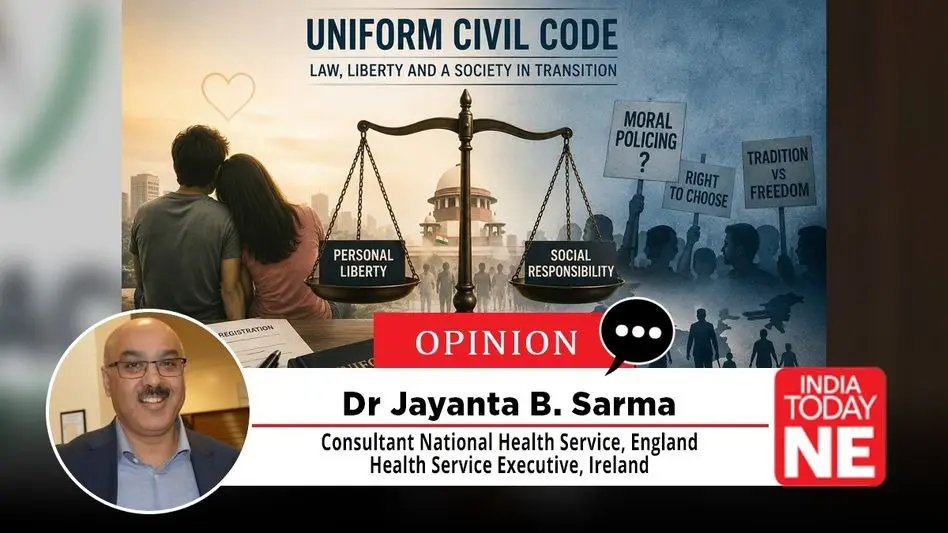
 Photo Courtesy: India Today Group
Guwahati: Assam's push for a Uniform Civil Code, specifically the requirement for couples to formally register live-in relationships, has triggered a national conversation about social responsibility versus government intrusion. While the Indian Supreme Court has already affirmed the rights of consenting adults to live together, the current debate centers on whether the state has the authority to mandate documentation for these unions.
Supporters of the proposal argue that formal registration serves as a necessary safety net in a society still deeply anchored to marriage for property rights, inheritance, and social stability. In this view, documentation provides legal protection for individuals, particularly women, who might otherwise face abandonment or financial exploitation without proof of their partnership. Proponents suggest that registration could mitigate the risks inherent in informal unions by establishing clear evidentiary support for both parties.
Critics remain skeptical, viewing the measure as a form of moral policing that ignores the evolving nature of personal liberty. However, the move draws comparisons to global shifts in legal systems where nations have adopted civil partnerships to offer rights related to housing, child custody, and domestic protections for those outside traditional marriage. As India navigates these changes, the proposal forces a difficult confrontation between traditional institutions and the realities of a modern, rapidly shifting social landscape.






Comments