 Photo Courtesy: nenow
Itanagar: The 2,000 MW Subansiri Lower Hydroelectric Project hits full stride. Builders expect project completion by March next year. Currently, four of the eight generating units run at full capacity. The fifth unit joins the grid in August. The sixth follows two months later. Officials aim to use the massive 1,365 million cubic metre reservoir to soak up seasonal surges.
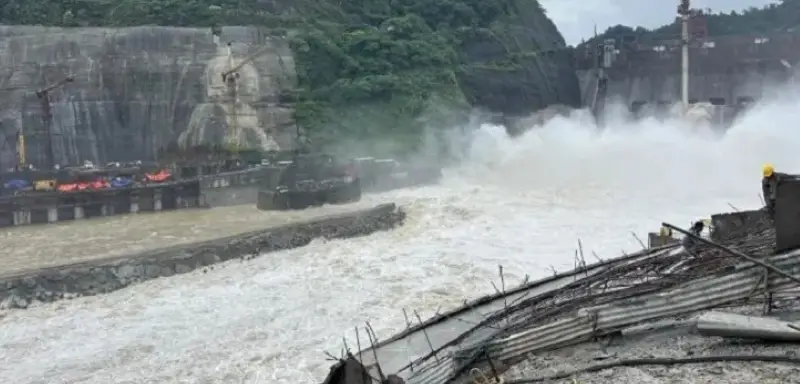
A July 13 surge tested these defenses. Inflows spiked from 7,000 to 13,000 cumecs by 10:45 am. The dam managed to throttle that outflow down to 12,000 cumecs by 11 am. This delay helped mitigate immediate downstream danger. Early warning sensors in Daporijo and Tamen triggered sirens at midnight. This gave locals six hours to brace for the rising river.
Project leaders note the Subansiri riverbed safely handles 7,000 cumecs. During monsoon months, the top 15 metres of the reservoir remain empty to act as a buffer. This helps hold excess water during standard storms. Officials remain realistic about extreme weather. They admitted, "the flood cushion is designed to handle normal flood conditions and cannot prevent flooding caused by exceptionally heavy rainfall."
Operations shift during winter months. Inflows drop low. Operators shut down most units during the day to build up volume. Power generation ramps up during peak demand hours between 5 pm and 10 pm. This strategy contrasts with smaller dams like Bhutan’s Kurichu or the Ranganadi project. Those sites lack the storage space to hold back intense rain, often forcing rapid spillway releases. While the project project officials claim recent moderation helped local communities, they warn that decade-scale storms still pose a flood threat regardless of reservoir regulation.







Comments