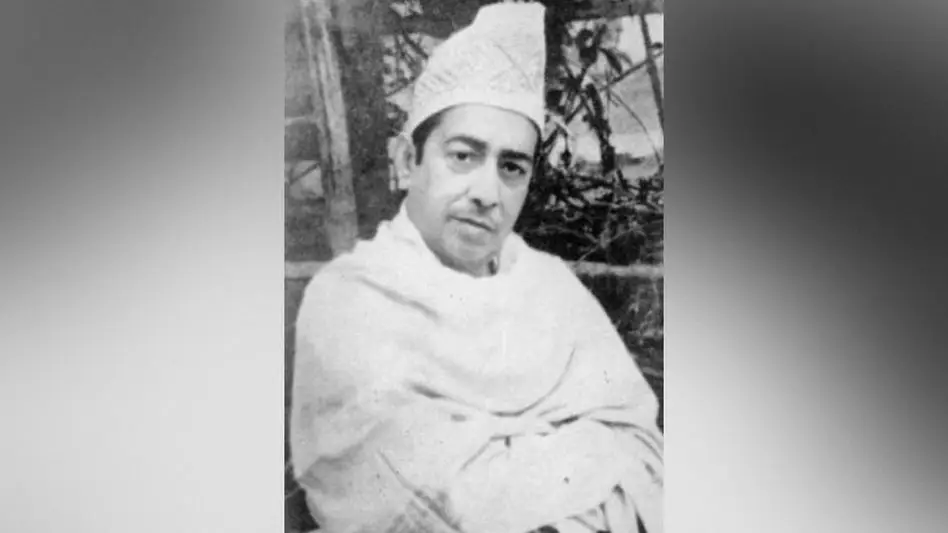
 Photo Courtesy: India Today Group
Guwahati: June 7 marked the death anniversary of Parvati Prasad Barua, an influential figure whose work redefined the landscape of Assamese music, cinema, and theatre. Known as the Geetikobi, or lyrical poet of Assam, Barua left behind a legacy that continues to shape the cultural identity of the region over sixty years after his passing.
Born in 1904 into a family of tea planters and intellectuals, Barua was heavily influenced by literature and music from a young age. His time spent studying in Kolkata, particularly his exposure to the works of Rabindranath Tagore, helped clarify his ambition to establish a unique Assamese musical identity. He achieved this by blending original lyrical poetry with folk melodies and indigenous traditions rather than relying on external influences.
Barua was a versatile creator. In 1940, he produced, directed, and starred in the fourth Assamese feature film, Rupohi. He also founded platforms like the magazine Jhupitora and the literary organization Bimalalaya to nurture young writers. Beyond his creative output, he pioneered the Jonaki Mel, an open community gathering for performance that remains a cultural staple in Assam today. Reflecting on his multifaceted impact, supporters often describe him as a foundational figure who built lasting institutions. During the 1962 Sino-Indian War, he famously joined forces with Dr. Bhupen Hazarika to perform patriotic songs across Guwahati to uplift the public spirit.
Following a long period of declining health, Barua died on June 7, 1964, after suffering a series of strokes. On this year's anniversary of his death, Assam Chief Minister Himanta Biswa Sarma paid tribute to him on social media, describing him as a visionary who made "invaluable contributions to Assamese literature, music, theatre and cinema." His literary collections, including Gungunani and Luiti, remain celebrated works that anchor his status as a permanent cultural icon.





Comments