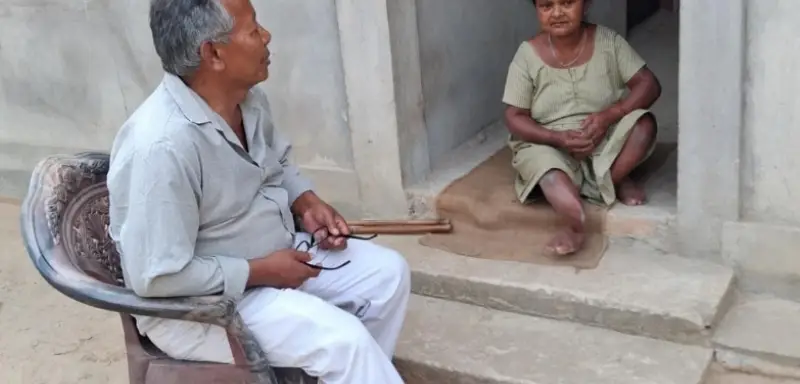
 Photo Courtesy: nenow
Guwahati: Groundwater contaminated with excessive fluoride is causing a long-standing health crisis across Assam. The contamination, which stems from local Precambrian rocks that naturally leach minerals into the water supply, has left many residents suffering from debilitating conditions like skeletal and dental fluorosis. Despite confirmation from the Ministry of Jal Shakti that fluoride levels exceed safe limits in at least nine districts, comprehensive official data on the scope of the crisis remains scarce.
Dr. Jutika Ojah of the Gauhati Medical College and Hospital explains the medical impact, noting that while minor amounts of fluoride can be beneficial, high levels cause significant damage. “[Excess] fluoride affects humans in three ways — dental fluorosis, whose symptoms are discolouration, mottling, and pitting [of teeth]; skeletal fluorosis, whose symptoms are joint pain, stiffness, and deformities; and non-skeletal symptoms such as gastrointestinal issues and muscle weakness,” says Dr. Ojah.
Local social worker Dharani Saikia has documented the spread of the disease for over two decades, particularly in the Nagaon, Hojai, and Karbi Anglong districts. In affected areas, children and adults alike endure lifelong health struggles, ranging from joint deformities to chronic pain. While the Public Health Engineering Department has introduced the Jal Jeevan Mission to provide safer piped water from springs and surface sources, the program faces significant operational hurdles. Frequent power outages often force residents to return to contaminated groundwater wells, leaving them vulnerable to recurring exposure.
Local officials are attempting to increase awareness, urging citizens to shift away from groundwater toward safer surface water sources like rivers and springs. However, as medical professionals point out, there is no cure for fluorosis. Current efforts are largely restricted to supportive care and managing exposure, even as researchers explore new chemical treatment tools to filter out harmful minerals from drinking water.






Comments