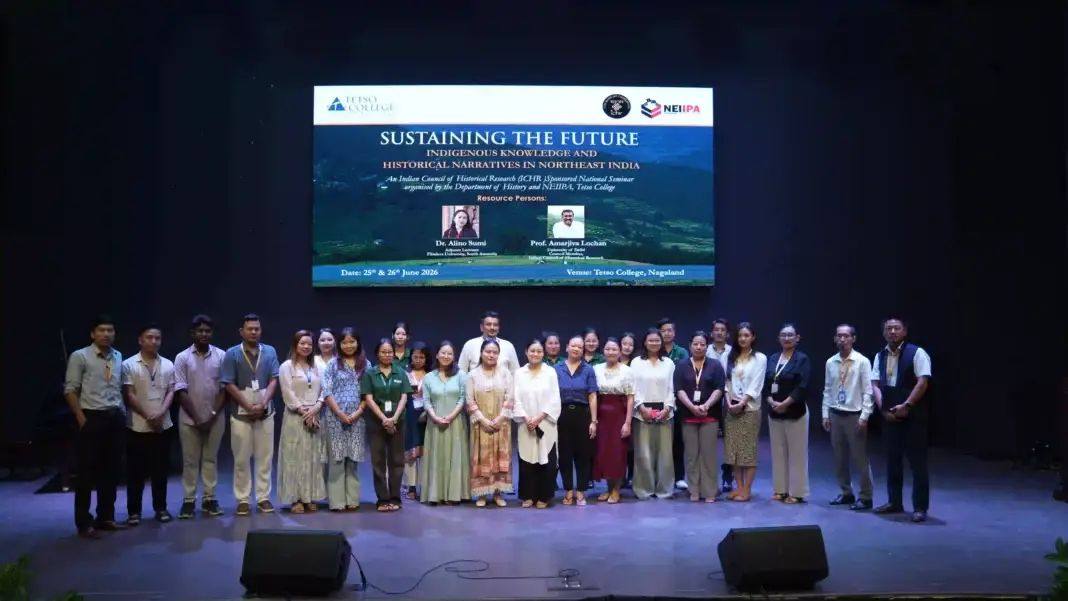
 Photo Courtesy: nagalandpost
Kohima: Academic experts recently gathered in Dimapur to push for the preservation of indigenous wisdom. The two-day seminar, sponsored by the Indian Council of Historical Research and hosted by Tetso College, focused on keeping historical narratives alive. It brought researchers together to argue that traditional practices are not relics of the past. Instead, they provide active solutions for current environmental and cultural struggles.
Professor Amarjiva Lochan of the University of Delhi opened the event by highlighting the deep roots of sustainable living. He pointed to the Covid-19 pandemic as a clear example of why traditional medicine still matters today. He urged researchers to get into the field before these stories vanish. "Modernity should not come at the expense of indigenous identities, languages and customary practices," Lochan said.
Dr. Hewasa L. Khing challenged scholars to stop relying on outsiders to document their lives. She pushed for decolonizing history through the Northeast India Indigenous People’s Archive. This initiative digitizes folklore, traditional recipes, and local memories. During the final sessions, Dr. Alino Sumi of Flinders University argued that local communities must control their own narratives. She insisted that indigenous knowledge is a dynamic system, lived daily rather than taught in formal classrooms.
Participants presented dozens of papers covering subjects like Naga architecture, traditional governance, and jhum cultivation. The event concluded with cultural performances by students, reinforcing the focus on heritage. Researchers left with a clear mandate to treat oral histories and community memories with the same weight as formal academic studies.

Comments