 Photo Courtesy: India Today Group
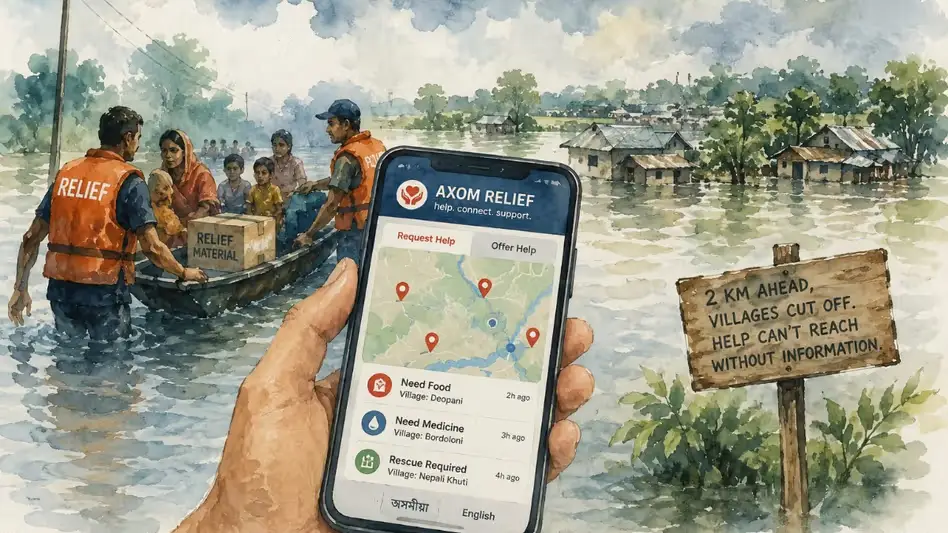
Guwahati: When devastating floods hit Upper Assam this July, relief teams repeatedly converged on accessible roads while villages just two kilometers away remained submerged and ignored. Tech entrepreneur Tinku M Kaushik noticed this pattern by the third week of July. "The problem in Assam isn't a lack of human empathy or resources," Kaushik says. "It's a communication gap."
By early August, the Assam State Disaster Management Authority reported 99 deaths. Over 1.5 lakh people across thirteen districts required assistance. Residents reported that cell broadcast alerts failed to warn them before the water rose. When Tinku M Kaushik contacted software engineer Ankita Bhagawati to find a solution, she initially resisted. She soon learned that existing WhatsApp groups were too chaotic to manage the flood of requests.
Bhagawati recruited Mrigakshee K, Tonmoy Mahanta, and Nikumoni Borah to build a fix. The team launched the Axom Relief platform within 24 hours of the initial idea. They bypassed sign-ups to ensure ease of use for victims with poor internet. The platform features a live location map and supports Assamese. It has since logged nearly 150 relief registrations.
The platform helps volunteers determine if an area needs boats or supplies, preventing wasted effort. In one instance, a girl in Mautgaon, Simaluguri, requested sanitary items and cooking utensils. The team coordinated delivery, and help arrived within three days. Bhagawati noted, "That moment, I realised my development skills were actually helping someone. It was emotional."
The developers also created Jabor, a separate tool for reporting civic waste and garbage. It tags officials on social media to force accountability. Bhagawati admits these tools cannot force authorities to act. They merely make hidden problems visible. The question of what happens after a request leaves a phone remains. The platform serves as a vital, if limited, bridge between those in need and those with the power to act.




Comments