 Photo Courtesy: nenow
Guwahati: Unplanned construction in India’s northeastern hill states is pushing Assam toward catastrophe. Arup Kumar Sarma, a civil engineering professor at IIT Guwahati, claims road projects and mining are supercharging downstream flooding. These projects move forward without hydrological studies or ecological safeguards. Deforestation has stripped the land of its natural defenses.
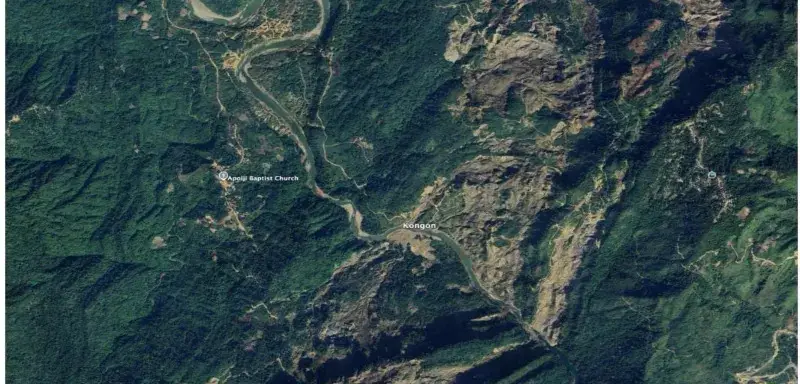
Sarma notes the impact is widespread. Deforestation in Nagaland hurts Sibsagar and Jorhat. Arunachal Pradesh activities hit Dhemaji and Dibrugarh. Meghalaya’s landscape changes directly punish Khanapara, Jorabat, and Guwahati. Satellite imagery confirms the damage. Sediment loads choke riverbeds, killing their ability to carry water.
“Developmental activities like construction of road or other infrastructures, extensive deforestation for mining or other developmental work in the hilly area, if done without detail hydrological study and without taking proper care for recreating vegetative cover, can alter the flood situation significantly at downstream, particularly when high intensity rainfall occurs in the hilly terrain causing high water and sediment yield,” Sarma said.
Bad engineering makes things worse. Culverts and road crossings often lack the capacity to handle heavy flows. This traps water, causing floods and landslides. Changing weather patterns amplify the danger. Orographic lift moves cyclonic moisture from the Bay of Bengal toward Nagaland and Manipur. When this hits saturated, deforested soil, the water yield spikes.
Karbi Anglong and Dima Hasao face similar threats. The Kapili reservoir adds another layer of risk. Operators must release excess water when levels hit capacity. Sarma advocates for a coordinated committee involving academics, reservoir authorities, and state officials. Better data is essential. He suggests installing rain gauges and using drones to monitor critical areas. Immediate reforestation through ecological management practices could help stabilize the soil, but the window to act is closing.




Comments