 Photo Courtesy: nagalandpost
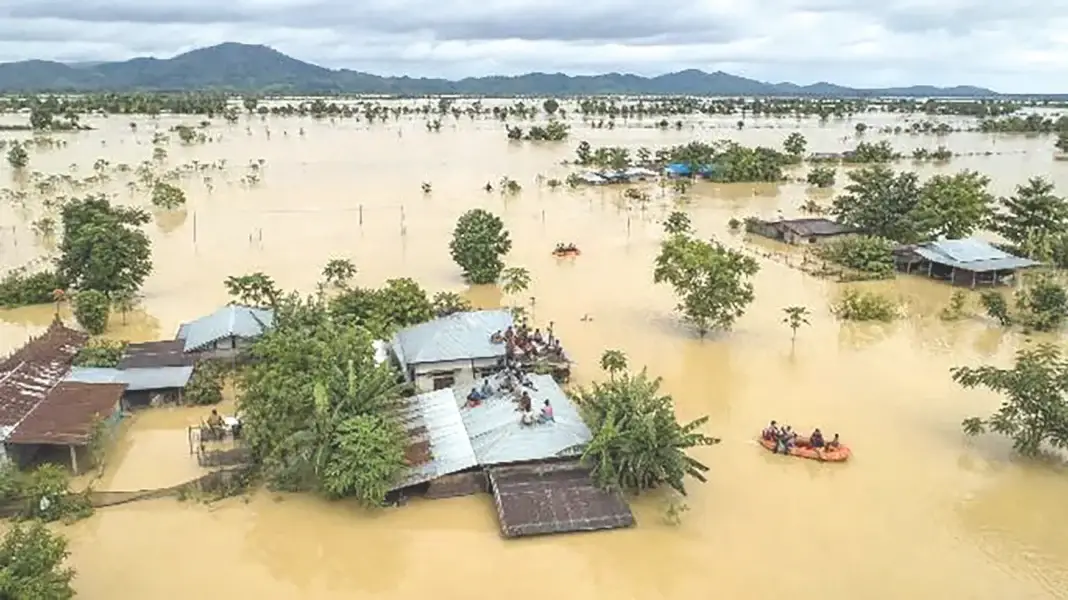
Kohima: Scientific data refutes claims that Nagaland rains triggered the recent, catastrophic floods in Upper Assam. The deluge hit Jorhat, Sivasagar, and Charaideo districts in July 2026. The Konyak Union challenged these accusations on July 31. They pushed back against social media theories blaming a supposed cloudburst in Nagaland for the disaster.
Assam Chief Minister Himanta Biswa Sarma initially suggested a cloudburst caused the flood. He later retracted that statement after the India Meteorological Department confirmed no such event occurred. The minister previously blamed Meghalaya rainfall for Guwahati flooding as well. People want someone to blame. The reality is far more complex.
Hydrology proves that high ground is not solely responsible for lowland inundation. The region suffered a massive weather event. Charaideo recorded rainfall 436 percent above normal levels. Saturated plains could not soak up the extra water. Experts explain, "Floods are system-wide phenomena that arise from a combination of meteorological events, topography, land use, and infrastructure across an entire drainage basin."
Urbanization in the plains worsened the damage. Roads and roofs replaced soil and plants. This creates impervious surfaces that speed up runoff. Drains proved too small to handle the volume. Developers encroached on wetlands and floodplains. These areas once acted as natural buffers for heavy water flow.
Effective management requires a regional approach. Hills and plains are linked. Success needs reforestation in the mountains. Officials must strengthen embankments and restore wetlands in the plains. Cross-border cooperation is the only way to stop future disasters.





Comments