 Photo Courtesy: nagalandpost
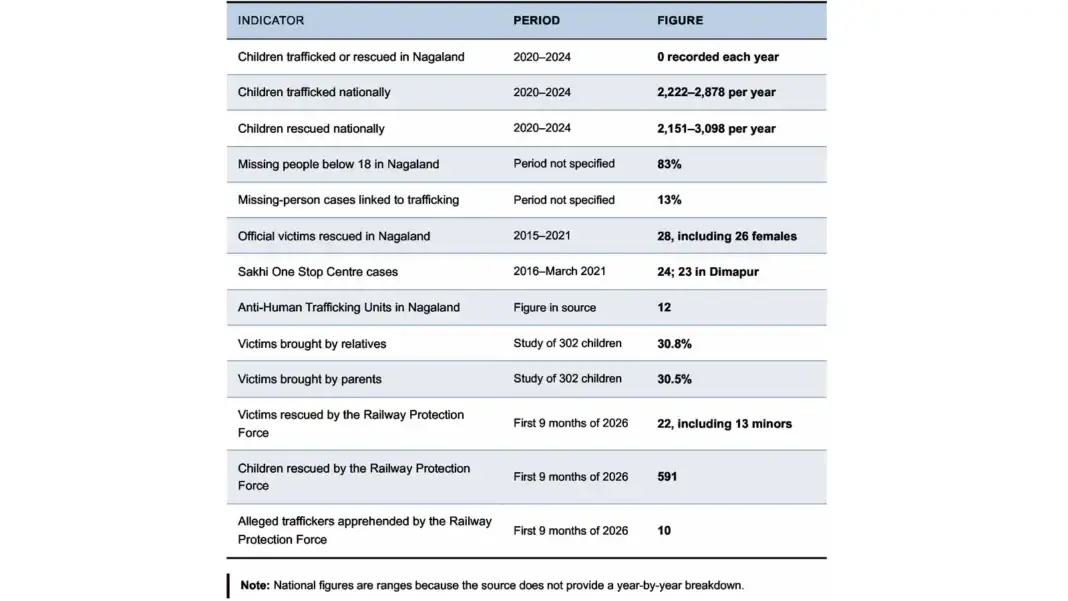
Kohima: Nagaland officially recorded zero child trafficking cases between 2020 and 2024. Data from the Ministry of Home Affairs, presented to the Lok Sabha on August 4, 2026, claims a perfect record. Local officials ignore reality. Police operations, arrests, and railway station rescues prove that trafficking remains a persistent threat across the state.
National data shows thousands of annual trafficking cases, yet Nagaland’s Anti-Human Trafficking Units logged nothing. Discrepancies abound. Statistics from Dimapur indicate 83 percent of missing persons were minors, with 13 percent of those cases linked to trafficking. Between 2015 and 2021, only 28 victims were officially recorded as rescued. Sakhi One Stop Centres logged 24 cases between 2016 and March 2021, with 23 occurring in Dimapur alone.
The system is failing. Recent field reports expose the record-keeping gap. Kohima Police rescued a minor from a hotel in August 2025 and arrested nine people, including a network mastermind. Two months prior, authorities arrested a Dimapur man for trafficking two girls to Raipur using social media job scams. Northeast Frontier Railway teams rescued 22 trafficking victims, including 13 minors, within the first nine months of 2026.
A V.V. Giri National Labour Institute study of 302 children reveals that families are often complicit. Relatives and parents were responsible for sending 61.3 percent of victims into exploitation. Poverty fuels this cycle. Traffickers use promises of education or better lives to lure children into domestic labour, commercial sex, or illegal adoption. Dimapur acts as a major transit point, with routes stretching to Dubai. Recruiters use digital platforms to find targets, often deleting evidence afterward.
The current lack of data points to administrative failure. "The real tragedy is not merely that children are being trafficked, but that they may remain invisible in the very records meant to safeguard them." Officials must address the intersection of cybercrime, forced labour, and financial fraud. Stigma and trauma stop victims from coming forward. Rehabilitation efforts remain thin. The state must reconcile police reports, missing-person registers, and rescue data to actually protect the vulnerable.






Comments