 Photo Courtesy: nenow
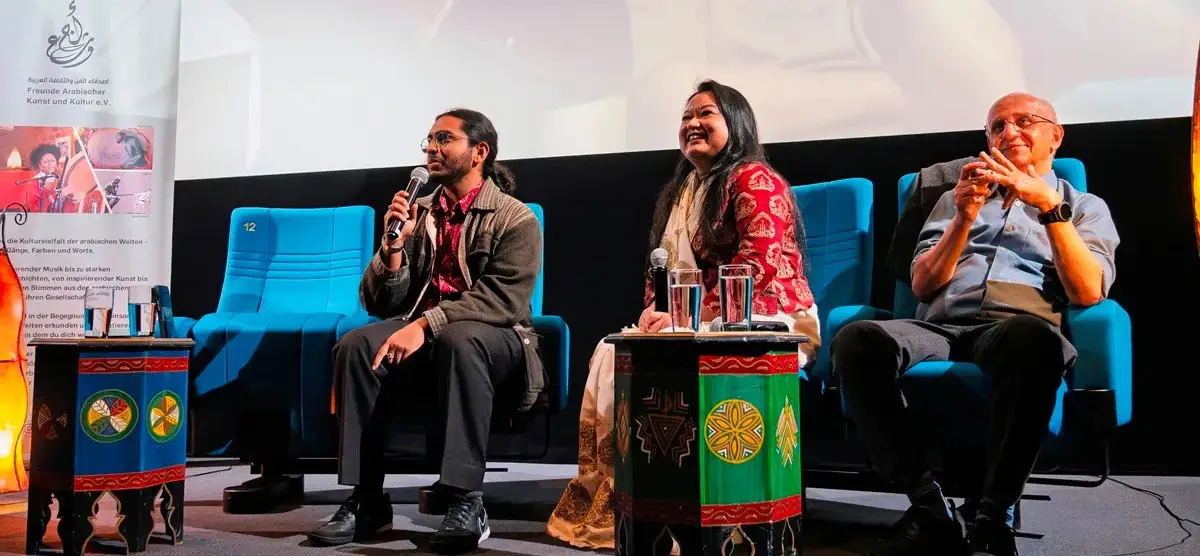
Guwahati: KangboAloti, a Karbi-language film from Assam, headlined the heARTblicke International Film Festival in Heidelberg, Germany, on 17 October. Directed by Khanjan Kishore Nath, the feature film explores the impact of armed conflict and political neglect in the Karbi Anglong hills. Despite the language barrier, the German audience connected with the story of Longsing, a young militant played by Harmony Bey. The film, which runs for 108 minutes without songs, captures how fear and state control embed themselves into everyday life.
The screening took place at Karlstorkino, a venue known for supporting politically charged works. The festival, themed Stories Tell Us, featured projects from across the globe, including films from India, Tunisia, Egypt, and the United States. KangboAloti follows Longsing as he infiltrates a village to recruit support for an insurgency, where he encounters a teacher named Birensing. Nath, who does not speak Karbi, explained his approach to the film by noting, "Without fluency in the language, he relied on what could be seen and staged: the landscape, physical spaces, silence, and the ways people move and touch one another."
Following the screening, a panel titled Histories of the Unresolved examined the broader implications of the film. The discussion featured director Khanjan Kishore Nath, activist Harsh Mander, writer Tonmoyee Rani Neog, and moderator Ayon Mukherjee. Panelists addressed the persistent influence of the Armed Forces (Special Powers) Act, or AFSPA, and the ongoing struggle for indigenous autonomy. Producer Ranjit Teron, editor Sersumbi Terang, and actor Harmony Bey joined the panel via an online link to discuss the project.
KangboAloti has already secured wins at the Indian Film Festival of Stuttgart and appeared at the Kolkata and Bengaluru International Film Festivals. In 2025, the London-based UK China Film Collab acquired its distribution rights at Cannes. Although the film premiered commercially in Karbi Anglong on 17 October, it highlights the recurring struggle of regional cinema to reach domestic audiences outside of festival circuits. The production serves as a stark reminder of the human cost of unresolved history in India’s Northeast.



Comments