 Photo Courtesy: nenow
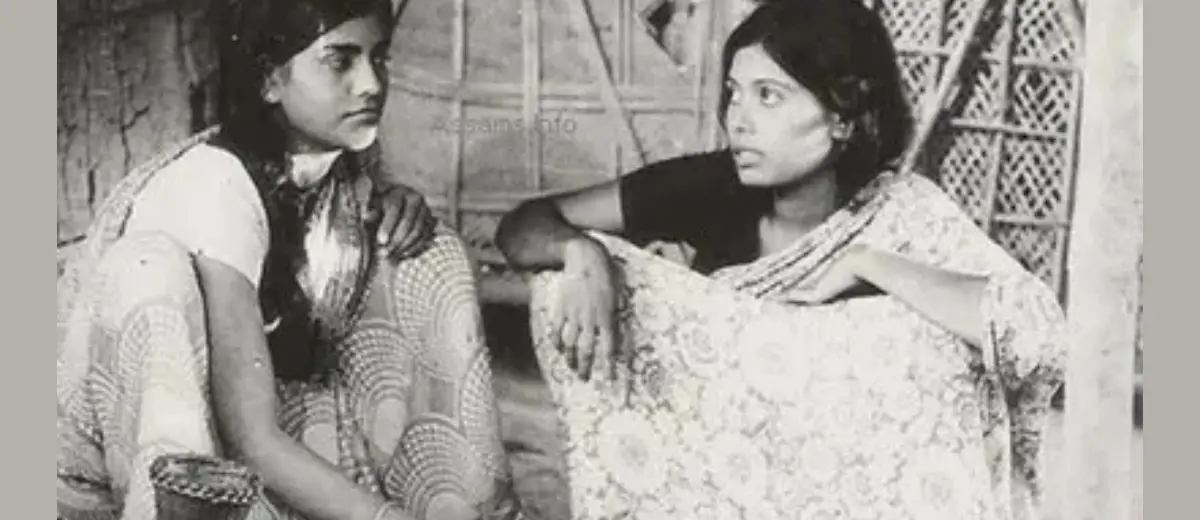
Guwahati: Bhabendra Nath Saikia directed and produced the black and white classic Sandhyaraag in 1977. It marked a sharp shift from melodrama toward realist filmmaking. The film snagged the Silver Medal for Best Assamese Film at the 25th National Film Awards. It was the first Assamese entry showcased in the Indian Panorama. Indukalpa Hazarika handled cinematography while playwright Arun Sarma joined the cast.
The story stems from Saikia’s own writing, Banprastha. It follows Putali, a widow in rural Assam who loses her husband in an accident. Desperation forces her to send daughters Saru and Toru to the city for domestic work. Survival has a steep price. Saru adapts to urban life, but Toru faces sexual harassment from her employer’s son. Employers eventually cast the sisters back to the village, viewing them as liabilities once they reach marriageable age.
Displacement defines their return. Years in the city left the sisters unable to weave, harvest paddy, or pound rice. They are stranded between two worlds. Saru looks to a driver named Moti for an exit, but the film’s ending highlights the crushing weight of their circumstances. One critic noted, "Whenever I watch Bhabendra Nath Saikia’s films, I am reminded, in certain respects, of Adoor Gopalakrishnan’s cinema, particularly its patience, observation and attention to ordinary lives."
Runi Devi plays the central role. Mamani Das shines as the young heroine alongside other natural child performers. The film remains a subject of academic study more than forty years later. You can find clips on YouTube or watch the full film via the Pragplay app. It stays relevant today because issues like economic vulnerability and the rural urban divide still haunt the region.




Comments