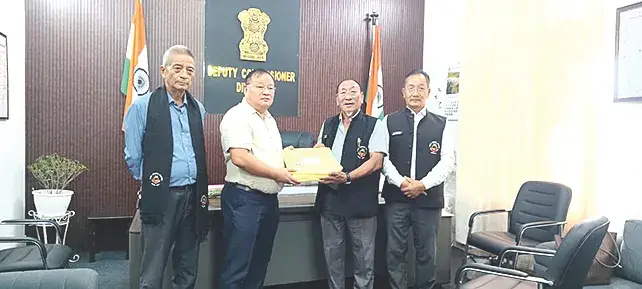
 Photo Courtesy: nagalandpost
Kohima: The Naga Council Dimapur and its repeal committee served a fresh demand to the deputy commissioner on Tuesday. They want the Nagaland Liquor Total Prohibition Act of 1989 scrapped in Dimapur. The council sent this request to the chief minister and top state officials after months of silence from the government. NCD president GK Rengma said the law remains ineffective after 37 years. "The NLTP Act, enacted in 1989, had completed 37 years but liquor remained widely available in Dimapur despite the prohibition," Rengma stated.
Liquor flows freely. The NCD vigilance committee found over 2,000 illegal outlets scattered across Chümoukedima Gate 2, New Field Gate, Manja Gate, Purana Bazar, and various other key areas. This count ignores local restaurants entirely. Dealers sell booze around the clock in residential zones. Leaders argue that prohibition causes unnecessary deaths linked to toxic, bootlegged spirits. They claim regulation ensures quality and keeps the state in control.
The CSOs propose a one-year trial. Shops would operate from 11 a.m. to 7:30 p.m. with strict dry days. They want to limit sales to customers aged 23 or older, capped at two bottles per person through Aadhaar-based checks. NCD general secretary LK Peter Anal said the proposal includes census data and a clear roadmap for state officials. The group has consulted with church leaders but insists the government holds the burden of regulation.
Deputy Commissioner Dr. Tinojongshi Chang confirmed the documents are moving up the chain. No deadline exists for a response. The council plans to meet and decide their next move if the state refuses to act again.
Updated at 8th October 2026 at 1:48am
The push to drop the ban is backed by a broad coalition including the Dimapur Naga Students Union, Naga Women Hoho, various tribal councils, and the local business community. These groups argue that shifting to a regulated, taxation-based model could rake in between 100 and 200 crore rupees for the state annually. They point to neighboring Assam, where excise revenue hits up to 2,000 crore rupees, as the benchmark for lost opportunity.
The CSOs are demanding that if the act is lifted, the government must exclusively run all retail outlets, cutting out private contracts. They also want a significant slice of that tax haul funneled directly into rehabilitation centers, public health initiatives, and school-based addiction programs. The coalition proposed a multi-stakeholder committee, including church leaders and law enforcement, to manage the transition and keep the trade on a tight leash.
This renewed effort follows a string of consultations held between late 2025 and January 2026. The NCD also cited a 2022 study from Dimapur Government College titled The Paradox of the NLTP Act, 1989, to support their claim that the prohibition has only fueled a black market while choking off potential income.
Updated at 8th October 2026 at 9:47am
The NCD pointed to a failed paper trail regarding the ban. They submitted a memorandum to the state government and governor on November 20, 2023, via the Dimapur United Colony Council Federation. The state assembly debated the issue in August 2024, but officials stalled on taking action.
The NCD also noted that illegal liquor trade hotspots include the Dhansiri River, Super Market, Nagarjan, Burma Camp, New Market, and the Industrial Estate.
Separately, the council asked the Dimapur police to push back the October 11 deadline for vehicle document verification. NCD officials claim current processes force long, snarling queues at the transport office in Purana Bazaar, creating massive headaches for school children and families during the exam season. They requested the police open additional inspection centers at the old district transport office in Chümoukedima to clear the backlog.


Comments