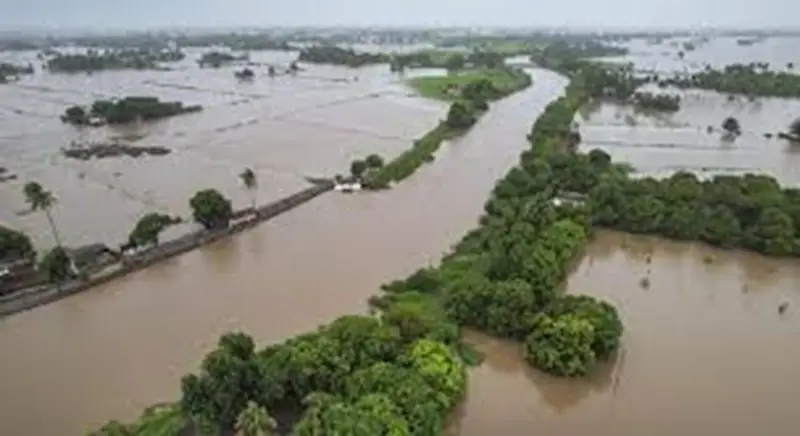
 Photo Courtesy: nenews
Guwahati: Assam faces a worsening flood crisis as climate change, shifting river systems, and human expansion collide. A new report from Delhi-based Climate Trends confirms that the state is more vulnerable than ever. Roughly 40 percent of Assam is flood-prone. The sediment-heavy Brahmaputra River constantly reshapes its own floodplains while eroding riverbanks.
This year, persistent monsoon systems parked over the Bay of Bengal fueled the destruction. Mahesh Palawat, vice president at Skymet Weather, noted that these systems stayed over the ocean throughout July. This provided a steady supply of moisture to the Northeast. It triggered heavy rainfall and occasional cloudbursts.
Warmer air holds more moisture. For every one degree Celsius increase, the atmosphere retains seven percent more water vapour. This trend drives intense rainfall events. Meanwhile, rising temperatures accelerate snow and glacier melt in the eastern Himalayas. This increases water volume in the Brahmaputra. The combination leads to higher flood peaks and longer periods of standing water.
Human activity further limits the ability of the land to absorb water. Deforestation, rapid urbanisation, and poor land-use planning increase surface runoff. These factors compound the natural threat. Experts point out that although flood forecasting has improved, sparse observations, poor data sharing, and weak transboundary coordination limit its effectiveness.
Climate models predict more intense flooding across the Indus-Ganga-Brahmaputra basins between 2020 and 2059. Assam holds 36 percent of the basin area in India, leaving it on the front lines. The shift creates severe risks for agriculture, soil stability, and wetlands.
Dr. Akshay Deoras, a research scientist at the University of Reading, noted that rainfall patterns have become volatile. "We have been witnessing sharp intraseasonal variations in the rainfall patterns; either the rainfall is very intense or break-monsoon periods are quite long, triggering extreme weather events," he said. Deoras insists that flood preparedness must evolve to track these changing weather patterns rather than just measuring total rainfall amounts.





Comments