 Photo Courtesy: nenow
Guwahati: Assamese Muslim weddings follow a specific set of traditions. These rituals define the culture of the community. It all begins with the Juron or Murot Tel Dia. Relatives from the groom’s side visit the bride to apply oil and comb her hair. They bring gold, sweets, pithas, fruits, clothes, betel nuts, haldi, and mehendi.
The day before the Nikah, the couple bathes at their own homes. Women sing biya geet during this Haldi ceremony. The formal Nikah follows. The groom travels to the bride’s home with his family and a Qazi. The Qazi records the contract and verifies the consent of both parties. After the prayer, the father hands over his daughter during the Khopidia, also known as kanyadan.
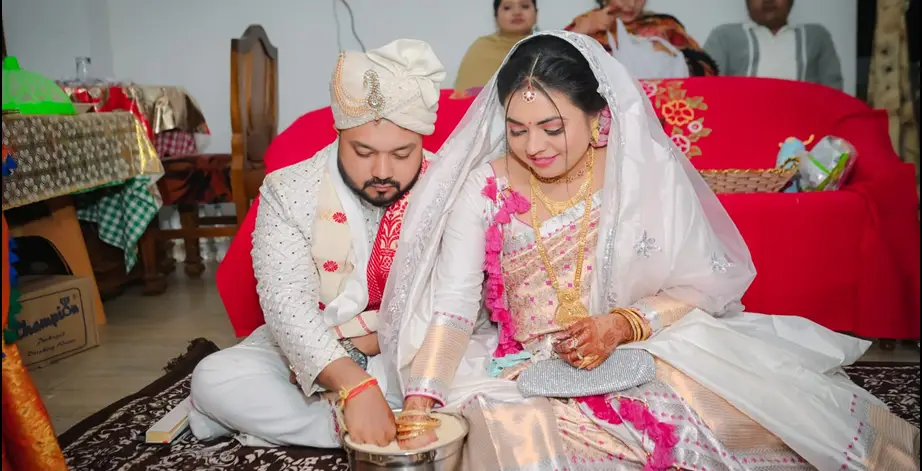
Groom’s family members distribute sweets to the guests. Upon arriving at the groom's home, the bride faces the Anguthi Bisora. The couple hunts for a ring hidden inside a bowl of rice. Relatives offer the newlyweds curd and sweets. The bride then returns to her parents' house.
The groom returns for the Athmongola or Neuta to bring his wife home permanently. The bride’s family prepares eight dishes for the guests. "Kol posola is a mandatory dish that should be prepared on the day of neuta or athmongola." The bride must wear the same mekhela chador provided by the groom’s family during the Nikah. Finally, the couple hosts a Walima reception. Both wear traditional clothing while greeting their guests.



Comments