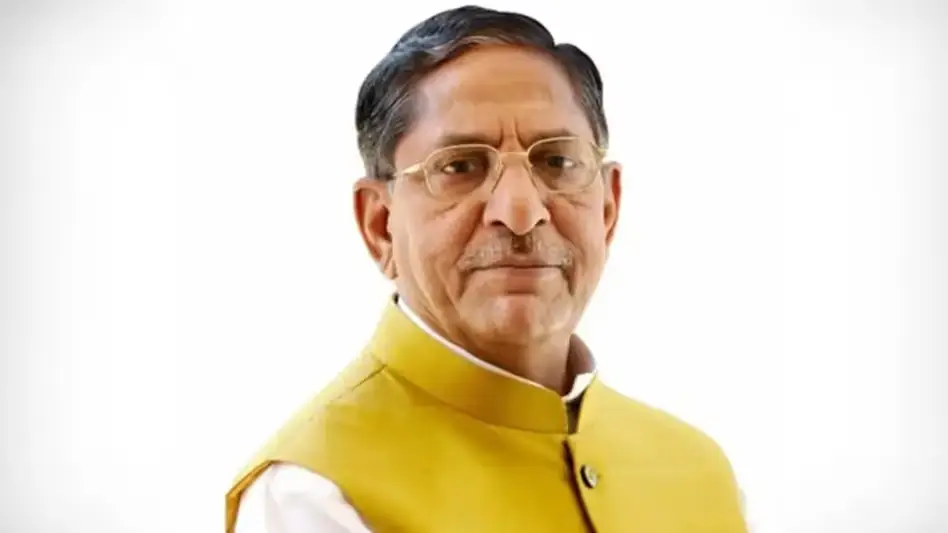
 Photo Courtesy: India Today Group
Kohima: Nagaland Governor Nand Kishore Yadav recently visited Tuensang and Longleng to signal support for the Frontier Nagaland Territorial Authority (FNTA). He called the deal an important milestone for the region. It seeks to balance peace with local growth.
The agreement was signed February 5 in New Delhi by the Centre, the state government, and the Eastern Nagaland People's Organisation. It provides special administrative, legislative, and financial powers. The Nagaland Assembly passed the enabling bill in September 2026. Six districts fall under this mandate: Mon, Tuensang, Kiphire, Longleng, Noklak, and Shamator.
Yadav met with officials and local stakeholders to survey infrastructure gaps. He noted that the region holds massive potential in agriculture, tourism, and entrepreneurship. Better technology and road access remain high priorities. He urged farmers and youth to embrace digital marketing and modern practices to scale their reach. During his stop in Longleng, he specifically demanded improvements to healthcare, communication networks, and regional market access.
Local leadership pushed back on current realities. Phom People's Council president Y B Angam pointed to failing roads and chronic marketing constraints. He pushed for finishing the district hospital and the NECTAR Lighthouse project. Addressing the stakeholders, the Governor said, "Development must go hand in hand with the preservation of indigenous traditions, languages, customs, music, crafts and community institutions."
The Governor lauded tribal bodies, churches, and security forces for keeping the peace. He pressed for greater transparency and community trust in government projects. High-level representatives including ENPO president A Chingmak and MLA A Pongshi Phom also participated in the discussions. The administration now pivots toward full implementation of the special arrangement.
Updated at 9th October 2026 at 3:00am
Yadav positioned the FNTA agreement as a protector of state unity and integrity, aiming to preserve the region’s status within the Naga political family. He noted that before the state formed in 1963, Tuensang served as a vital meeting point for communities under the Naga Hills-Tuensang Area, forming the bedrock of the state’s current administrative evolution.
During his stop in Tuensang, the Governor made it clear that while he wants modernization, it cannot come at the expense of local identity. He pushed for development that keeps indigenous languages, music, and customs intact rather than washing them away. He also challenged local youth to shift from passive observers to active partners by pursuing higher education and specific skill sets to fuel the local economy.
The governor's visit included departmental briefings, with officials from the Health and Family Welfare and Rural Development departments presenting data on ongoing work. Additional local input came from CKS vice-president Sipong Chang and USLP joint secretary T. Bendang Dhongrü during the Tuensang session.
Updated at 9th October 2026 at 5:46am
Yadav positioned the FNTA agreement as a protector of state unity and integrity, aiming to preserve the region’s status within the Naga political family. He noted that before the state formed in 1963, Tuensang served as a vital meeting point for communities under the Naga Hills-Tuensang Area, forming the bedrock of the state’s current administrative evolution.
During his visit to Tuensang, the Governor sat through departmental briefings where officials from the Health and Family Welfare and Rural Development departments presented data on ongoing projects. He emphasized that governance gains weight when constitutional institutions keep direct lines to people at the grassroots level. Additional local input during the session came from CKS vice-president Sipong Chang and USLP joint secretary T. Bendang Dhongru.
Addressing the specific potential of the region, the Governor pointed to forest-based livelihoods and horticulture as prime areas for economic expansion. He stated that cultural heritage is a foundation for sustainable development rather than an obstacle to it.
Updated at 9th October 2026 at 10:15am
Yadav signaled that the FNTA deal is meant to keep the state’s unity tight, aiming to protect the region’s status inside the wider Naga political family. He pointed out that long before the state arrived in 1963, Tuensang served as a central meeting point for communities under the Naga Hills-Tuensang Area, acting as the foundation for how the state grew into its current form.
During his visit, the Governor sat through briefings from the Health and Family Welfare and Rural Development departments. He argued that governing carries real weight only when constitutional offices keep direct lines open to people at the grassroots level. He specifically highlighted forest-based livelihoods and horticulture as primary sectors for growth, noting that cultural heritage should serve as a base for sustainable building rather than a barrier to progress.
Updated at 9th October 2026 at 5:48pm
Yadav framed the FNTA as a stabilizer for state unity, noting that Tuensang served as a hub for the Naga Hills-Tuensang Area before Nagaland formed in 1963. He argued that the district remains a bedrock for the state's administrative evolution, acting as a historical meeting point for various communities.
Beyond general growth, the Governor pointed to forest-based livelihoods and horticulture as specific drivers for the regional economy. He challenged the idea that cultural heritage slows progress, arguing that traditional knowledge and customs provide a base for sustainable building rather than a barrier. During his visits, departments including PWD, Agriculture, and Medical presented data on ongoing projects to help sharpen oversight of the new authority.


Comments