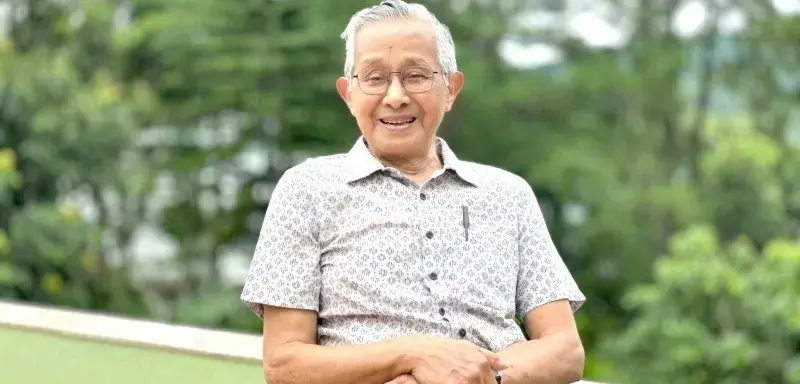
 Photo Courtesy: nenow
Kohima: Niketu Iralu died in New Delhi on August 18 after suffering a cardiac arrest. The prominent Naga peace activist had been battling illness and was undergoing treatment at BLK Hospital. He leaves behind his wife, Christine, and a long legacy of community work.
Iralu pushed for reconciliation for more than six decades. He chaired the Naga Reconciliation Commission and acted as a guiding force for the Forum for Naga Reconciliation. He was born in Khonoma and started his work with Initiatives of Change in 1955 while studying at Madras Christian College. He eventually directed the group's training center in Panchgani, Maharashtra. He returned home to focus on non-violent conflict resolution and moral leadership.
The state recognized his efforts several times. He received the Rotary Peace Award in 2018 and the Nagaland Government's Distinguished Senior Citizens Award in 2019. He earned the Dr. Bhupen Hazarika Integration Award in 2023, followed by the Initiatives of Change Lifetime Achiever Award on November 12, 2025.
Iralu lived at his Sechü Zubza home, named Kerunyu Ki, or House of Listening. It served as a hub for leaders seeking dialogue. Vitono Gugu Haralu of the Forum for Naga Reconciliation honored his memory in a public statement. "Today, we have lost an elder, a peacemaker, and a voice of conscience," Haralu said. His family expects to announce funeral details soon.
Updated at 18th August 2026 at 10:00pm
Iralu was in his late 80s when he died. Family sources confirmed that his mortal remains will be transported back to Nagaland.
Beyond his work with the Forum for Naga Reconciliation, the Naga Students Federation recognized his influence on younger generations. The group stated that Iralu proved true leadership depends on service, sacrifice, and the commitment to the greater good rather than power or position.
Vitono Gugu Haralu added that Iralu served as a symbol of unity, consistently reminding the people that their internal differences should not outweigh their common belonging.
Updated at 19th August 2026 at 5:46am
Iralu was 91 years old. Born on July 12, 1935, to Dr. Sevilie Iralu and Vituno Iralu, he was the third of 13 children. His mother was the elder sister of Naga national leader A.Z. Phizo.
Beyond peacebuilding, Iralu left a mark on public health. In 1989, he facilitated a partnership between the Naga Mothers Association and the Kripa Foundation, leading to the creation of the Mount Gilead Home rehabilitation center in Zubza. The center became a critical site for addressing substance abuse and managing the state's first HIV cases among injecting drug users.
A funeral service took place at the Nagaland State Guest House in New Delhi on August 18 at 9:30 p.m. His remains are scheduled to arrive at Dimapur Airport on August 19, followed by a public send off hosted by the Khonoma Rüffüno. The final funeral service is set for noon on August 20 at the Shalom Bible Seminary in Sechü Zubza.
Updated at 20th August 2026 at 5:48am
A wave of tributes from organizations across the Northeast reflects the reach of Iralu's influence. ACAUT Nagaland, which counted Iralu as an advisor, labeled him the group's conscience, noting his fearless opposition to corruption and exploitative taxation. Student and research groups, including CTAN, NNQF, and the Naga Research Scholars' Forum, credited Iralu for mentoring younger generations, specifically citing his support for their 2025 protests and his use of podcasts to amplify student concerns.
Educational and civil society institutions also highlighted his long-term impact. Patkai Christian College noted his 27-year tenure on its Board of Trustees, while groups like the Kuki Christian Leaders' Forum and the Kuki Inpi Nagaland praised his commitment to cross-community reconciliation. Peace Channel and NEISSR noted that Iralu received their specific Peace Award in 2021.
Wati Aier of the Forum for Naga Reconciliation honored his peer with a final message. "His life was not merely lived; it was offered, poured out in service to the people, to truth, and to the vision of a reconciled community," Aier said. "In him, the Naga story found a witness who believed that peace was not an abstract ideal but a lived discipline, nurtured through dialogue, humility, and courage."
Updated at 20th August 2026 at 9:47am
Thousands turned out at Dimapur Airport on August 19 for a homecoming reception dubbed Honoring a Legacy of Common Hope. Youth in traditional dress received his remains before mourners held a mass prayer service. The Khonoma Ruffuno Nagaland praised him as a healer of wounded souls, while the funeral banner carried his belief that forgiving becomes possible only when people recognize their own role in provoking conflict.
New details about his early life and career emerged. Born to Dr. Sevilie Iralu, the third Naga to become a doctor, he completed pre-university studies in Shillong before heading to Madras Christian College. His career included holding the Lokapriya Gopinath Bordoloi Award for National Integration in 2005 and the UN Brahma Foundation Soldier of Humanity Award in 2011.
Political leaders and tribal groups continue to weigh in on his impact. Chief Minister Neiphiu Rio credited him as the first director of the Mount Gilead Home, where he worked as a counselor. The Kuki Inpi Nagaland noted his historical connection to the community, citing a friendship between his father and Kuki leader Lengjang Kuki. Various organizations including the Angami Public Organization, Tenyimi Peoples Organization, and Naga Council Dimapur joined the chorus of tributes, emphasizing his lifelong work as a bridge-builder who refused to shy away from painful truths.
Updated at 20th August 2026 at 9:46pm
Iralu’s father, Dr. Sevilie Iralu, served as a doctor in Tening and built a lasting friendship with Lengjang Kuki, one of the signatories of the Memorandum to the Simon Commission. This historical bond formed the bedrock of Iralu’s long engagement with the Kuki community.
The funeral service held on August 20 took place at Spicer Hall, located within the Shalom Bible Seminary in Sechü Zubza. Following the ceremony, Iralu was laid to rest at his home, Kerünyü Ki.
Tributes poured in from a wide range of organizations. The Naga Hoho remembered him as a wise counselor who enriched their leadership. The NNC/FGN praised his non-partisan approach and candor during years of political splintering. The Naga Scholars Association noted his work to bridge tribal divides, while the Dimapur Naga Students Union highlighted his role in encouraging collective responsibility among the youth. The Fellowship of Naga Baptist Associations recalled his frequent service as a resource person for their programs.
Former minister Neiba Kronu described Iralu as a social scientist whose work extended beyond activism into the academic understanding of conflict. The Naga Rising, a local media organization, recalled his specific advice to keep social processes clean and to regularly evaluate what parts of society need to be challenged or discarded.
Updated at 20th August 2026 at 10:07pm
Iralu's funeral took place at Spicer Hall within the Shalom Bible Seminary in Sechü Zubza, followed by his interment at Kerünyü Ki. The Baptist World Alliance and its Commission on Human Rights, Peacebuilding and Reconciliation noted his witness to human dignity and dialogue. Other groups, including the North East India Christian Council, the Central Nagaland Tribes Council, and the Naga Peoples Movement for Human Rights, credited his specific work in addressing substance abuse and human rights during periods of fratricidal conflict.
Regional organizations provided further insight into his influence. The Yimkhiung Tribal Council noted his seven decades of service, while the Southern Angami Public Organization and the Naga Club highlighted his role as a moral compass during complex political divisions. Former assembly speaker Thenucho Tunyi and power minister K.G. Kenye remembered his articulate, soft-spoken nature as a statesman. Iralu’s guidance also impacted institutions like the Union Christian College Alumni Association and Tetso College, both of which recognized his lasting footprint on their communities.
Updated at 21st August 2026 at 1:48am
Iralu's widow, Christine, revealed that the couple jokingly viewed their home, Kerünyü Ki, as a space they held in trust for others rather than property they owned. She recalled that during his final illness in Delhi, Iralu remained fixed on the belief that forgiveness is the only path to new possibilities. Their son, Kevipulie Iralu, noted that his father held an unfulfilled dream of walking from the Naga Hills into Myanmar to connect with people across the border.
Kevipulie shared that his father's commitment to social work began after he learned that many of his peers from Madras Christian College were dying in the jungles of Nagaland. This revelation shifted his path from literature toward a life of restitution and faith. During the homecoming reception in Dimapur, the Khonoma Rüffüno Nagaland stressed that Iralu insisted his own community do the hard work of internal reconciliation before he took that message to the rest of the Naga people.
Updated at 21st August 2026 at 9:47am
Iralu's widow, Christine, revealed she and her husband viewed their home not as property, but as a space held in trust for everyone. She described herself as a city girl from Bombay who found a role model in her husband, noting that even through their differences, he remained a man who loved people and reached out to nearly everyone he met.
His son, Kevipulie Iralu, recalled his father's early childhood memories in Panchgani, including time spent hiking, fishing, and walking. During his father's final days in Delhi, Kevipulie read him favorite biblical passages and shared a final moment where the elder Iralu shed a tear while acknowledging his love for his family.
Chief Minister Neiphiu Rio shared that he met with Iralu for the last time on February 8, 2026, in Kohima. He credited their families' marriage connection for adding depth to their personal relationship and professional trust.
At the funeral service, speakers included his sister Sano Vamuzo and relative Visier Sanyü. The program featured music from the Sechü Zubza Baptist Khriesarüü Krotho and was led by Rev. Rachülie Vihienuo, with Rev. Zhabu Terhüja officiating the rites.
Updated at 21st August 2026 at 1:48pm
Iralu was a signatory to the 2nd Naga Consultative Meeting in Bangkok in 2002, a key moment in carrying forward the Indo-Naga peace talks. During his work with the Naga Peoples Movement for Human Rights, he spoke at their 1990 human rights seminar and helped organize the 1993 Naga Week during the International Year of the World’s Indigenous People. He also engaged in track-two diplomacy with Indian officials in cities like Kolkata, Goa, and Kaziranga.
His family connections ran deep, with his sister Sano Vamuzo and relative Visier Sanyü playing roles during the funeral services. During his final days in Delhi, Iralu shared a final emotional moment with his son, Kevipulie, where he shed a tear while acknowledging his love for his family. His wife Christine noted that the couple frequently joked they were merely custodians of their home, Kerünyü Ki, rather than owners.
Reflecting on his early path, his son shared that Iralu initially studied English literature but switched his focus to social work after learning that many of his college peers were dying in the jungles of the Naga Hills. This realization pushed him away from literature and toward a life of restitution and faith.
Condolences came from across the region, including the All Angami Gaon Bura Association, the Tangkhul Hoho, the Western Sümi Baptist Akukuhou Küqhakulu, the Eastern Naga Students Association, the Kachari Tribal Council, and the Dimapur District Gorkha Indigenous Forum. They remembered him for his intellectual clarity, his role as a conscience keeper, and his ability to bridge divides between disparate groups.
Updated at 22nd August 2026 at 1:48am
Iralu's funeral service at the Shalom Bible Seminary featured prayers led by Rev. Dr. Mar Pongener, with songs from the family of the deceased. During the proceedings, wife Christine Iralu shared that the family received immense community support, noting that neighbors cooked, cleaned, and sang through the night leading up to the burial.
Kevipulie Iralu spoke of his father's deep appreciation for nature and conservation efforts. In his final days, the elder Iralu, though too weak to speak, acknowledged his love for his family and told his son he was proud to be his father.
A host of other organizations added their voices to the mourning, including the Nagaland Baptist Church Council, the Nagaland Joint Christian Forum, the Angami Gazetted Officers Krotho, the Zeliangrong Welfare Association Delhi, the All Angami Gaon Bura Association, the Eastern Naga Students’ Association, the Kachari Tribal Council, the Dimapur District Gorkha Indigenous Forum, the South Nagas Union of Nagaland State, the Linguistic Minority Forum of Nagaland, and the Senior Citizens Association Nagaland.
Updated at 22nd August 2026 at 5:49pm
General secretary Rev. Dr. Mar Pongener noted that Iralu's contributions were central to the work of the NBCC Peace Mission. The council stated that his interventions consistently pushed members to push past short-term goals and grapple with the broader moral and human realities of the Naga experience.


Comments