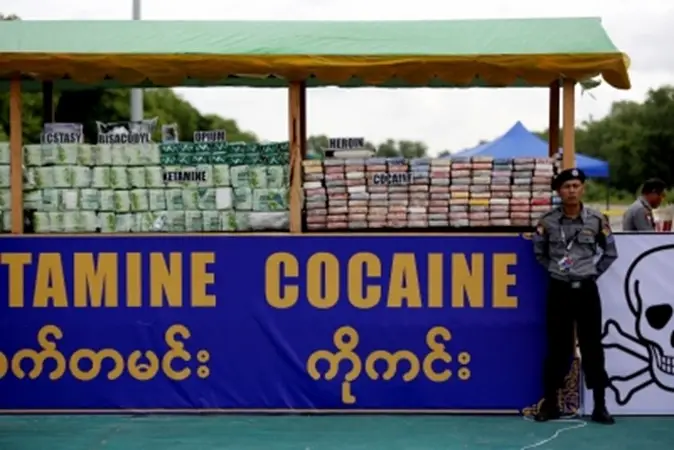
 Photo Courtesy: nenews
Imphal: Myanmar-based drug syndicates are now the primary narcotics threat on India's eastern frontier. These cartels exploit ongoing instability in the Northeast, particularly in Manipur, to move massive shipments across the border. Security officials report that these groups often use local associates to ignite social tensions, forcing security forces to focus on maintaining order while drug shipments move through the chaos.
Intelligence reports confirm that cartel production surged by nearly three times in 2026. The Narcotics Control Bureau (NCB) described the scale of this trade as "dramatic" in 2025. Seizure data presented to the Lok Sabha in March 2026 highlights the growing crisis. Assam recorded 31,706 kg of narcotics seized, while Tripura saw 46,346 kg. In Mizoram, seizures jumped from 1,967 kg in 2024 to 2,233 kg in 2025. Another unspecified state saw a sharp increase from 284 kg to 2,556 kg over the same period.
Cartels have massive resources. They easily absorb losses from busted shipments to rebuild supply lines. Experts believe the Taliban's opium ban in Afghanistan created a power vacuum that Myanmar syndicates filled. Myanmar now stands as the world's largest opium producer, with cultivation reaching 53,100 hectares in 2025. Beyond opium, the groups push large volumes of synthetic drugs like methamphetamine into India.
Geography hinders enforcement. The Moreh-Tamu crossing serves as the main transit point. Thick forests and hilly, porous terrain make interdiction difficult. While the NCB and Assam Rifles have notched major busts, they face a formidable opponent. New Delhi and Naypyidaw continue to hold talks, but officials warn that dismantling these well-funded networks will take significant time.




Comments