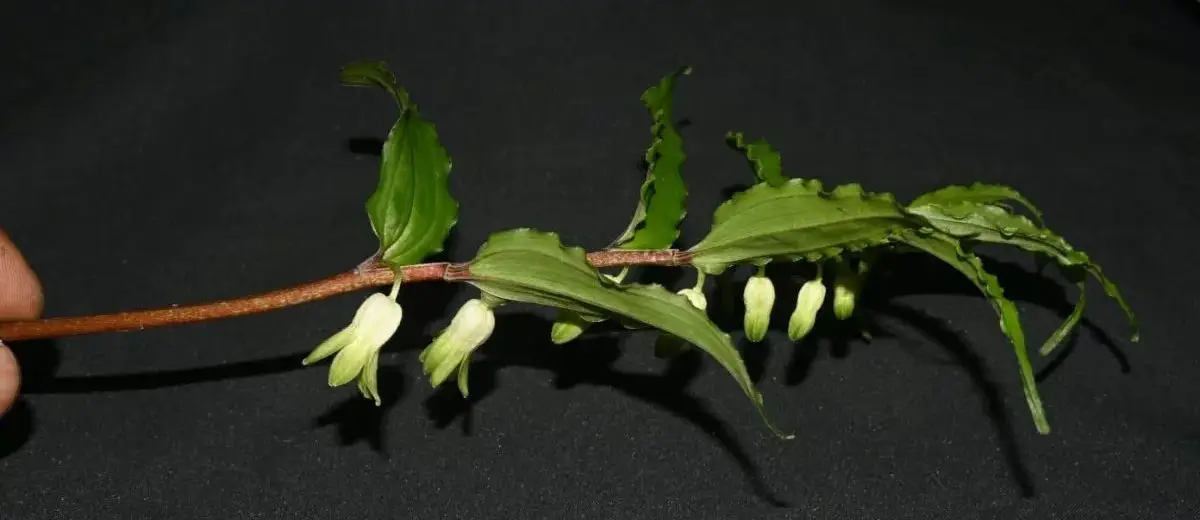
 Photo Courtesy: nenow
Itanagar: Botanists recently identified two distinct plant species in the remote forests of Arunachal Pradesh. The discoveries highlight the region's vast, undocumented biodiversity. Both plants currently lack sufficient data for formal conservation assessments.
Researchers discovered Begonia siangensis in 2024 during a survey of the Siang River basin. This plant grows in shaded, humid conditions between Bomdo and Jengging at an elevation of 600 metres. A team from the Thackeray Wildlife Foundation identified the species by its creeping, 35 cm stem and asymmetrical, corrugated leaves. Unlike its close relative Begonia iridescens, this new species lacks silver leaf spots. It produces drooping pink flowers with nearly equal ovary wings. The researchers deposited specimens at the Botanical Survey of India, the Forest Research Institute, and the Wildlife Institute of India.
Separately, a team featuring authors from the Missouri Botanical Garden and the Royal Botanic Garden Edinburgh identified Disporopsis crispata in the Changlang district. Found at 2,500 metres in Vijoynagar, this discovery marks the westernmost expansion of its genus into India. Vinay Kumar Sahani collected the flowering specimen in June 2026. The plant features reddish stems and wavy leaf margins, which earned it the name crispata. Historical collections from Myanmar dating back to 1962 had previously remained unidentified due to a lack of flowering material.
These plants grow in fragile environments. The researchers classified both species as Data Deficient under International Union for Conservation of Nature criteria. Currently, experts know of fewer than five individuals of D. crispata in India. Regarding the broader effort to map these hidden species, one lead researcher noted: "The discovery of Begonia siangensis highlights the importance of field exploration in the Eastern Himalaya, where small, specialised plants growing in streamside and forest habitats can remain undocumented despite the region's botanical significance." Scientists are now calling for further systematic surveys across the Upper Siang Valley and the mountainous stretches near the border with Myanmar to determine if these populations are widespread or nearing extinction.
Updated at 12th November 2026 at 6:15pm
Botanists identified Begonia siangensis as a member of the Platycentrum section, a group highly diverse in Northeast India. The plant features thickened nodes on its stems that produce roots. Its dark green leaves display small, oval projections on their undersides. Compared to the related Begonia iridescens, the new species shows less hair on its flower stalks and lacks blue iridescence. Researchers also noted it grows near other moisture-loving plants like Henckelia oblongifolia, Leptoboea, and Selaginella.
The discovery of Disporopsis crispata in the Kachin Hills of Myanmar back in 1962 had previously stalled because the samples lacked flowers, leading scientists to misidentify the genus as Polygonatum. Beyond its wavy leaf margins, the plant grows 30 to 80 cm tall with leaves measuring 5 to 15 cm. It produces white and green flowers and fleshy white fruit containing three to eight seeds. The species follows a specific cycle, blooming from May to June and fruiting between July and December. It prefers slopes blanketed in mixed rhododendron and bamboo.
Deputy Chief Minister Chowna Mein officially acknowledged the Disporopsis crispata find, noting the role local Yobin and Gorkha communities played in the field efforts. Researchers clarified the habitat elevation for this species spans 2,500 to 2,800 metres.






Comments