 Photo Courtesy: nenow
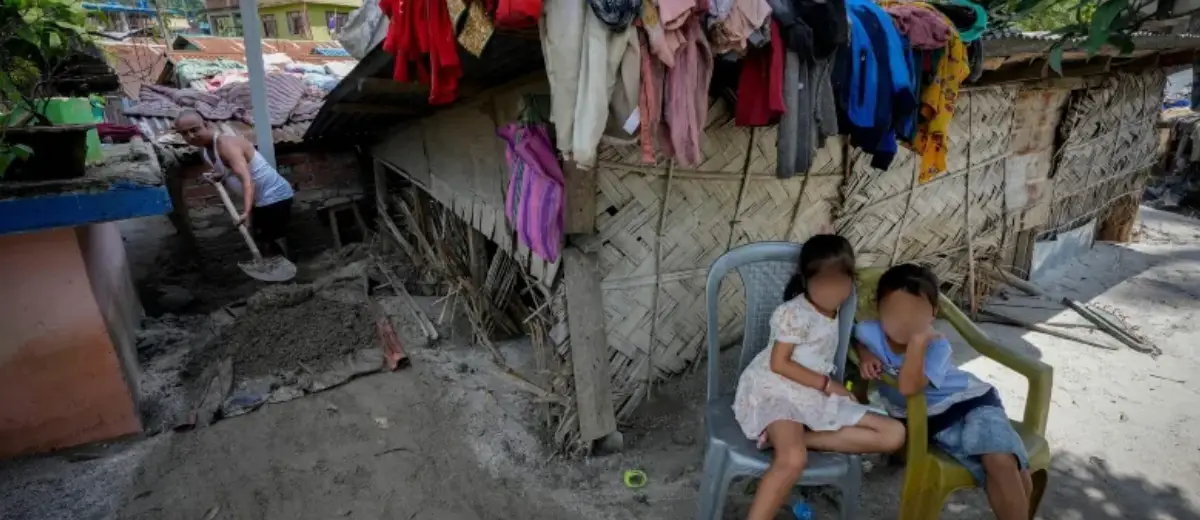
Gangtok: Three years after a devastating Glacial Lake Outburst Flood (GLOF) shattered the Teesta river region, survivors are still living in limbo. The October 2023 disaster, triggered by a breach at South Lhonak Lake in Sikkim, upended 80,000 lives. It sent 270 million cubic metres of sediment downstream. The riverbed in Kalimpong rose by as much as 14 metres. Families are now huddled in makeshift shelters, watching the river creep closer each monsoon.
Bijay Pradhan, 36, lost his home and his independence to the torrent. He now works as a daily-wage labourer, supporting his family from a relief camp in Teesta Bazaar. His reality is bleak. He says, "When the flood took everything from me, it took more than my home and livelihood, it took away the place I once had in society. People look at us differently now. The relationships and respect we once had are no longer the same. I am not a beggar, and I was never born into a life like this."
The damage reports vary wildly. A preliminary assessment identified 550 wrecked houses across Teesta Bazaar, Tarkhola, Rangpo, and Melli. Subsequent surveys by insurance assessors recorded 104 damaged structures, later increased by 11. Families claim these figures are inaccurate. They face constant, frustrating re-surveys while living in unfinished buildings or forest-encroached land. Residents in Gafur Busty live under tin and bamboo. Families in Labar Bhotay fear immediate eviction from forest land. West Bengal officials have failed to provide a dedicated housing scheme for these survivors.
Mitigation efforts remain stagnant. Praful Rao, founder of Save The Hills, notes that critical work must occur during the dry winter months. Instead, agencies react only when disaster strikes. The lack of an operational early-warning system in 2023 cost precious time. New sensors were installed late, leaving the region vulnerable to subsequent flash floods in 2024 and 2025. Former ICIMOD director Eklavya Sharma insists that rivers ignore state borders. He demands shared data and coordinated relocation for high-risk communities.
Political friction has hindered recovery. While Sikkim sanctioned over 4,000 homes, West Bengal stopped at one-time compensation. The state has not officially declared the event a disaster, blocking significant relief. Residents like 66-year-old Bhawuni Boju refuse to repair homes that the river claims annually. Pradhan still waits for a permanent solution. He refuses to give up hope for his children, even as his future remains pinned to a temporary tent.




Comments