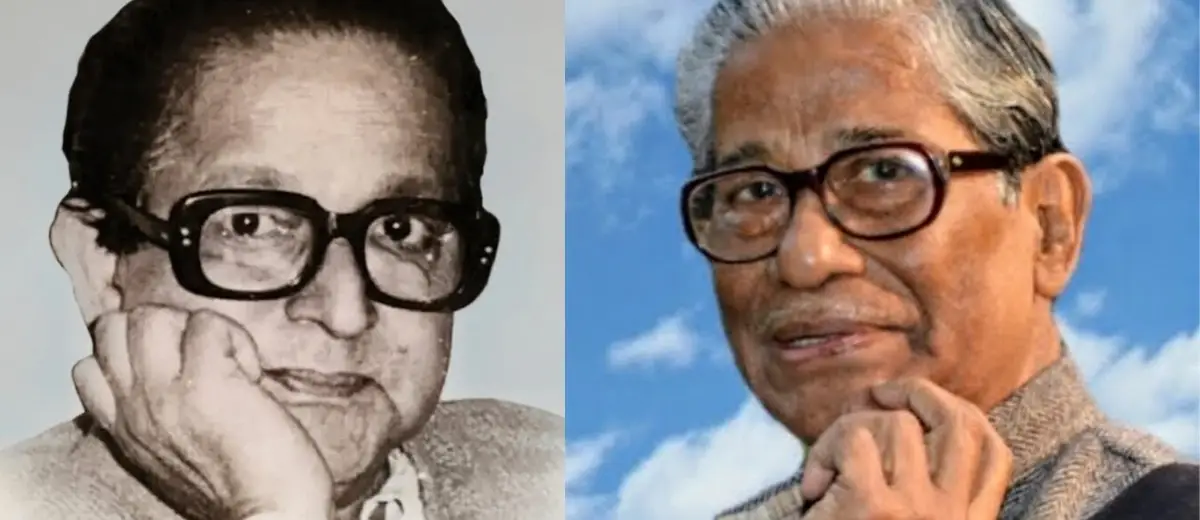
 Photo Courtesy: nenow
Guwahati: Academician Dr. Birendra Nath Datta composed and performed more songs by poet Nabakanta Barua than anyone else. Their collaboration defined a chapter of Assamese culture. Barua once noted that without Datta, he might have remained solely a poet, novelist, or professor rather than a lyricist.
The partnership began in 1951. Datta, then a radio artist for All India Radio, searched for new material. A staff member handed him a book of Barua’s poetry. Datta immediately gravitated toward the lyrics. He chose to work on Akash Amak Okoni Akash Diya and Boroxa Tomar Sokut Meghor Anjan first.
Datta worked alone. Barua wrote the lyrics first, then Datta composed the music. He enjoyed full creative freedom. Datta often said, "If Biren Datta had not discovered the lyricist within him, Nabakanta Barua would have remained merely a poet, novelist, children’s author, or professor."
The duo produced numerous hits. These included Mon Mor Bohagor Xirno Nodi, Xou Pothoror Kohua Phool, Bohagor Duporiya, and the children’s song O Dhundhuniya Mor Akonmani. Bogoli Boga Phot Di Ja was a gift for Datta’s wedding. Another track, Junukar Gaan, honored Barua’s daughter, Junuka. Later, Barua’s grief over Junuka’s 1999 death inspired Niyorore Phool, later popularized by Zubeen Garg.
Their work often explored deep themes. Ahinak Kune Ane, released in 1971, featured music by Tafazzul Ali and Datta. The song Jilir Mate Gobhir Kore Nirjanota remains a classic, featuring a sitar performance by Pradyumna Das. Toward the end of the century, the pair worked on Aahin Ahai Nai and Pranor Tirthajol. They were unable to complete two final songs, Hoi Gudu Nugudu Beli Dile Bhati and O Phool O Phool Nuphoolo Kiyo, before Barua died.





Comments