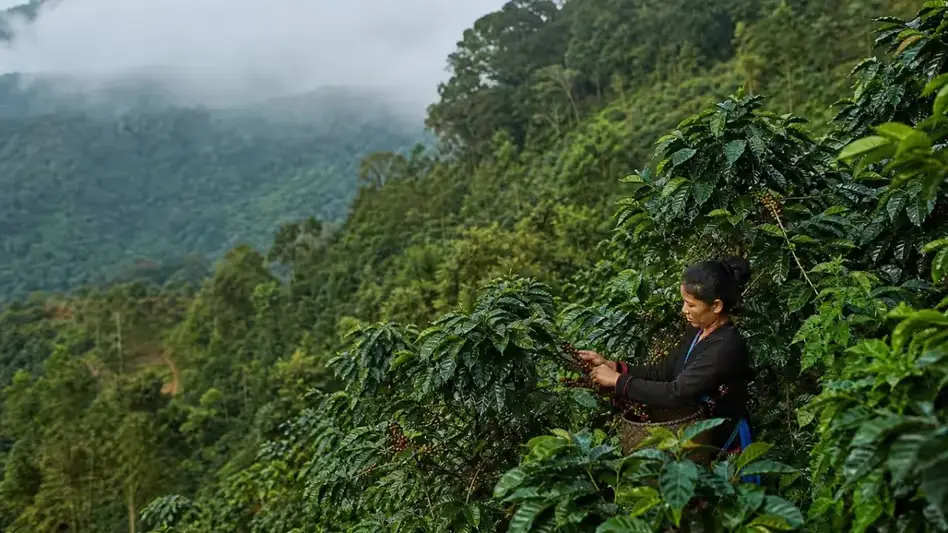
 Photo Courtesy: India Today Group
Kohima: North Eastern Council Secretary Satinder Kumar Bhalla visited Touphema village on October 2 to review the Coffee Utilisation of Surplus Potential project. He toured plantation sites and a Hi-Tech Coffee Washing Station. His message to the local growers was clear. "Coffee development cannot be limited to planting coffee trees alone," Bhalla stated. He demanded better roads, modern processing gear, and robust export ties to turn a simple crop into a thriving economic engine.
Bhalla pitched the project as an integrated development program. He wants it to boost local livelihoods and help move the nation toward a Viksit Bharat by 2047. Real change requires teamwork. He called for a joint effort between the Centre, the Nagaland government, the Coffee Board, and private investors. Success depends on everyone working together.
Nagaland has struggled with this crop for decades. Principal Secretary Y Kikheto Sema noted that efforts started back in 1981. Limited awareness and poor market links stalled progress for years. To fix this, officials now suggest planting black pepper alongside coffee. This diversification should sharpen land productivity and pad farmers' wallets.
The growers have needs. Village Council Chairman Pfuduolhou Kense asked for help with labor costs and irrigation. He requested brush cutters and harvesting tools. He also needs storage tanks and water-harvesting systems to survive dry spells. Bhalla promised to look into new technologies and mechanization to handle these gaps. He even praised Vibei Kense, a young grower who earned professional coffee certification in Vietnam, as a model for local expertise.
Nagaland currently runs cluster-based projects. Touphema focuses on Arabica. The Ghotovi district in Niuland grows Robusta. The state is also pushing a brand called Coffees of Nagaland to capture specialty markets.
Updated at 3rd October 2026 at 2:00pm
Bhalla wants the local administration to drag industrial houses, investors, and exporters into the fold. He says these players need to step up to support automation and mechanization through formal financial and institutional deals. The goal is to build sustainable livelihoods that go beyond just crop yields, aiming to provide villages better access to education, healthcare, and basic modern amenities.
A delegation of officials accompanied the Secretary, including Dr. Sentitula, Director of Tourism and Industries for the NEC, alongside directors from the state's Department of Land Resources. The official visit also featured briefings from Hekato N, the project director for coffee, and Albert Ngullie, CEO of the state level nodal agency.
Updated at 3rd October 2026 at 10:00pm
Bhalla wants the state and the Coffee Board to rope in central agricultural institutions to identify specific intercrops and side ventures for plantations. He views this research-backed diversification as a way to maximize every acre of land and keep cash flowing for farmers.
The Secretary’s trip included a specific roster of officials, including Dr. Sentitula, Director of Tourism and Industries for the NEC, alongside directors from the state's Department of Land Resources. The visit also featured formal briefings from Hekato N, the project director for coffee, Albert Ngullie, CEO of the state level nodal agency, and Dr. Menuosietuo, District Project Officer for the Land Resources Department in Kohima.
Updated at 4th October 2026 at 1:47pm
Bhalla pointed to the collective effort of northeastern chief ministers, noting their unified strategy to bump up farm incomes across the region. He wants the state and the Coffee Board to hook into central agricultural institutions, identifying specific intercrops and side ventures to sweat every acre of dirt. This research-backed diversification aims to create extra cash flow and cement the long-term economic stability of the crop.
To get the job done, he is pushing the local administration to drag industrial houses, investors, and exporters into the mix. He says these heavy hitters need to provide the muscle for automation and mechanization through formal financial and institutional deals. Beyond just raw yield, he envisions this push providing villages with better leverage for education, healthcare, and basic modern amenities.
The visit included a formal lineup of brass: Dr. Sentitula, NEC Director of Tourism and Industries, and directors from the state's Department of Land Resources. They sat through briefings from Project Director Hekato N, state nodal agency CEO Albert Ngullie, and Kohima District Project Officer Dr. Menuosietuo.
Updated at 4th October 2026 at 9:49pm
Beyond the coffee fields, the NEC is calling for a major shift in how the state plans its future. During a session at the Polo Hotel in Kohima, Bhalla pushed state officials to stop thinking small. He wants a comprehensive wish list of ambitious, long-term proposals that map out the state's path toward 2047. Principal Secretary Y Kikheto Sema noted that the NEC has pumped over 1,600 crore into 252 state projects in the last two decades, but the current mandate is to aim significantly higher.
Bhalla pitched a vision that hits sectors far beyond agriculture. He flagged carbon credits, e-sports, IT services, and forest development as prime targets for job creation. For tourism, he hammered home a new strategy: build an iconic tourism circuit linking major destinations and adopt a One District, One Destination approach to turn cultural heritage into hard cash.


Comments