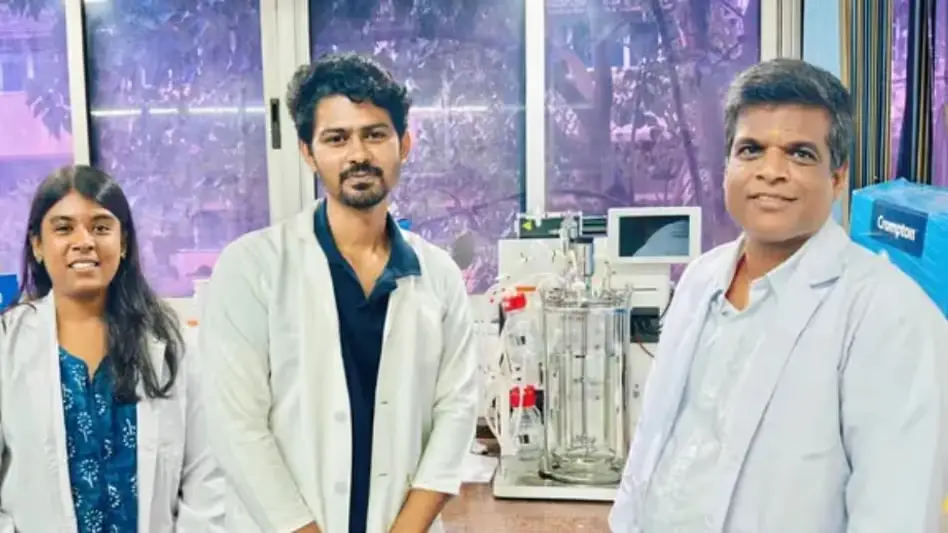
 Photo Courtesy: India Today Group
Guwahati: Researchers from IIT Guwahati and IIT BHU developed a green method to clean toxic textile water. They announced the results on September 16. A new bacterium, Brevundimonas sp. AJZ05, breaks down 98.50 percent of Direct Blue-6 dye. This synthetic dye is common in textile work. It does not go away easily.
Azo dyes contain stable chemical bonds that resist standard cleaning efforts. These chemicals threaten human health and aquatic life. The team found the bacteria at a local textile discharge site. It creates an enzyme called azoreductase to snap those tough azo bonds. The process turns the dye into harmless metabolites.
The study appeared in the journal Environmental Geochemistry and Health. The team used a statistical method to refine how the bacteria work. They balanced enzyme output with dye removal. Selvaraju Narayanasamy, an Associate Professor at the Biochemical and Environmental Engineering Laboratory, leads the project. He noted, "The study provides a scientific foundation for developing biological treatment systems for textile wastewater containing azo dyes."
Conventional chemical treatments cost too much energy. They often create new pollutants. This biological approach stays safe. The team is now building a continuous system to scale these lab results. They aim to bring this microbial tool into actual industrial plants.




Comments