 Photo Courtesy: nenow
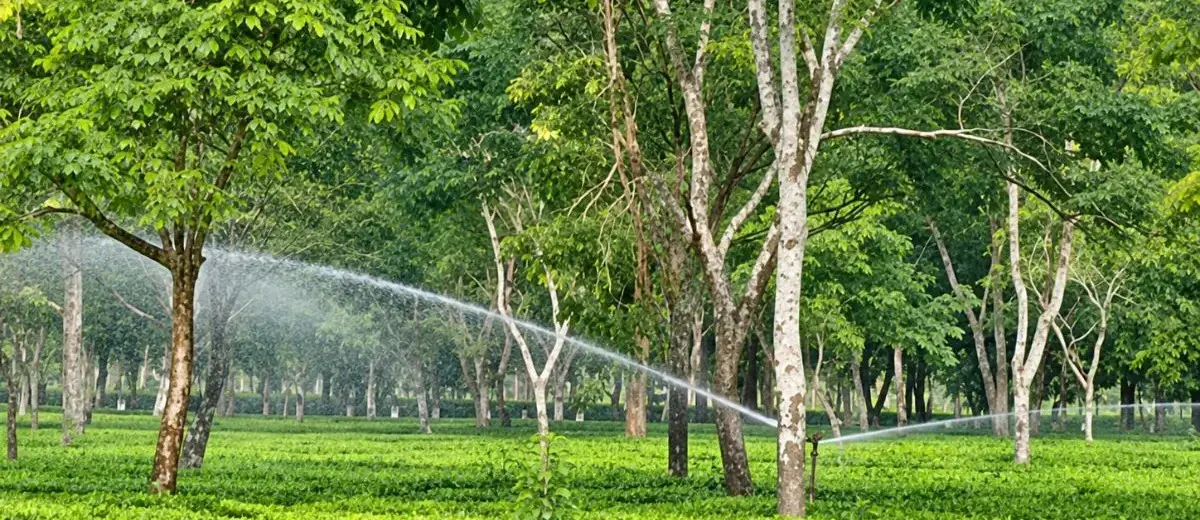
Guwahati: Tinsukia tea estates are fighting a losing battle against the weather. Growers are increasingly forced to install sprinkler systems to keep bushes alive as rainfall patterns turn unpredictable across eastern Assam. The shift represents a major financial hit for an industry traditionally fueled by seasonal rains.
Brahmananda Jha, a retired manager at Lodoka Tea Estate in Daisajan, warned that artificial watering is a stopgap measure. "Tea is a crop that responds to the rhythm of nature. When rainfall becomes irregular and the soil loses moisture, the bushes cannot produce fresh shoots at their normal pace. Sprinkler irrigation can provide temporary relief, but it increases the cost of cultivation and cannot completely compensate for the natural conditions required for healthy tea growth," Jha said.
India Meteorological Department data from November 14, 2026, shows the strain. The district recorded zero rainfall that day. Between October 1 and November 14, Tinsukia faced a 13.3 percent rainfall deficit, totaling 116.6 mm against a 134.5 mm norm. October reports across Assam show similarly grim figures, with many areas seeing less than 2.5 mm of mean monthly rainfall. Dry bushes are already showing signs of distress as foliage turns pale.
The current autumn flush, which runs from October through December, remains the most sensitive period. Lower leaf production has forced some factories to slash hours. One local factory worker noted, "We have been leaving the factory early these days because there are not enough green leaves to process. Factory officials have told us that, owing to the shortage of green leaves, there will be no work at the factory towards the end of November." While no official notice confirms industry-wide closures, the output dip is undeniable.
Data from the Tea Research Association indicates a long-term trend of environmental pressure. Rainfall in Assam dropped by over 250 mm between 1921 and 2024, while temperatures climbed by 1.2 degrees Celsius. These conditions add significant overhead for water, fuel, and labor. The Regional Meteorological Centre in Guwahati projects potential scattered showers between November 19 and 21, but for planters, the damage to the season's health may already be done.







Comments