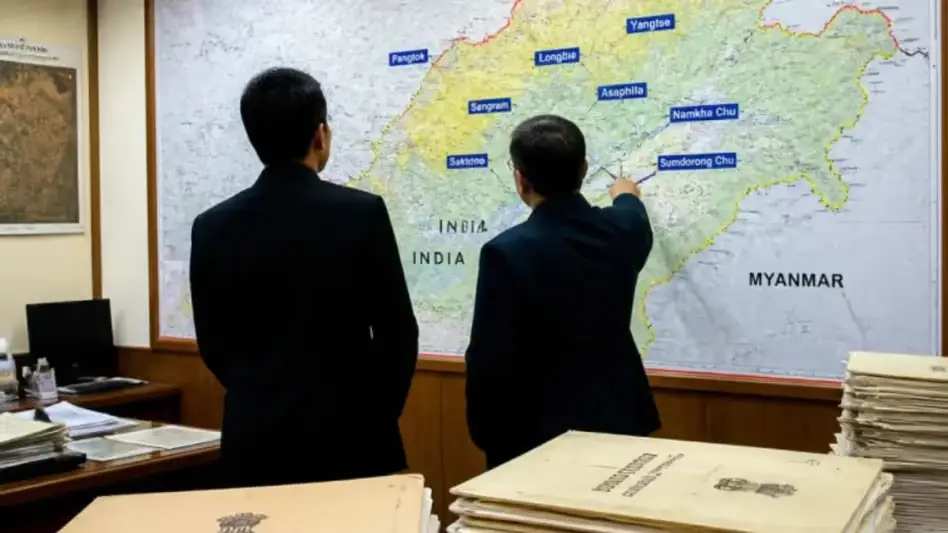
 Photo Courtesy: India Today Group
Itanagar: China formally rejected India’s decision to assign standard names to 27 locations and geographical features in Arunachal Pradesh. The dispute boiled over on August 10. Beijing refuses to recognize the Indian state.
Chinese Foreign Ministry spokesperson Guo Jiakun issued a firm statement on the ministry website. He labeled the mapping project invalid. "India's move of attempting to replace names long been used by China with its so-called 'standard names' is illegal, null and void," Guo stated. He added that the renaming does not change the fact that Beijing claims the area, which it refers to as Zangnan.
The tension follows India’s formal identification of these sites on its official map last week. China has frequently tried to rename regions in the state since 2017. The Ministry of Civil Affairs released its own list of Chinese names for these locations in April. New Delhi continues to stand its ground. Officials maintain that Arunachal Pradesh is an integral part of India and that these naming games cannot alter the reality on the ground.
Updated at 11th August 2026 at 2:15pm
Beijing also clarified its terminology for the broader region. Chinese officials now refer to Tibet as Xizang in official correspondence. The ministry has been pushing these lists of names since 2017, with the most recent batch issued in April 2026.
Updated at 11th August 2026 at 6:00pm
New Delhi responded to the latest spat by declaring that the state was, is, and will remain an inseparable part of India. Officials dismissed the Chinese renaming efforts as baseless exercises that fail to shift the reality on the ground.
Updated at 11th August 2026 at 10:00pm
MEA spokesperson Randhir Jaiswal blasted Beijing's renaming effort as 'vain and preposterous' during a media briefing. He emphasized that the Indian government's mapping move aims to ensure consistent geographical identification while highlighting the historical and strategic importance of these sites.
The updated list features locations tied to past border conflicts. It includes Long Ju, the site of a 1959 skirmish, and Thag La, where fighting erupted during the 1962 war. The register also covers Jairampur, a key logistics hub, and sites like Jaswant Garh and the Sher-e-Thapa Memorial that honor soldiers from the 1962 conflict.
Beijing has steadily expanded its list of claims over the years. China issued six names in 2017, followed by 15 in 2021 and another 11 in 2023.





Comments