
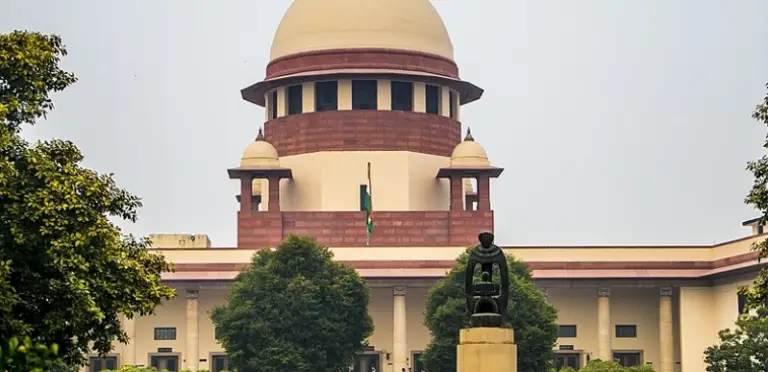
 Photo Courtesy: nenow
Imphal: The Supreme Court ordered an immediate end to all highway blockades in Manipur. Chief Justice of India Surya Kant and Justices Joymalya Bagchi and JV Mohana refused to handle the crisis through selective, piecemeal solutions. The court maintains that these roads serve as a vital economic lifeline for every community in the state.
The bench issued the directive while hearing a public interest litigation regarding ongoing blockades in the Kangpokpi district. Justice Surya Kant warned that broad state intervention could spark localized violence if handled poorly. The court demanded that rival Kuki and Meitei groups submit comprehensive data mapping every blocked national highway along with functional plans to restore traffic flow.
Senior Advocate Anand Grover, representing the Kuki Women Organisation for Human Rights, highlighted the human cost of the standoff. He noted that the blockades caused severe food shortages and disrupted schooling in the Kangpokpi district. Meanwhile, Ngangom Junior, counsel for the International Meitei Organization, dismissed the petition as mischievous. He claimed petitioner groups were actively maintaining their own blockades on alternate state routes.
The court explicitly rejected a route by route approach. It now requires both sides to submit a complete list of all obstructed paths. The judges seek a mediated consensus to allow free movement under the oversight of a neutral agency. They stressed the urgency of the matter, noting that blockades hinder the supply of essential goods for everyone. The court will not address the issue until both sides provide full details of the disruptions.
Updated at 15th August 2026 at 2:00pm
The court has officially ordered the National Highways Authority of India to be impleaded in the case. This move brings federal transport authorities into the fold as the bench seeks a workable, joint plan to clear the gridlock.
The legal focus has specifically expanded to include the status of NH-2, the vital link between Imphal and Dimapur, as well as reported counter-blockades on NH-202. The court is looking to address the crisis as a single, systemic failure of movement rather than a collection of isolated incidents.
The Kuki Women Organisation for Human Rights filed their petition under Article 32, alleging the blockades function as a form of collective punishment. The organization claims Naga civil society groups triggered the current situation following a May 13 attack where gunmen ambushed church leaders returning from a peace event in Kangpokpi, leaving three dead.



Comments