There is something I have often noticed at funerals. When a person dies, we suddenly have so much to say about him or her. We talk about how kind the person was, how faithful, how generous, and how much he or she had done for others. We remember the good things, tell stories, and speak with gratitude and sometimes with tears. And I have often wondered: Why do we say all these things only after the person is gone? Why didn't we say them when the person was still there to hear us?
I ask this question not only of others. I ask it of myself too. There are people I have appreciated but never told them. There are people whose words encouraged me at a particular time in my life, but I never told them how much it meant to me. There are older people from whom I learned something, but I assumed they knew. I have said to myself, They know. I have also thought, I will tell them later. But later does not always come. That is something I have learned, and I have learned it the hard way.
The good things people do for us, the sacrifices they make, and the years they give in serving others should not be taken for granted. Take Rev. W. C. Khongwir, for example. He invested the prime years of his life in ministry and in the welfare of people. During those same years, he could have pursued many other opportunities and achieved much in other fields, as many of his friends and contemporaries did. But he chose to give his life to serving the Church and people. That choice deserves to be recognised.
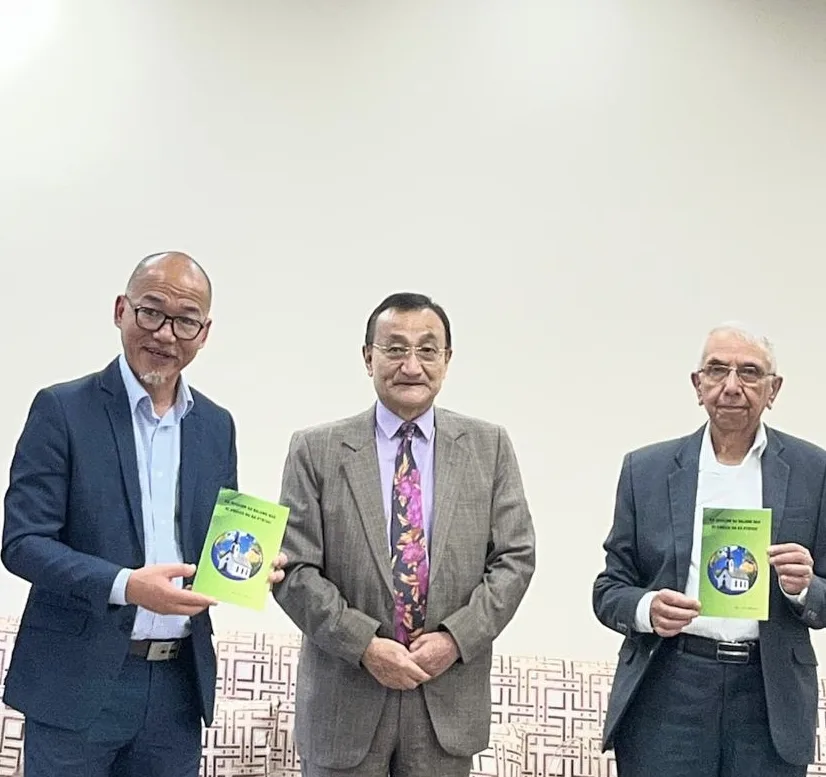
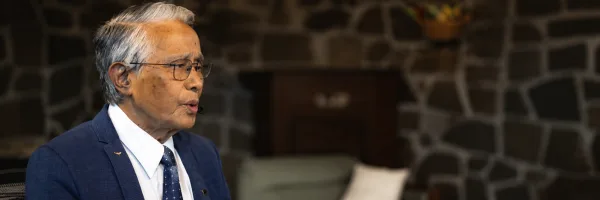
This thought came back to me on September 9, 2026, in Shillong, when I had the privilege of releasing Rev. Khongwir's second book. His family, friends, well-wishers and church members were gathered for the occasion. I was particularly happy that my wife and I could be there together to share this special occasion with Rev. Khongwir and his family. Then his second son surprised us by announcing that the same day was also his parents' 43rd wedding anniversary. I thought that was beautiful, not simply because forty-three years is a long time, but because his parents were there to receive the words and celebrate the occasion together. I remember thinking, What a beautiful way to say thank you.
It also made me think about the way we look at people as they grow older. There is a tendency to associate usefulness with position, and once a person retires from an office, we sometimes assume that the most productive part of life is over. I don't think life works quite that way. One may retire from an office, but one does not retire from a calling to serve. A position may change hands, but the experience, wisdom and convictions gathered over many years do not disappear with the office.
I have known of Rev. Khongwir for much longer than I have known him personally. When I was a younger pastor, he was one of those senior church leaders whom people like us watched from a distance. We knew of his ministry and leadership, and we learned from people like him without necessarily having a personal relationship with them. Later, through the North East India Christian Council, our paths came closer and I got to know him better. We come from different states and different church traditions. I am Baptist; he is Presbyterian. But our work in the wider Church has brought us together.
His journey of ministry and leadership has taken him from pastoral ministry at Jaiaw Presbyterian Church to significant responsibilities within the Khasi Jaintia Presbyterian Church Synod and the General Assembly of the Presbyterian Church of India, where he also served as Moderator. His ministry later extended into the wider ecumenical movement through the North East India Christian Council and the National Council of Churches in India. It has also taken him beyond the country, including to Zambia, Africa, in the wider mission of the Church. Within the NCCI, he has served as Chair of the Commission on Justice, Peace and Creation and presently serves on the Commission on Policy, Governance and Public Witness. In 2025, he received the Pa Togan Sangma Award for Social Service from the Government of Meghalaya.
I am not saying all this simply to speak about his achievements. What interests me is the journey. A person serves in one place, then another. Responsibilities change. Positions change. Eventually someone else takes over. But the years of learning do not disappear. The years themselves are not the achievement. What we make of those years is.
Perhaps this is also why the relationship between generations matters. Young people bring energy, new ideas and a willingness to try things differently. Older people carry memories of what has been tried before, what worked, what failed, and what the consequences were. Neither has everything the other has. There is something to be gained when the two listen to each other.
That is what I find meaningful about Rev. Khongwir continuing to write. His first book, The Family and the Church in Modern Changing Society, was written in English. His second book, Ka Mission Ka Balang Bad Ki Jingjia Ha Ka Pyrthei, is in Khasi and deals with global events and the mission of the Church. I cannot read Khasi, so I cannot comment on its contents. But I appreciate that he is still thinking, still engaging with what is happening around us, and still asking questions about the mission of the Church. A person does not stop having something to say simply because he has stopped holding an office.
The 43rd wedding anniversary celebration stayed with me for another reason. Forty-three years of marriage is forty-three years of life together - ordinary days, difficult days, responsibilities, changes, disagreements, forgiveness, laughter and tears. A long marriage is not simply a collection of happy moments. It is a story of staying, adjusting, forgiving, carrying responsibilities and continuing together. I was glad that, on that particular day, the couple could share that occasion with the people who had gathered around them.
As I look back, I can think of people I should have thanked more deliberately - people who gave me time, encouraged me when I needed it, taught me something, or stood with me in different seasons of ministry. I may have appreciated them in my mind, but not always in words. I don't want to keep doing that. The next time I find myself thinking, I should tell him that, I hope I will not leave it at that thought. I hope I will make the call, send the message, or say it when I meet the person.
Perhaps that is what September 9 has left with me. There are things we may feel deeply about people but never say. Why wait for their funeral? Say it now. Say it before it is too late.
- by Rev. Dr. Meyu Changkiri, General Secretary of the North East India Christian Council (NEICC), Shillong.

Comments