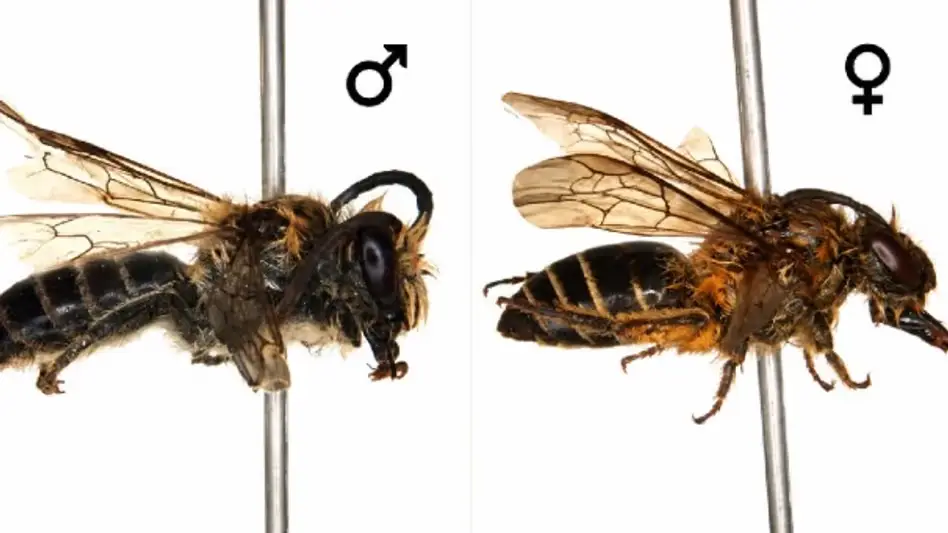
 Photo Courtesy: India Today Group
Itanagar: Scientists from the Zoological Survey of India have recorded the rare solitary bee Colletes bhutanicus in Tawang, Arunachal Pradesh. This marks the first time the species has appeared in India. Researchers Dibyajyoti Ghosh, K.A. Subramanian, and Dhriti Banerjee made the find during a recent survey. The bee previously only appeared in records from Bhutan and China, including the Xizang region.
Unlike honeybees, this species lives alone. They build individual nests instead of sharing a hive. These insects are efficient pollinators that help plants reproduce. The team spotted the bees at elevations between 1,500 and 3,800 metres. The insects visited 25 different flowering plants. This list includes coriander, beans, mustard, buckwheat, chilli, and eggplant. The interaction proves the bee supports both wild vegetation and mountain crops.
Arunachal Pradesh Deputy Chief Minister Chowna Mein praised the find. He stated, "The discovery is a matter of pride for the state." He added that it shows how native pollinators support mountain agriculture. Previous data from a 2014 Zootaxa study confirmed the bee existed in China, but this new record significantly expands the known range of the species. Experts say the diverse climate of Arunachal Pradesh makes it a prime area for documenting rare, poorly studied insects.







Comments