 Photo Courtesy: India Today Group
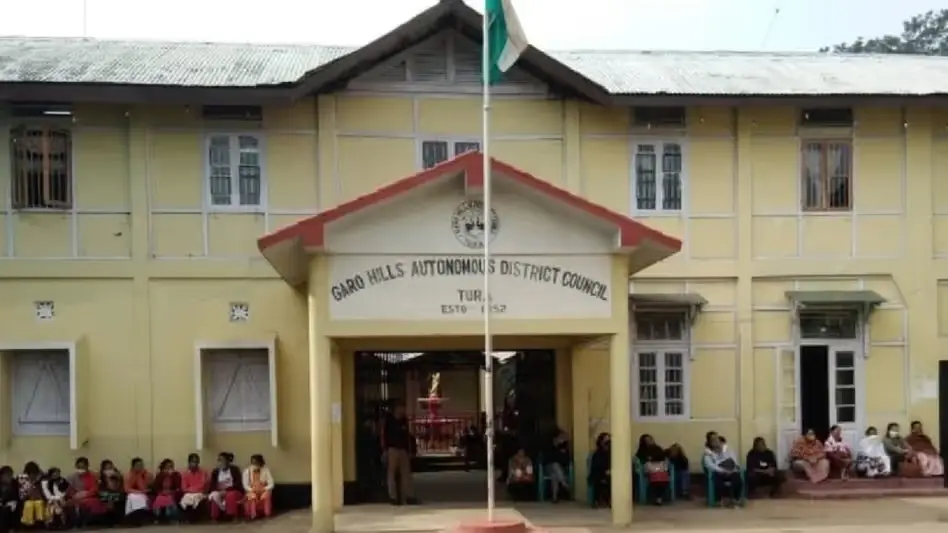
Shillong: The Meghalaya cabinet pushed back the Garo Hills Autonomous District Council (GHADC) elections for a second time on Wednesday. The current term expires on October 17. This latest six-month extension uses up the full one-year limit allowed by law.
Chief Minister Conrad K Sangma chaired the meeting. MDA spokesperson Wailadmiki Shylla confirmed the decision. Officials now expect polls to occur early next year, likely after April 2027. The council manages the Garo Hills under the Sixth Schedule of the Constitution, overseeing 30 seats with 29 elected members and one governor-appointed official.
Initial delays started in March following violent clashes over non-tribal candidate participation. Protesters assaulted a former MLA in Tura and Chibinang on March 9. Security forces opened fire on a mob in West Garo Hills, killing two people and wounding several others. Officials enforced an indefinite curfew and deployed the Army to restore order. “Because of that unfortunate incident which happened in Garo Hills, we could not hold the election and we extended it for six months,” Shylla said.
Ongoing work on delimitation and the revision of tribal-only electoral rolls forced this second delay. The government previously updated the electoral framework to restrict voting to Scheduled Tribe members. Authorities hope these administrative processes will conclude before the new extension lapses.
Updated at 8th October 2026 at 10:00am
State officials confirmed the Special Intensive Revision (SIR) of electoral rolls remains a key hurdle alongside the ongoing delimitation work. During the unrest in March, authorities also suspended mobile internet services across the region to choke off communication between rioting factions.
Chief Minister Conrad K. Sangma took to social media to signal the urgency of the move, stating, "The Cabinet has approved the extension for another six months, within which we hope to complete the necessary processes and conduct the GHADC elections."
Updated at 8th October 2026 at 2:00pm
The second extension faces stiff pushback from the Garoland State Movement Committee (GSMC). The group slammed the government decision as unjustified and warned of further agitation if authorities do not move quickly to restore the democratic mandate. GSMC leaders claim the process should have proceeded following high court developments regarding the Delimitation Committee report.
Critics also smell political foul play in the redrawing of constituency lines. Tura MDC Bernard N. Marak questioned the neutrality of the Delimitation Committee, pointing out that its leadership includes members affiliated with the ruling National People's Party. Marak argued that this political connection compromises the independence of the exercise.
While the state maintains the work is ongoing, some local organizations report the Delimitation Committee expects to submit its findings on October 12. Future steps now hinge on the Governor signing off on special election rules once that report lands.
Updated at 9th October 2026 at 9:46am
Deputy Chief Minister Prestone Tynsong confirmed the final publication of the Special Intensive Revision of electoral rolls is set for October 26. Following this, officials will begin segregating tribal and non-tribal voters to comply with recent election amendments. Tynsong noted the delimitation report is in its final phase and must clear the GHADC House before reaching the Governor.
Opposition leader Mukul M. Sangma slammed the move, arguing there is no cause for further delay. Sangma suggested the government failed to anticipate rising tensions earlier and warned that the timing of the electoral roll revision is suspect. He claimed the process, which is also stalling the Shillong parliamentary by-election, could allow parties to weaponize voter data and push for selective deletions.
NGOs including the Nangrimgimin A-chik Dol report the Delimitation Committee has finished its work and expects to hand off findings on October 12. These groups demand the state ditch the administrative stalling tactics and respect the autonomous nature of the council with a clear, transparent schedule for the vote.


Comments