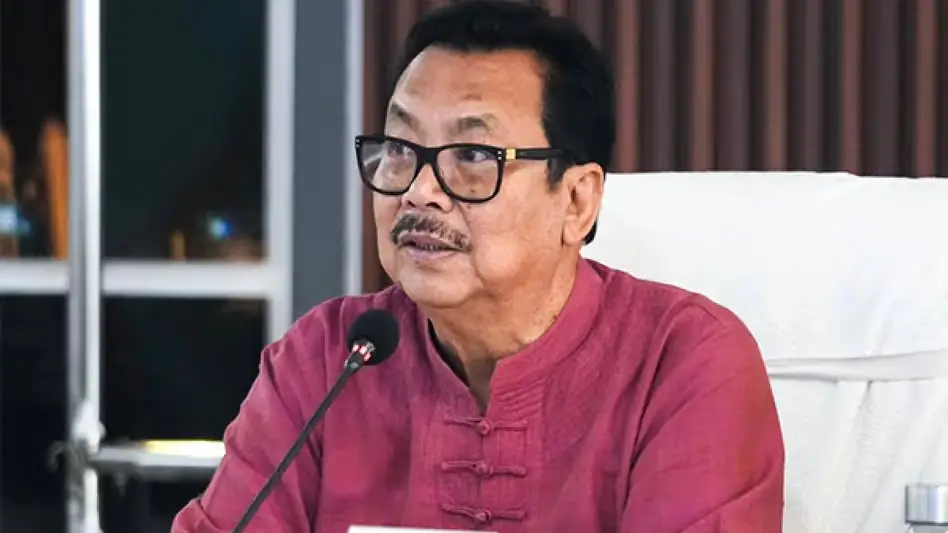
 Photo Courtesy: India Today Group
Itanagar: Arunachal Pradesh Deputy Chief Minister Chowna Mein sees a massive future in water power. He told a New Delhi conference on September 19 that the state holds the key to India’s energy security. It offers a stable partner for wind and solar power. Hydropower is the state’s engine.
Mein manages the state's power portfolio. He pushed the case for prioritizing hydro development as a national strategy rather than a local one. The numbers are big. "Arunachal Pradesh has an assessed hydropower potential of nearly 58,000 MW, accounting for around 40 per cent of the country’s total hydropower potential. The state has set a target of harnessing 40,000 MW of hydropower capacity by 2047," he said.
Growth is already moving fast. Capacity jumped from 405 MW in 2016 to 2,270 MW today. This follows the launch of the Subansiri Lower Project. The state's Decade of Hydropower 2025-35 vision aims for another 19,000 MW. This plan requires an investment of Rs 1.9 lakh crore. Work is already underway on 19,000 MW worth of projects, including one massive 4,880 MW site.
The boom promises jobs. Expect 30,000 direct roles and 16,000 indirect positions. The terrain is rough. Remote sites require smart planning. Mein pushed for better transmission lines and energy aggregation infrastructure to handle the load. He wants responsible growth to drive the country’s clean energy shift while boosting the local economy.
Updated at 20th September 2026 at 9:48am
Beyond the power goals, Mein is knocking on New Delhi's door for a special economic package. He told Finance Minister Nirmala Sitharaman that the state’s massive hydropower build-out is hitting a wall due to high transportation costs, brutal terrain, and short working seasons caused by long monsoons. He noted that a lack of access to externally aided funding makes it even tougher to bankroll these remote projects.
Despite these financial hurdles, the state government claims it is keeping its books clean. Mein pointed out that Arunachal Pradesh has stayed within the fiscal deficit limits set by the FRBM Act, meeting all salary and debt obligations without default. He argued that the state’s heavy spending on roads and power is already firing up the local economy, creating a multiplier effect that reaches far beyond the construction sites.
Updated at 20th September 2026 at 9:46pm
Mein aired these grievances during the inaugural day of a two-day Ministry of Finance conference at Bharat Mandapam, where he joined state finance ministers and top economists to talk shop on fiscal strategy and economic development. He made his case directly to Union Finance Minister Nirmala Sitharaman and Minister of State for Finance Pankaj Chaudhary, noting that while Arunachal has a smaller economy than more developed states, its massive geographic footprint and the high cost index of working in remote, rugged regions demand a different approach to federal funding.
He underscored that the state is currently locked out of externally aided funds, which stunts development in hilly areas prone to long monsoon shutdowns. Despite these headwinds, Mein maintained the state keeps its house in order. He confirmed the government has avoided defaults on salaries, pensions, and debt obligations, sticking strictly to the limits set by the Fiscal Responsibility and Budget Management Act while funneling capital into roads, healthcare, and education to keep the local economy firing.


Comments